
China’s Shenzhen supercomputer is #1 again, and it dodges GPU chips
The world’s fastest machine returns to China, built with standard microprocessors instead of GPU-style acceleration.
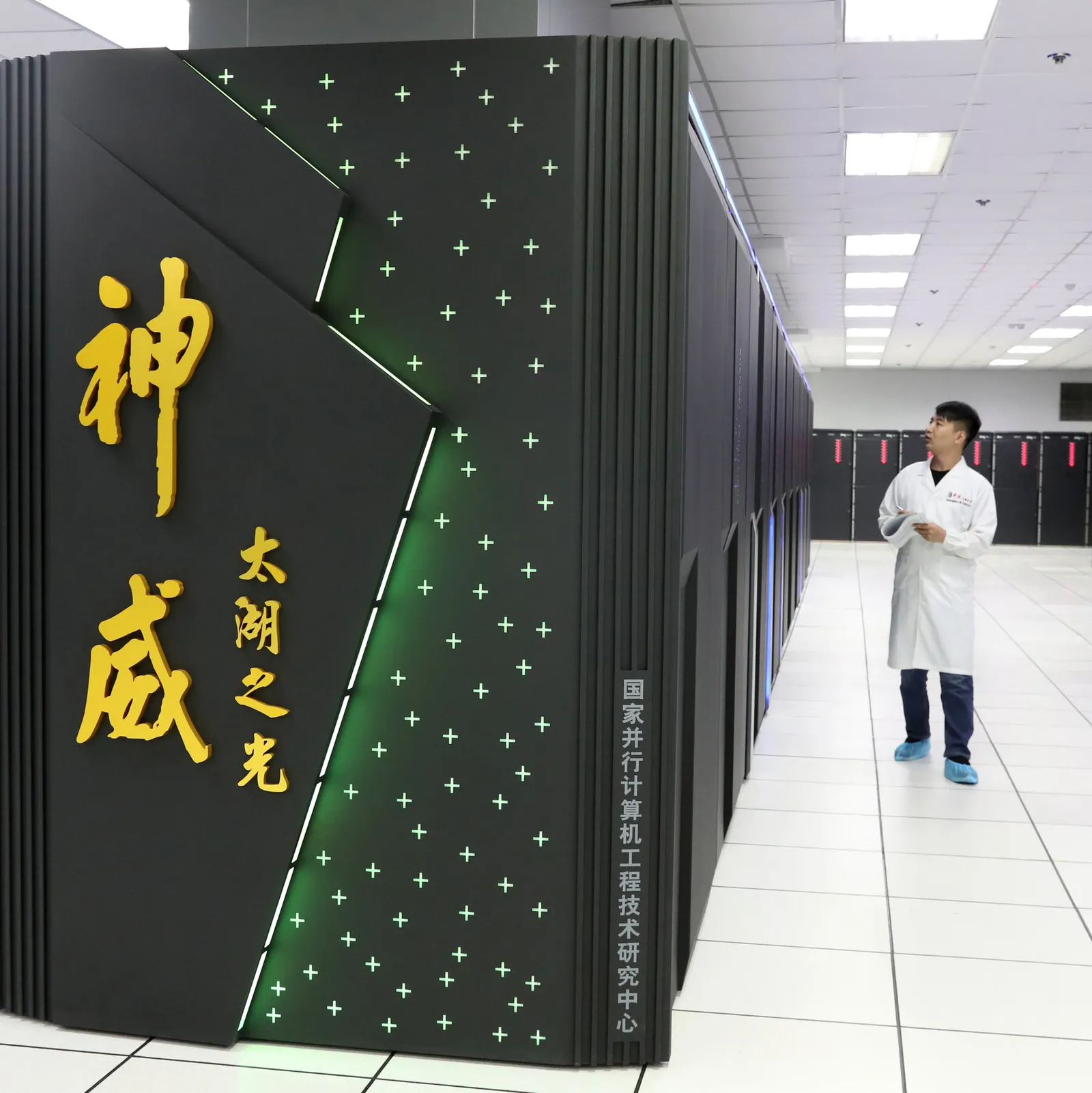
A supercomputer in Shenzhen has been declared the world’s fastest, taking the crown from the United States for the first time since 2017. Its design uses only standard microprocessors, avoiding the special-purpose graphics processing units (GPUs) many top systems rely on.
China just took the supercomputer crown back, and it did so with a design decision that pokes a very specific hole in the usual playbook. A supercomputer in Shenzhen was declared the world’s fastest, ending a U.S. run that had held since 2017. The headline detail is not only where the machine lives, but how it’s built.
This Shenzhen system is notable because it uses only standard microprocessors and not the special-purpose chips called graphics processing units, or GPUs. That matters because GPUs have become the default accelerator in modern high-performance computing, especially when workloads can benefit from parallel processing. In other words: this win is not just a “location” story. It is a “compute strategy” story, and it arrives at a moment when the supply chain for advanced chips is already politically sensitive and commercially decisive.
To understand why executives should care, zoom out to what the supercomputer ranking is actually measuring. These systems are often judged by performance on standardized benchmarks, and the architecture choices behind them usually influence what the industry builds next. When a top machine relies on GPUs, it reinforces demand for those specialized processors. When a top machine can deliver at the top using only standard microprocessors, it signals something that procurement and strategy teams have to take seriously: performance ceilings may not require the most strategically complicated hardware in every case.
The U.S.-China angle is the obvious part, but the real board-level implication is the signal it sends about capability and resilience. For years, compute leadership has been tied not only to algorithms but to access to certain classes of chips, including GPUs and other specialized components. In practice, that means export controls, licensing restrictions, and supply constraints can cascade into system performance timelines. If you are a technology leader building models, running simulations, or deploying AI-adjacent workloads, the architecture of “top-of-the-world” machines becomes a competitive reference point. Even if you do not copy the hardware one-for-one, you absorb the lesson: what is possible when you emphasize different parts of the stack.
There is also an incentives dimension. Hardware platforms live or die by ecosystem momentum. GPU manufacturers attract software optimization, tooling, and developer familiarity. That ecosystem effect tends to make GPU-heavy designs easier to scale and easier to justify internally. A Shenzhen machine that reaches #1 without GPUs suggests either that standard microprocessors are being pushed hard through system engineering or that the workload mix and interconnect choices are doing a lot of heavy lifting. Either way, it complicates the narrative that “accelerators are mandatory” for frontier compute outcomes. Executives who allocate budgets based on that narrative may need to re-check assumptions about where incremental performance gains come from.
For decision-makers, the second-order effect is procurement optionality. If top-tier results can be achieved without GPUs, then the risk profile changes. GPU supply constraints and regulatory exposure can be reduced by design, not just by negotiation. Boards tend to like designs that lower single-point-of-failure dependencies, especially when chip supply chains can be disrupted by policy or geopolitics. This announcement is not a policy document, but it lands in the same political economy where chip control and compute control are increasingly linked.
Finally, the competitive stakes extend beyond hardware firms. Cloud providers, AI research organizations, energy and materials companies, and government labs all track supercomputer announcements because rankings often forecast where performance engineering is headed. A Shenzhen #1 that runs on standard microprocessors is a reminder that the path to leadership is not a straight line through the same silicon every time. For peers in similar roles, the strategic question is simple and uncomfortable: are your infrastructure roadmaps overly anchored to one class of specialized chips, or are they built to perform under constraints you cannot control?
The short version: China’s Shenzhen machine is #1, and it earned that position without GPUs. That shifts the conversation from “who has the best accelerator” to “who can extract the most capability from the chips they can reliably get and deploy.” In today’s world, that is not just a technical flex. It is a business advantage with geopolitical gravity.
This story's Key Insights and Take-aways are locked.
Create a free account to unlock Executive Actions for one credit.
Register to UnlockAlways free for Executives Club members. Join the Club
More in Business

Accenture’s $4.18bn play fails as AI fears spark a 20% worst-ever stock plunge
On Thursday, Accenture hit its biggest one-day drop on record after forecasting worries that AI could hollow out consulting.

SpaceX stock jumps 3% after it overtakes Amazon’s market cap
CNBC says SpaceX’s shares surge following its IPO Friday, forcing investors to reprice what “space” and “AI” are worth.

SpaceX’s first options day breaks U.S. records after a $85B IPO win
Big IPO, bigger options debut: what it means for investors, risk teams, and anyone benchmarking market appetite.