

China’s spacecraft sends first image of asteroid Kamo‘oalewa, shrinking the unknown
The first Quasi-Moon photo from Kamo‘oalewa turns a theoretical target into something mission planners can actually study.

A Chinese spacecraft has captured the first image of the asteroid Kamo‘oalewa. For decision-makers, it signals rapid progress in deep-space sensing and reinforces how quickly space capabilities can convert curiosity into actionable data.
A Chinese spacecraft has captured the first image of the asteroid Kamo‘oalewa, offering the earliest visible look at a “quasi-moon” object that had largely lived in the realm of orbital theory. That single image is small in pixels and big in meaning. It moves Kamo‘oalewa from a concept to a concrete target, with real visual data that mission teams can build plans around.
Why this matters now: if you can see a small body clearly enough, you can ask better questions. Imaging is not just for bragging rights. It is the foundation for later work like refining how an object is shaped, how it reflects light, and how it fits into its orbital relationship with Earth. In other words, the first picture is often the start of a whole chain of decisions: what to measure next, what to prioritize, and what risks to expect if operations ever need to rendezvous or otherwise interact with the target.
Zoom out for a minute and you can see the broader race operating underneath. Space is increasingly a competition between those who turn observation into follow-on action and those who stay stuck at the “we found it” stage. Capturing the first image of a specific asteroid aligns with a familiar mission logic: get a baseline view, validate navigation and sensing performance in deep space, then use that performance to expand the set of objects you can study. For executives, this is the difference between capability as a press headline and capability as a durable operating advantage.
There is also a governance angle that typically sits quietly in the background until it matters. Deep-space imaging, communications, and trajectory work live under a patchwork of international norms and national rules. While the source only states that a Chinese spacecraft captured the first image of Kamo‘oalewa, the second-order implication for companies and investors is about how mission data becomes usable across borders. When you have credible observations, it supports scientific coordination and informs how other actors model risk, plan future missions, and decide where to allocate resources.
Kamo‘oalewa is called a quasi-moon, and that label hints at why imaging was consequential. Objects in Earth-adjacent dynamical neighborhoods can be tricky to characterize from Earth-based observations alone. They can be faint, their apparent behavior can be subtle, and their orbital relationships can be counterintuitive. A spacecraft image cuts through some of that ambiguity by providing direct observational input, which helps mission planners and scientists anchor their models. From an executive perspective, that means fewer assumptions going into the next step and faster iteration cycles for teams building tooling, simulations, and mission architectures.
Now connect this to capital and partnerships. Deep-space technology tends to be cumulative. The more successful imaging missions an organization delivers, the more it can justify follow-on investment in improved sensors, faster onboard processing, and better downlink strategies, because the company has proof that its system works in the real world. That proof is exactly what board members look for when they evaluate whether spending today will translate into capability tomorrow.
Finally, there is the competitive narrative. The first image of a newly spotlighted target is a credibility event. It suggests operational readiness and competence in executing complex pointing and imaging tasks at interplanetary distances. Even when the public focus is on the science, the strategic stakes for similar roles are about reliability: can the organization perform under mission constraints, and can it repeatedly produce high-value outputs?
So the executive takeaway from this single fact is simple, and it hits the core of why markets watch space closely. A Chinese spacecraft captured the first image of asteroid Kamo‘oalewa. That turns an intriguing object into an evidentiary asset, accelerates model-building, and strengthens the case for future missions that require more than guesswork. If you are tracking the trajectory of deep-space capability, this is the kind of milestone that quietly changes what is possible next.
This story's Key Insights and Take-aways are locked.
Create a free account to unlock Executive Actions for one credit.
Register to UnlockAlways free for Executives Club members. Join the Club
More in Science
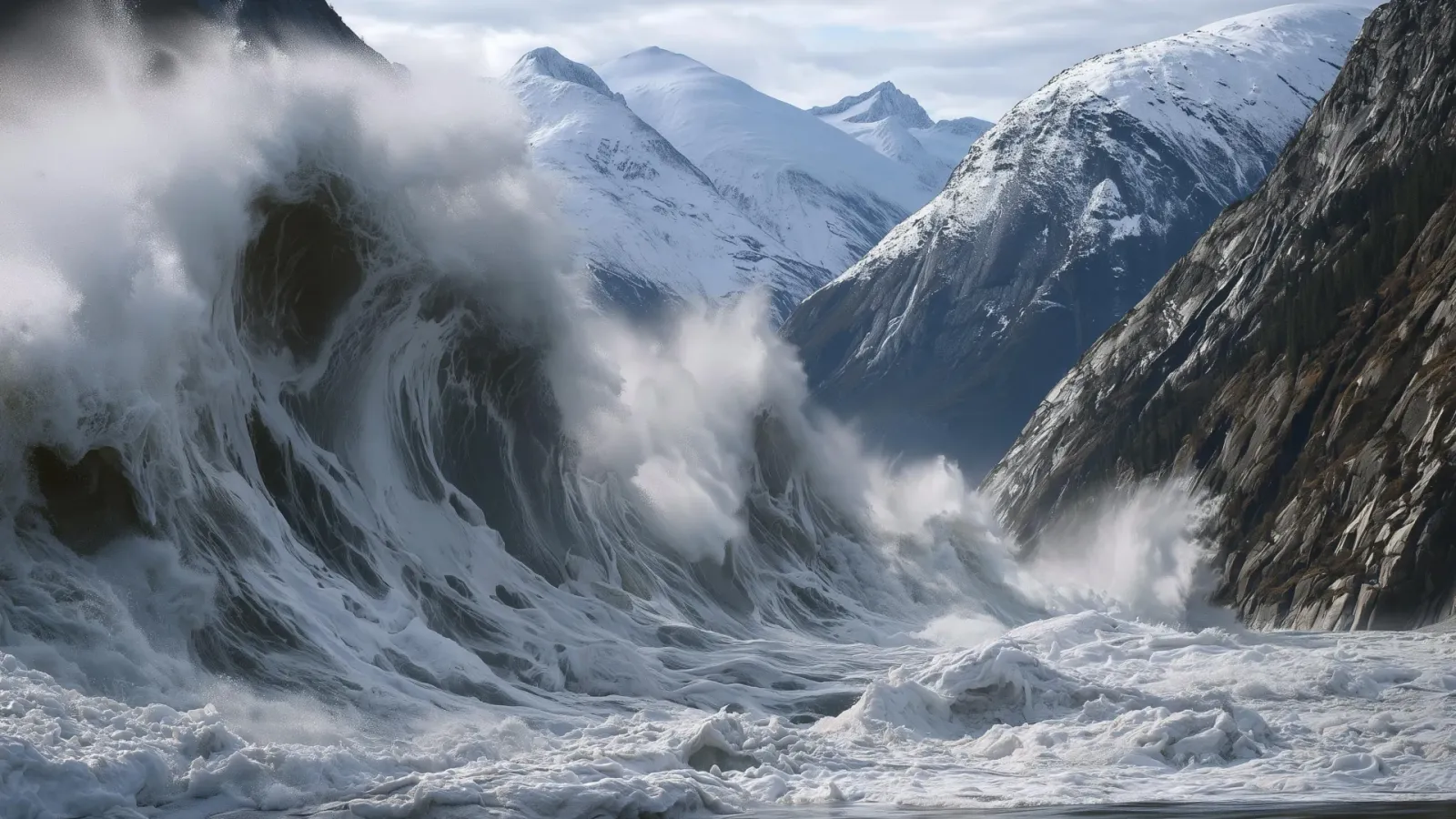
Alaska's 1,580-foot tsunami had warning signs. Scientists just found them.
Rapid glacier retreat, heavy rainfall, and thousands of tiny tremors preceded Alaska's 1,580-foot tsunami, a warning for every coastal community in a warming world.

The rare mutation that lets high-risk brains dodge Alzheimer's
Scientists found a natural defense against protein buildup, opening a new path to preventive treatments.

3,000 steps a day may halve Alzheimer's decline, study finds
New research links a modest daily walk to less tau buildup and nearly half the cognitive and functional decline, even for those with early signs.