
CHPE hit two outages, and New York still counted on it less than you’d expect
A Quebec-to-Queens HVDC link can move up to 20% of NYC power, but outages and drought uncertainty are now the story.
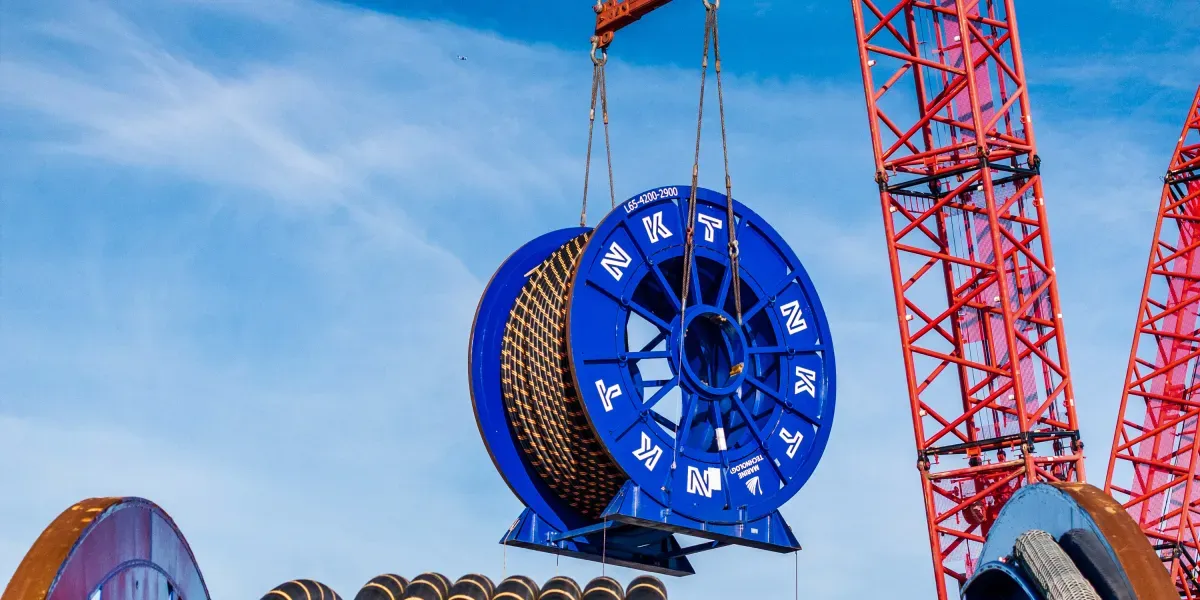
New York’s grid imported 52 gigawatt-hours from Canada during the July 3 heat wave, with some power routed through the 339-mile Champlain Hudson Power Express (CHPE). But CHPE has been down for most of July, leaving decision-makers to plan around reliability, cable repair, and the future of Quebec hydropower.
On July 3, as a heat wave baked the Northeast, New York State imported 52 gigawatt-hours of electricity from Canada, enough to meet about 9% of its total electricity demand that day. Some of that power came through the Champlain Hudson Power Express, or CHPE, a 339-mile line stretching from Quebec to Queens that began operation in May. The twist: even though CHPE is designed to be a major new artery for low-carbon power, the line has been down for most of this month. As of the morning of July 22, it still isn’t operating reliably enough to matter the way planners had hoped.
CHPE’s potential is huge on paper. When available, it could provide up to 20% of New York City’s electricity demand, largely using abundant hydropower from Quebec. The infrastructure is also unusually ambitious for North America: it is officially the longest underground transmission line in North America and uses a bundle of two high-voltage direct-current (HVDC) power cables, each roughly five inches across, buried underground or underwater across the length of New York State. The business case is straightforward. If you can reliably transmit clean power from where it is produced to where demand spikes, you can reduce emissions and possibly limit the need for new fossil-heavy generation and capacity. That is why this project, despite sounding like a niche engineering tale, lands directly on boards and grid managers.
So what actually went wrong? The line has seen two outages so far. The first occurred on July 1, and was reportedly caused by a trip at a converter on the Canadian side of the border. The second outage began on July 4, and CHPE was still down as of July 22. According to reporting cited by the article, officials traced the issue to a damaged section of cable on the U.S. side of the border. The line’s cable manufacturer reportedly sent experts to investigate, then removed and replaced the damaged portion. Hydro-Quebec spokesperson Lynn St-Laurent said that the remaining work, including necessary post-repair testing, is estimated to be completed by the weekend.
The underlying message for executives is not “transmission projects fail.” It is that startup risk is real, and it shows up quickly in the operational details. Some experts say this is not unusual for a new infrastructure project. Power lines often do not experience fully representative performance until they are in operation, because the stress tests are different when real-world electrical flows hit the system. Normand Mousseau, a physics professor at Université de Montréal, told The Gazette that testing really lands once the equipment is actually running.
This is especially important because the grid does not make room for wishful thinking. The New York Independent System Operator, the state’s grid management company, explicitly said the system was not counting on CHPE for summer reliability. Kevin Lanahan, a spokesperson for NYISO, stated that planning studies did not assume CHPE would be available this summer, and that was one reason the grid performed reliably during the heat wave earlier this month. He added a core reliability principle: do not rely on any single project. Put bluntly, planners treat new transmission like an optional upgrade until it is proven, because if it goes down, the replacement problem is expensive and fast-moving.
CHPE was built by Transmission Developers, a company owned by alternative asset manager Blackstone, alongside Hydro-Québec, which manages generation and transmission in Quebec. Construction began in late 2022 and wrapped up earlier this year, and the privately funded project cost $6 billion. Planning for the CHPE process started 15 years ago, with formal permitting beginning in March 2010. That long timeline matters because once you sink billions into infrastructure, you cannot just shrug and wait. Regulators and utilities need confidence that reliability will hold, and investors need evidence that the operational bottlenecks are fixable without turning into repeating delays.
The parallel example in the region is the New England Clean Energy Connect line, which opened in January. That project, spanning 145 miles from Quebec to Maine, has also seen outages and delivered very little additional energy into the Northeast. In other words, CHPE is not alone in showing “startup turbulence,” and the market question becomes: how quickly will these links move from commissioning problems to consistent delivery?
The longer-term strategic risk is not only equipment. It is water. Quebec has seen intense drought for the past three years, eating into water reserves used to generate electricity. That could mean there will not always be abundant hydropower to ship across the border, even if the transmission lines can carry it. For executives overseeing grids, utilities, and capital allocation, the second-order implication is clear: the value of long-distance clean power depends on both the wire and the upstream resource that feeds it. If drought persists, “more transmission” may not translate into “more clean power delivered,” and planning will have to hedge across variability in generation, not just across project outages.
This story's Key Insights and Take-aways are locked.
Create a free account to unlock Executive Actions for one credit.
Register to UnlockAlways free for Executives Club members. Join the Club
More in Science

Alaska's 1,580-foot tsunami had warning signs. Scientists just found them.
Rapid glacier retreat, heavy rainfall, and thousands of tiny tremors preceded Alaska's 1,580-foot tsunami, a warning for every coastal community in a warming world.

The rare mutation that lets high-risk brains dodge Alzheimer's
Scientists found a natural defense against protein buildup, opening a new path to preventive treatments.

3,000 steps a day may halve Alzheimer's decline, study finds
New research links a modest daily walk to less tau buildup and nearly half the cognitive and functional decline, even for those with early signs.