
Chris Evert and Martina Navratilova back each other through cancer in Netflix doc
Their decade-spanning friendship and rivalry returns for one brutal reason: they are both facing cancer, together.
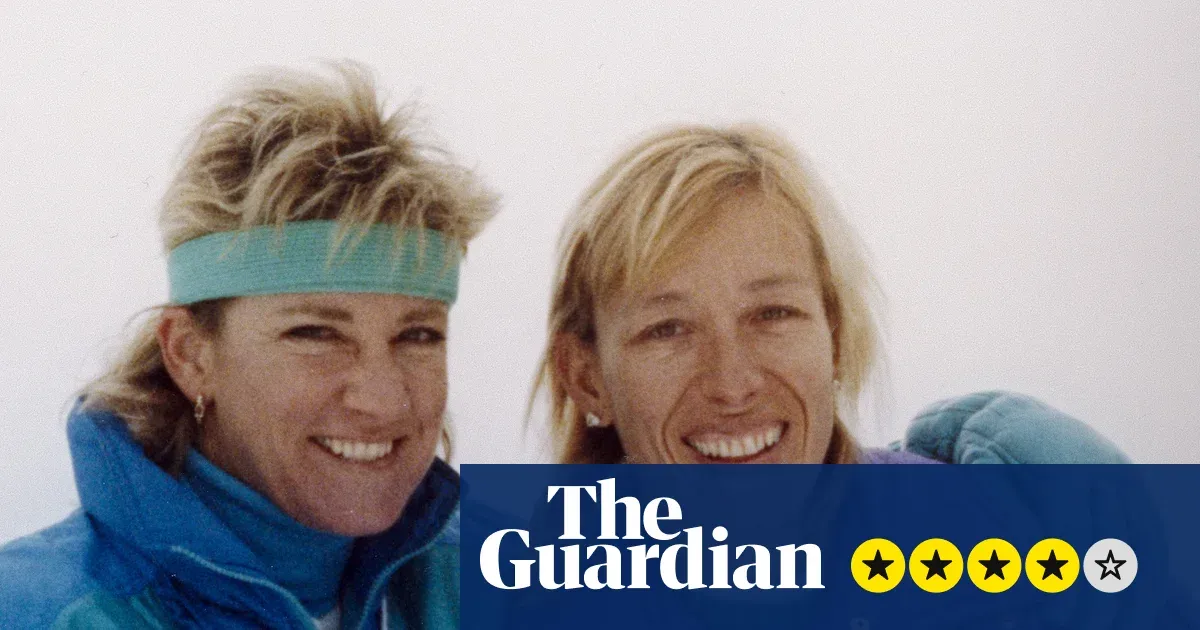
Netflix’s documentary on Chris Evert and Martina Navratilova follows how the tennis titans navigate cancer treatment while revisiting decades of bond and rivalry. For decision-makers, it is a reminder that even in competitive, high-pressure arenas, support systems can be real, but complex.
Chris Evert and Martina Navratilova are not trading volleys in silence anymore. In the Netflix documentary discussed in The Guardian, the women’s tennis legends show up in the hardest spotlight imaginable: both are going through cancer treatment, and they support each other while their shared past still burns in the background. The film uses that dual, real-time storyline to highlight something the sports world rarely slows down long enough to celebrate: friendship and “sportsmanship” can coexist with rivalry at the very summit of achievement.
That headline moment matters because it flips the usual narrative logic of elite sport. Professional competition is built to maximize advantage. It rewards winning, not mutual care. Yet here, as Evert and Navratilova deal with cancer, the documentary argues there is still room for genuine friendship even in a place that is often caricatured as cutthroat. The review calls the documentary “highly watchable,” and it credits the film for making a strong and valid point: real friendship is possible in a sport world that can feel emotionally transactional.
But the review also flags a tension that will land with anyone who has ever watched relationships get flattened by a highlight reel. Even if Evert and Navratilova’s bond is “perfectly genuine,” the film leaves “open the suspicion” that their friendship may be “a little more complicated than it looks here.” That is not a takedown. It is a more interesting claim. It suggests the documentary is balancing two storylines and, by doing so, may tilt attention away from the single most dramatic section for the reviewer: Navratilova’s defection in 1975.
If you want the kind of plot that makes business people sit up, it is there. Navratilova’s 1975 decision, when she was just 18, was to leave communist Czechoslovakia for the US. The review notes she understood she might never see her mother or sister again, and that at one point she faced a real threat of abduction by Soviet or Czech security forces. In other words, this is not rivalry in the normal sports sense. It is a life-altering, high-risk transition involving political power, personal safety, and family separation. The stakes dwarf what most competitors ever face on a court.
The review even adds context by comparing timelines of other famous defections: Nureyev was 23 when he defected, and chess star Victor Korchnoi was 45. The point is not just trivia. It frames Navratilova’s defection as part of a broader pattern of athletes and public figures who became geopolitical symbols, then had to build new lives under extreme uncertainty. For executives and boards who spend time on “risk,” this is a reminder that the most decisive risks are rarely spreadsheets. They are often about identity, belonging, and whether you can protect the people you love.
Now connect that to why the documentary’s cancer storyline is not merely heartfelt. It is the opposite of a sentimental detour. Cancer turns every relationship into a test of what is sustainable when performance stops being the currency. The film’s approach, as described by The Guardian, uses the present crisis to revisit the past. That is emotionally effective, but it also raises a second-order question: if the friendship has endured through rivalry, politics, and personal terror, what does that say about the underlying relationship mechanics? The reviewer seems to think the documentary gives you the bond, but not all the explanatory scaffolding about how complicated it might be.
There is also a sports culture angle that The Guardian reviewer folds in, and it is worth taking seriously because it shows how sport narratives can influence social narratives. The review describes how Evert and Navratilova dominated international women’s tennis throughout the late 70s and 80s and did so in a way that “boost[ed] the sport” and, the reviewer adds, helped to silence “certain sexist reactionaries” who doubted the feasibility of women’s football. Whether or not you agree with the phrasing, the strategic implication is clear: public success is not just a scoreboard outcome. It becomes leverage in cultural debates about legitimacy, funding, and mainstream attention.
So what is the strategic stake for readers who run companies, invest in talent, or lead teams in any competitive arena? The documentary described here is a human story, but it maps onto organizational realities. First, it shows that support networks can coexist with rivalry, but not always in the clean way marketing would like. Second, it reminds you that the strongest bonds are often forged under existential pressure, not just through shared goals. Third, it underscores how public platforms can become battlegrounds for larger societal arguments, from gender credibility to international politics.
In short, this Netflix doc, as reviewed, is not only about tennis legends growing old and facing illness. It is about how complex relationships survive when stakes stop being abstract. For decision-makers, that is the uncomfortable takeaway: if you want loyalty, resilience, and performance, you have to design for more than wins. You have to design for the moments when people need each other most, and when the story is bigger than the game.
This story's Key Insights and Take-aways are locked.
Create a free account to unlock Executive Actions for one credit.
Register to UnlockAlways free for Executives Club members. Join the Club
More in Entertainment

Russell Brand's accuser 'bewildered and confused' as he denies 7 sex charges
The criminal case against the comedian is a live test of how media companies manage talent risk when serious allegations go public.

'It's a Magic Trick': Ballet Experts Say Rosalía's SNL Pose Is Impossible
Three ballet experts tell Rolling Stone Rosalía's gravity-defying SNL stillness shouldn't be possible - and why the debate is now part of the show.

Activision CMO: GTA 6 Will Boost Call of Duty, Not Bury It
Activision's top marketer says Rockstar's blockbuster will drive players back to consoles and into Modern Warfare 4, even as the company admits its recent strategy failed.