
Christoph Hartmann returns to Ubisoft leadership, taking charge of Splinter Cell, The Division, Ghost Recon
A former 2K founder and Amazon games veteran now runs Creative House 2. Here’s what that signals for Ubisoft’s next moves.
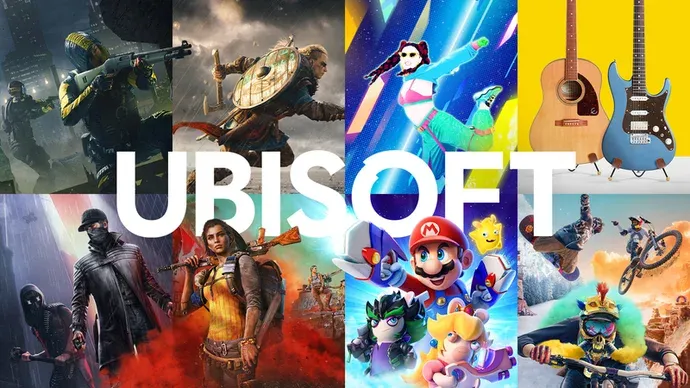
Ubisoft has appointed Christoph Hartmann as General Manager of Creative House 2, overseeing Splinter Cell, The Division, and Ghost Recon. The hire pulls an industry veteran back into a major franchise portfolio after he founded and led 2K Games and later ran Amazon’s troubled games business, leaving in January.
Ubisoft just put Christoph Hartmann in charge of its Creative House 2 unit, the team that oversees Splinter Cell, The Division, and Ghost Recon. In practical terms, that means Hartmann is now the executive steering some of the publisher’s biggest long-running brands, at a moment when “live franchises” are increasingly judged by consistency, not just launch day excitement.
Hartmann’s path to this role matters because it is unusual. He is an industry veteran who founded and led the 2K Games label at Take-Two before leaving in 2017 to head up Amazon’s troubled games business. He then left Amazon in January, and now Ubisoft has handed him a franchise-heavy mandate, which is the kind of assignment that tends to come with very clear internal expectations: keep performance steady, reduce chaos, and turn scattered development into predictable output.
If you are an executive watching from the next company over, this is a signal worth decoding. Creative House 2 is not a “one-off project” organization. It is a business unit built around franchises that have existing audiences, existing economic models, and existing obligations to fans. That changes the job description for the General Manager. Instead of thinking purely about greenlighting a new concept, Hartmann has to manage momentum across multiple teams and products that live or die by post-launch cadence, content planning, and how quickly teams can respond when player behavior shifts.
There is also a governance angle here. When a publisher taps someone with experience running major game operations, the board-level subtext is often straightforward: the company wants someone who has dealt with the messiness of large-scale production and organizational friction before. Hartmann’s history includes being at the center of two very different environments. Take-Two’s 2K label was a major commercial games brand. Amazon’s games effort, on the other hand, was described in the source as troubled. That contrast suggests Ubisoft is not just buying talent, it is buying a specific type of operational maturity that comes from surviving complicated game businesses.
The Amazon part is particularly relevant when you consider incentives. In troubled environments, the pressure usually shifts from “build the future” to “figure out why the basics are not working.” A general manager arriving after that kind of experience can be expected to bring a tighter focus on execution and risk management. Not because the franchises at Ubisoft are necessarily struggling, but because the industry has learned that large teams can still fail if planning is sloppy or if product direction is constantly redefined.
The second-order implication for other leaders is how this hire fits into the broader pattern of franchise stewardship. Over the last few years, publishing has leaned harder into recurring engagement, bigger roadmaps, and longer development cycles justified by long-term returns. The problem is that longer horizons amplify management mistakes. A poor content strategy can stall engagement, which then hits revenue projections, which then forces further changes. Putting someone like Hartmann at the helm of a franchise unit is one way to reduce those feedback loops by betting on a manager who has already been inside the machinery.
There is also a timing element. Hartmann left Amazon in January, and Ubisoft’s appointment puts him back into high-visibility leadership relatively quickly. That kind of move often signals that Ubisoft wanted a clean handoff, not a “wait and see” trial. When executives are available and the mandate is immediate, boards tend to act. For Ubisoft, Creative House 2 is now the locus for three major franchises, which means Hartmann’s decisions will ripple across multiple products rather than staying confined to a single game team.
For peers, the takeaway is simple: this is not a lateral staffing change. It is a management statement about what Ubisoft values right now, namely the operational oversight of established franchises. Hartmann is General Manager of Creative House 2, overseeing Splinter Cell, The Division, and Ghost Recon. With a background that includes founding and leading 2K Games, departing Take-Two in 2017 to run Amazon’s troubled games business, and leaving Amazon in January, he arrives with a resume built for managing big, stubborn, high-stakes game portfolios. In an industry where execution often matters more than pitch decks, that is exactly the kind of leadership appointment that should get everyone paying attention.
This story's Key Insights and Take-aways are locked.
Create a free account to unlock Executive Actions for one credit.
Register to UnlockAlways free for Executives Club members. Join the Club
More in Entertainment

Russell Brand's accuser 'bewildered and confused' as he denies 7 sex charges
The criminal case against the comedian is a live test of how media companies manage talent risk when serious allegations go public.

'It's a Magic Trick': Ballet Experts Say Rosalía's SNL Pose Is Impossible
Three ballet experts tell Rolling Stone Rosalía's gravity-defying SNL stillness shouldn't be possible - and why the debate is now part of the show.

Activision CMO: GTA 6 Will Boost Call of Duty, Not Bury It
Activision's top marketer says Rockstar's blockbuster will drive players back to consoles and into Modern Warfare 4, even as the company admits its recent strategy failed.