
Christopher Nolan’s The Odyssey hits 98% on Rotten Tomatoes and critics call it a “masterpiece”
First reviews praise Matt Damon, Tom Holland, the Cyclops scenes, and Ludwig Göransson’s score, with a few pacing complaints.
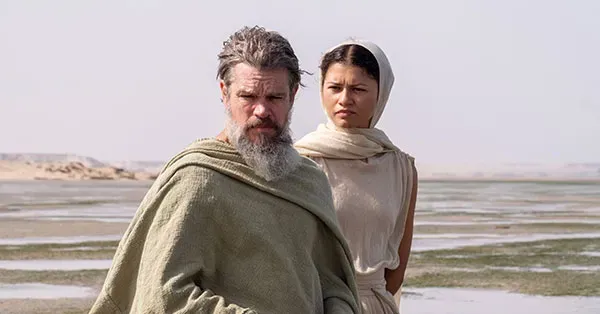
Christopher Nolan’s epic adaptation of Homer’s The Odyssey, starring Matt Damon as Odysseus, is arriving in theaters this weekend with Rotten Tomatoes showing 98%. For decision-makers tracking prestige film performance, the early critical consensus signals strong momentum, plus clear watch-outs in audience retention and tone.
Christopher Nolan’s The Odyssey, his adaptation of Homer’s classic, lands in theaters this weekend with Rotten Tomatoes listing it at 98% positive (and 0% negative) in the “first reviews” snapshot. Critics aren’t just saying it’s good, they are repeatedly calling it one of the best movies of the year, with multiple reviews arguing it is Nolan’s “crowning achievement” and one of the greatest epic fantasy films ever made.
What’s driving that consensus? The early praise starts with the core cast and quickly expands into the things that usually decide whether a prestige spectacle becomes a cultural artifact instead of a one-time event. Matt Damon stars as Odysseus, “one of the most understated yet quietly commanding performances of his career,” and multiple critics frame his work as more than muscular heroics. The ensemble is stacked: Tom Holland as Telemachus, Zendaya, Robert Pattinson, Anne Hathaway, Lupita Nyong’o, Charlize Theron, Elliott Page, and John Leguizamo. Critics call out Holland’s “career-best work,” with Clarisse Loughrey saying it “effectively charts Telemachus’s maturation,” while David Gonzalez highlights the film’s emotional foundation as the differentiator from many ancient Greek spectacles that can feel like pageantry first and consequence second.
The adaptation itself is another pillar of the reviews. Several critics highlight that Nolan’s “stamp is all over the film” while it still “never wavers in its commitment to, and comprehension of, its source text.” Others note he takes liberties, but in service of structure, expanding and uniting accounts of Odysseus’s deeds toward “a larger, more elusive goal.” In plain English: the critics are saying it doesn’t feel like a loose retelling, it feels like a deliberate re-engineering of the myth with Nolan’s cinematic habits intact.
Nolan’s usual narrative signature also shows up, and the reviews are clear that this film plays with non-linear storytelling. Mike Ryan describes it as not linear, but also pushes back on what he calls “obvious flashbacks” being in the same league as Tenet or Dunkirk. Meanwhile, David Gonzalez says Nolan “weaves together the parallel journeys of father and son, Odysseus and Telemachus,” in a Godfather Part II-style convergence, where the reunion “feels earned.” That matters because the one thing executives cannot buy with a bigger budget is trust. If the audience trusts the story mechanics, the spectacle has room to land emotionally, and the reviews suggest the film earns that trust rather than merely demanding it.
Then come the scenes that critics say are likely to outlive the opening weekend. The Cyclops encounter and the “numerous sequences at sea” are flagged as image-making moments. There is also specific praise for “Samantha Morton’s remarkable cameo as Circe” and the “song of the Sirens sequence,” with one reviewer calling the Cyclops and Sirens material “destined to be remembered as classic cinematic moments for years to come.” For executives watching prestige film economics, these are the kinds of sequences that drive social clips, repeat viewership, and awards chatter. They are also the kinds of set-pieces that can justify premium theater experiences because they are hard to replicate at home.
On the craft front, the reviews repeatedly credit Ludwig Göransson’s score. David Gonzalez calls it “Magnificent,” saying it may be Göransson’s “most ambitious work to date,” enhancing every emotional beat and action sequence without overpowering the story. That balance is a big deal. In large-scale films, music can either guide feeling or bulldoze it, and critics are effectively telling you Nolan kept the orchestra in service of character and drama. Sound design also gets a major mention, with Tim Cogshell saying the battle scenes are shot “tightly,” edited “choppily,” and come to life “mostly in their sound design.”
And yes, there are critiques, which is important for anyone making decisions around distribution, timing, and positioning. M.N. Miller says “not every section is equally effective,” making the film “feel uneven.” Tim Cogshell adds a visual complaint, calling it “too dark and monochromatic.” There is also a specific structural reassurance buried in the reviews: Mike Ryan says the diverse-looking cast “actually helps keep the story in order,” and Gonzalez notes that meticulous editing by Jennifer Lame makes the three-hour runtime move “at a surprisingly brisk pace,” with the runtime feeling shorter than its 172-minute length. In other words, the critiques are not killing confidence, they are outlining what might affect walk-ups and repeat attendance.
Finally, the “second-order” implication for decision-makers is how this kind of critical landing can cascade. When critics call the film a masterpiece, highlight standout performances, and identify multiple award-relevant categories, it raises the probability of sustained attention beyond opening weekend. One reviewer frames Göransson as a “legitimate contender for a fourth Academy Award,” even suggesting an opportunity to become one of the few composers to win back-to-back Oscars. For peers making bets on prestige content, the strategic takeaway is simple: The Odyssey is already demonstrating the early ingredients that convert reviews into momentum, while still leaving enough friction points (uneven sections, tonal darkness) to keep everyone honest about audience expectations.
This story's Key Insights and Take-aways are locked.
Create a free account to unlock Executive Actions for one credit.
Register to UnlockAlways free for Executives Club members. Join the Club
More in Entertainment

12TB Steam 'teraleak' goes beyond Valve: GTA 3, Mafia 2 prototypes exposed
A 12-terabyte dump of Steam data reveals prototypes and builds of third-party classics like GTA 3 and Mafia 2, plus unreleased Valve content, rewriting game history.

LinkedIn's romance problem: 1 in 4 workers say dating on it is fair game
A new survey shows a quarter of U.S. employees treat the professional network as fair game for romance, even as LinkedIn bans it and removes hundreds of thousands of offending posts.

Enhypen's first No. 1 album breaks K-pop's Billboard 200 streak
The K-pop group's 98,000-unit debut tops the chart while Dolly Parton's catalog reentry shows how death reshapes streaming.