

Christopher Nolan’s The Odyssey tops The Dark Knight Rises for biggest global opening
Nolan’s latest film outperforms his own record, reshaping what “opening” means for studios and investors.
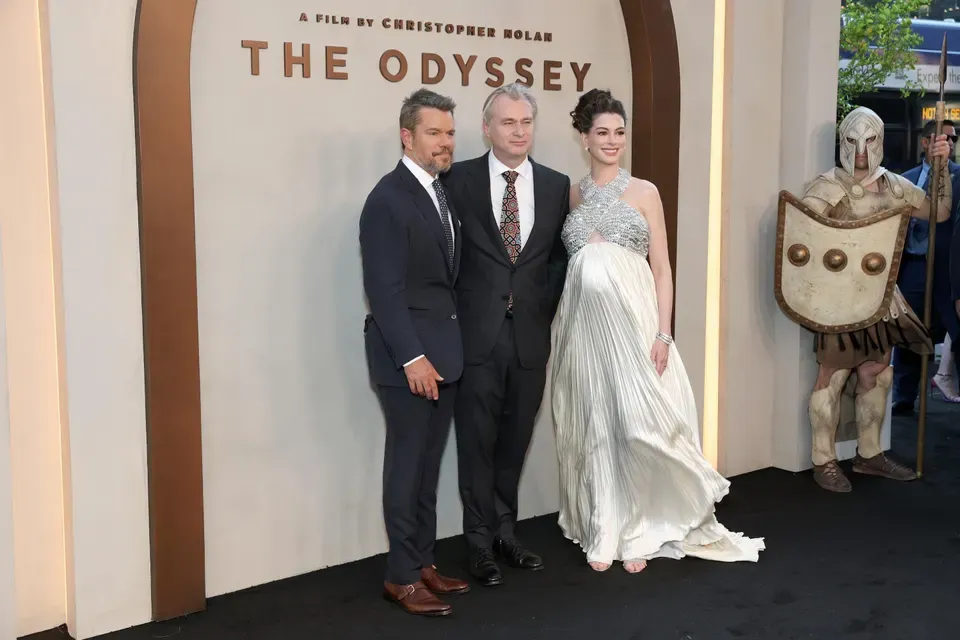
Christopher Nolan’s global box office debut for The Odyssey has become his biggest global opening ever, surpassing his previous benchmark, The Dark Knight Rises. For decision-makers, the shift signals that global first-week momentum is now the core metric studios and investors will chase.
Christopher Nolan’s The Odyssey is now the filmmaker’s biggest global box office opening ever, beating his own prior record set by The Dark Knight Rises. That detail matters because “biggest opening” is more than trivia. It is the clearest, fastest signal the market sends about demand, pricing power, and whether a tentpole behaves like a one-time event or something studios can scale into a bigger commercial plan.
In this case, the opening didn’t just land. It landed globally, and it arrived in a way that outperformed a Nolan standard that many people in the industry already treat as a reference point. The Dark Knight Rises is Nolan’s earlier high-water mark, and The Odyssey surpassing it means the latest title is winning the most competitive part of the release cycle: the first global weekend-plus, when attention, theater programming, and marketing intensity converge. If you run a studio, a distribution partner, or an investment desk watching the theatrical calendar, a new peak opening resets how you model upside and how you negotiate the next slate.
To understand why this is a big deal, you have to know what “opening” does to the rest of the film’s economics. The opening period is when most of the easy forecasting happens. Studios look for early global traction to judge whether they should lean harder on marketing, lock in premium formats, and protect screens in key markets. Exhibitors use that same early data to decide what gets prime scheduling and what gets swapped out. Investors, meanwhile, treat strong openings as proof that the film has broad appeal, which can reduce perceived risk even before final worldwide totals are known.
The global angle is the other essential part. A film’s performance in a single country can be noisy due to local competition, release timing, and cultural fit. A global opening smooths that noise by combining multiple markets, each with different viewing patterns. When Nolan’s film beats his own record on a global basis, it implies the appeal is not just local or niche. It suggests that the kind of audience that fuels blockbuster opening weekend behavior is showing up across regions.
This is also the kind of moment that influences boardroom dynamics and incentive structures. When a film sets a new benchmark for “opening,” it can shift internal debates about where leadership should allocate resources. For example, teams deciding budgets and marketing spend can point to a result like this as evidence that the company should continue betting on premium creative. On the flip side, executives who were more cautious about tentpole scale can lose their leverage if the market repeatedly rewards large releases with global momentum.
Then there is the question of regulation and policy, which might feel far from a movie box office peak, but it matters in practice. Theatrical distribution and advertising are shaped by local rules, including consumer protection norms, content standards, and marketing requirements that vary by jurisdiction. Even though nothing in the provided source adds new regulatory details, the second-order implication for executives is straightforward: when you have a film that is clearly outperforming on opening, regulatory friction becomes more consequential because the upside is larger. If a studio has to navigate approvals, labeling rules, or advertising restrictions, strong global demand increases the cost of delays and makes operational precision a competitive advantage.
Strategically, peers should take note because Nolan is not an isolated benchmark. His success becomes a reference point for other filmmakers, producers, and studios planning future release calendars. When the top slot for “biggest global opening ever” moves, it changes what other teams believe is possible. That influences how quickly studios greenlight similar scale projects, how agents negotiate talent packages, and how distribution partners structure their risk around wide releases.
For decision-makers considering their next slate, the message is clear: The Odyssey is winning the global opening race, and it has done so by surpassing Nolan’s previous global peak tied to The Dark Knight Rises. Strong openings do not guarantee final totals, but they do guide the decisions that shape those totals. When the market resets its expectations, executives who interpret the signal fastest tend to make the cleanest moves next, whether that is protecting screens, adjusting marketing emphasis, or refining how they value global audience reach.
This story's Key Insights and Take-aways are locked.
Create a free account to unlock Executive Actions for one credit.
Register to UnlockAlways free for Executives Club members. Join the Club
More in Business

Uber buys Delivery Hero for nearly $15B, vaulting to top food delivery outside China
The deal doubles Uber's dual-services footprint and pushes a ride-and-eats bundling play into 50 more markets.

Epic and Google drop settlement bid, forcing rival Android app stores by July 22
Google told the court it is ready to carry third-party app stores starting Wednesday, July 22.
SK Hynix opens at $170, raises $26.5B, and tops foreign IPO records
In Friday's Wall Street debut, SK Hynix turns AI RAM demand into a $26.5B fundraising moment that rewrites comps.