
Chuck Russell says Arnold Schwarzenegger's Captain Blood died after a Pirates-of-the-90s pitch
The Eraser director explains why the “Captain Blood” plan never sailed, and what it says about how action franchises get made.
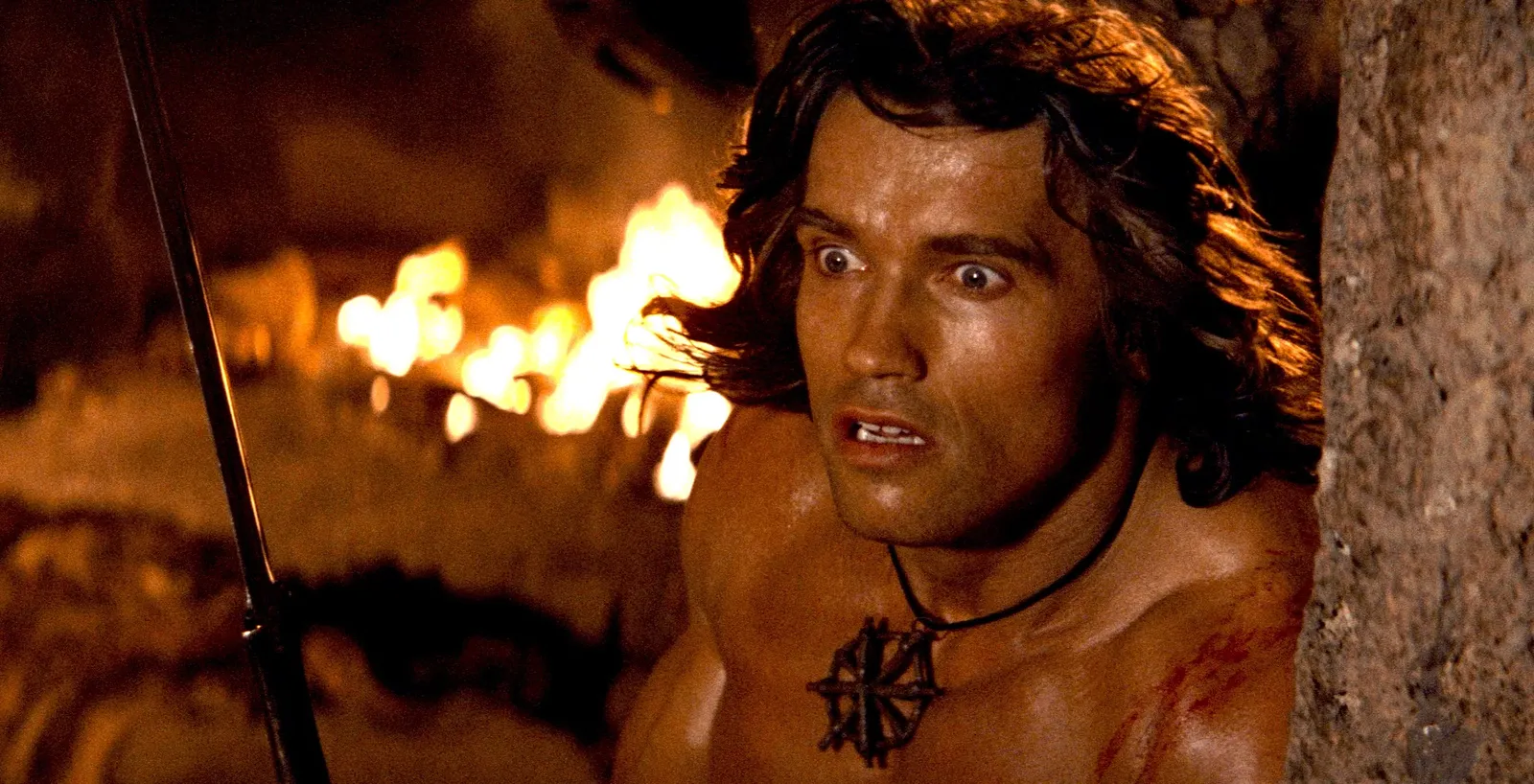
Chuck Russell, director of Eraser, shared details about the Arnold Schwarzenegger pirate movie Captain Blood that never got made. For decision-makers, it is a reminder that even bankable stars can miss the window when projects fail at momentum, timing, and deal-making.
Arnold Schwarzenegger the pirate almost happened. Chuck Russell, the director of Eraser, says he has details about Schwarzenegger’s lost Captain Blood, the movie that would have put the action star into a 1990s-style swashbuckling world that Russell compares to Pirates of the Caribbean.
The setup matters because Captain Blood was not some vague “maybe someday” idea from a distant studio archive. Russell ties it to a specific moment in Schwarzenegger’s career: after the blockbuster one-two punch of True Lies and Junior. That timing is the real hook, because it captures the way Hollywood greenlights projects not only on quality, but on velocity. When an actor is riding a wave, studios are looking for the next wave to ride right behind it. Captain Blood was the next attempt to keep that momentum going, only it never sailed.
To understand why a Captain Blood could die even when the star is a guarantee, you have to look at how blockbuster logic works in practice. In the late 80s and 90s, Schwarzenegger’s brand was basically a production machine: big spectacle, high concept, and enough action to travel globally without translating jokes or relying on niche tastes. Studios built strategies around that reliability. But reliability is not the same thing as controllability. A pirate movie is a totally different kind of production than an action thriller or a sci-fi killer robot setup. You need period visuals, costumes, set pieces, and a world that feels coherent, not just loud.
Even before you get to money, pirate adventures are hard to “spec” your way into. They demand craft across a wider surface area, and that introduces friction inside the system: more departments, more schedule dependencies, and higher risk if anything goes sideways during development. In a standard development pipeline, a project like Captain Blood would have to win internally against other projects competing for the same budget, the same release slots, and the same attention from executives who are juggling multiple priorities.
That internal competition becomes sharper when a star is at peak. Studios are encouraged to move quickly, because box office results can change faster than board decks. Russell’s reference to True Lies and Junior points to a classic industry behavior: after a “hot” sequence, executives want to lock in the next release before audience momentum cools. But speed can also be the thing that breaks a project. If the script, tone, or financing structure does not snap into place fast enough, the project can get delayed, and delays are where enthusiasm leaks out.
There is also the question of how the market’s appetite for a certain kind of adventure evolves. Russell’s comparison to Pirates of the Caribbean is telling. Pirates of the Caribbean became a cultural reference point later, with a specific blend of swagger, comedy, and cinematic fantasy that helped redefine what a pirate franchise could look like for mass audiences. Captain Blood would have been early to that party, trying to create a 90s version of that energy. And when audiences have not yet decided on a specific recipe, studios often hesitate to spend as if they already have.
From a governance angle, projects like this live and die in the rooms where executives weigh risk and timing, not just talent. A board or senior leadership team typically asks questions like: Is the genre shift worth it? Can we afford the scale? Will the audience follow the star into a different lane? Those are not questions that get solved by star power alone. Schwarzenegger could carry action, comedy, and sci-fi; a pirate adventure requires a different kind of sponsorship from the whole production system.
So the strategic takeaway is not “pirates are hard,” or “Schwarzenegger failed.” The story is more interesting than that. It is a case study in how Hollywood turns momentum into opportunity, and how quickly that opportunity can disappear when the project cannot align development, production reality, and market timing. For executives and producers watching similar windows today, Captain Blood is a reminder that even when the talent is undeniable, the machine still has to agree on the timing, the genre, and the path to release. When it does not, the project can vanish, and all you get later are the director’s behind-the-scenes details about what almost became the next franchise moment.
This story's Key Insights and Take-aways are locked.
Create a free account to unlock Executive Actions for one credit.
Register to UnlockAlways free for Executives Club members. Join the Club
More in Entertainment

Russell Brand's accuser 'bewildered and confused' as he denies 7 sex charges
The criminal case against the comedian is a live test of how media companies manage talent risk when serious allegations go public.

'It's a Magic Trick': Ballet Experts Say Rosalía's SNL Pose Is Impossible
Three ballet experts tell Rolling Stone Rosalía's gravity-defying SNL stillness shouldn't be possible - and why the debate is now part of the show.

Activision CMO: GTA 6 Will Boost Call of Duty, Not Bury It
Activision's top marketer says Rockstar's blockbuster will drive players back to consoles and into Modern Warfare 4, even as the company admits its recent strategy failed.