

Circle’s Jeremy Allaire maps agentic commerce, and regulators are quietly moving fast
A year after the GENIUS Act, new stablecoins and Circle’s trust bank approval show how “software money” becomes infrastructure.

Jeremy Allaire, CEO of Circle, laid out an “agentic economy” blueprint in a newly published 18,500-word treatise, The Agentic Economy. The ecosystem is shifting from ideas to infrastructure, with Circle gaining approval to establish a federally regulated national trust bank and new stablecoin partnerships targeting compliance, speed, and agent-to-agent payments.
Good morning, and welcome to the part of AI most executives are still treating like a thought experiment. If software agents do the buying and selling for you, then the real question becomes: who builds the plumbing that makes those transactions accurate, compliant, fast, and smart?
Fortune’s CEO Daily frames that “agentic economy” move as more than hype. A year after the GENIUS Act passed, a wave of stablecoins, platforms, and partnerships is pointing to how the ecosystem is taking shape. And Circle CEO Jeremy Allaire is one of the loudest architects of what comes next. He published an 18,500-word treatise called The Agentic Economy (with several iterations, including a 60-second version), arguing that a “planetary nervous system for information” must now be matched by a “circulatory system for value.” In his framing, a software-agent economy needs “software money, software contracts, and software governance,” or it “cannot run at all.”
That sounds poetic until you connect it to how agentic commerce actually has to work. Agents will not just recommend purchases. They will need to settle payments, verify terms, and execute transactions at speed. In traditional finance, that means rails, compliance checks, dispute handling, and reliable identity. In agentic commerce, those same needs get translated into “software money” (stablecoins and tokens), “software contracts” (programmable agreements), and “software governance” (rules that keep the system coherent).
Circle is the headline example in Fortune’s briefing because it is not just proposing the end state. Among other developments, the global fintech company “just got approval to establish a federally regulated national trust bank.” That matters because regulatory status is not a footnote in payments infrastructure. It is the permission slip that determines what can be deployed, who can use it, and how institutions feel comfortable building on top of it.
Meanwhile, the stablecoin market is diversifying in ways that reflect different risk appetites and different business models. Fortune notes stablecoin innovation you may already associate with controversy and politics, pointing to Tether as “the popular and controversial stablecoin issuer,” with ties to the family of Commerce Secretary Howard Lutnick, and an issuer background “from El Salvador.” The point is not to settle that debate here. The point is that executives building agentic commerce infrastructure are watching how issuers position themselves with regulators, partners, and merchant networks.
On the “new offerings” front, Fortune spotlights Open Standard, partnering with Stripe, Visa, Blackrock, and about 140 other firms. The plan is to launch a new stablecoin this year called Open USD. The mechanism is a key detail: instead of reserve income being held by a single issuer, it is “shared with partners,” and partners can mint and redeem tokens at no cost. If you are thinking like a board member, the second-order implication is clear. When minting and redemption are frictionless for partners, adoption barriers drop. But when incentives get distributed, governance and operational controls become even more critical.
Why would consumer brands care enough to launch their own stablecoins? Fortune answers that too: it “could let them bypass credit card fees” to securely settle transactions at a fraction of the cost. This is where agentic commerce stops being a fintech sandbox and becomes a margin story. If agents are negotiating and executing purchases constantly, the transaction cost model matters every time. Lower settlement costs and faster finality can be compounding advantages, especially for high-frequency use cases.
Infrastructure players are also moving at the rails level, not just in token land. Fortune says Visa CEO Ryan McInerney predicted on its second-quarter earnings call last week that agentic commerce “will expand our addressable market,” and that stablecoins and blockchain show “significant opportunities” for growth. Visa also launched a new platform last week to provide stablecoin services to more than 200 million merchants. On a different network, Fortune notes SWIFT, which links more than 11,500 financial institutions, now has a blockchain-based ledger. These are reminders that stablecoins are not isolated products. They are becoming part of settlement workflows across large networks.
Circle’s Allaire adds another layer: building a full-stack platform. Fortune’s briefing references Circle’s ecosystem focus ranging from open-source Arc blockchain infrastructure to “nanopayments for agents in the application layer,” from coins to compliance. The strategic logic is straightforward. If you are trying to power agentic commerce at scale, you cannot just ship a token. You need integration surfaces, compliance enforcement, and systems that can handle the operational reality of constant automated transactions.
Fortune closes the CEO Daily with an editorial but practical lens: the landscape keeps shifting, from Stripe’s bid to buy PayPal to new currencies and platforms, and guidelines for managing agentic commerce are evolving as the technology is put to use. The competitive filter is not only which brand or token arrives first. It is who attracts respected talent, top developers, and top partners into their ecosystem. In other words, in agentic commerce, winners build trust into the highway. Putting a toll booth on a popular and safe highway everyone wants to use beats trying to monetize access to a neighborhood people do not know or trust.
This story's Key Insights and Take-aways are locked.
Create a free account to unlock Executive Actions for one credit.
Register to UnlockAlways free for Executives Club members. Join the Club
More in Business

Uber buys Delivery Hero for nearly $15B, vaulting to top food delivery outside China
The deal doubles Uber's dual-services footprint and pushes a ride-and-eats bundling play into 50 more markets.

Epic and Google drop settlement bid, forcing rival Android app stores by July 22
Google told the court it is ready to carry third-party app stores starting Wednesday, July 22.
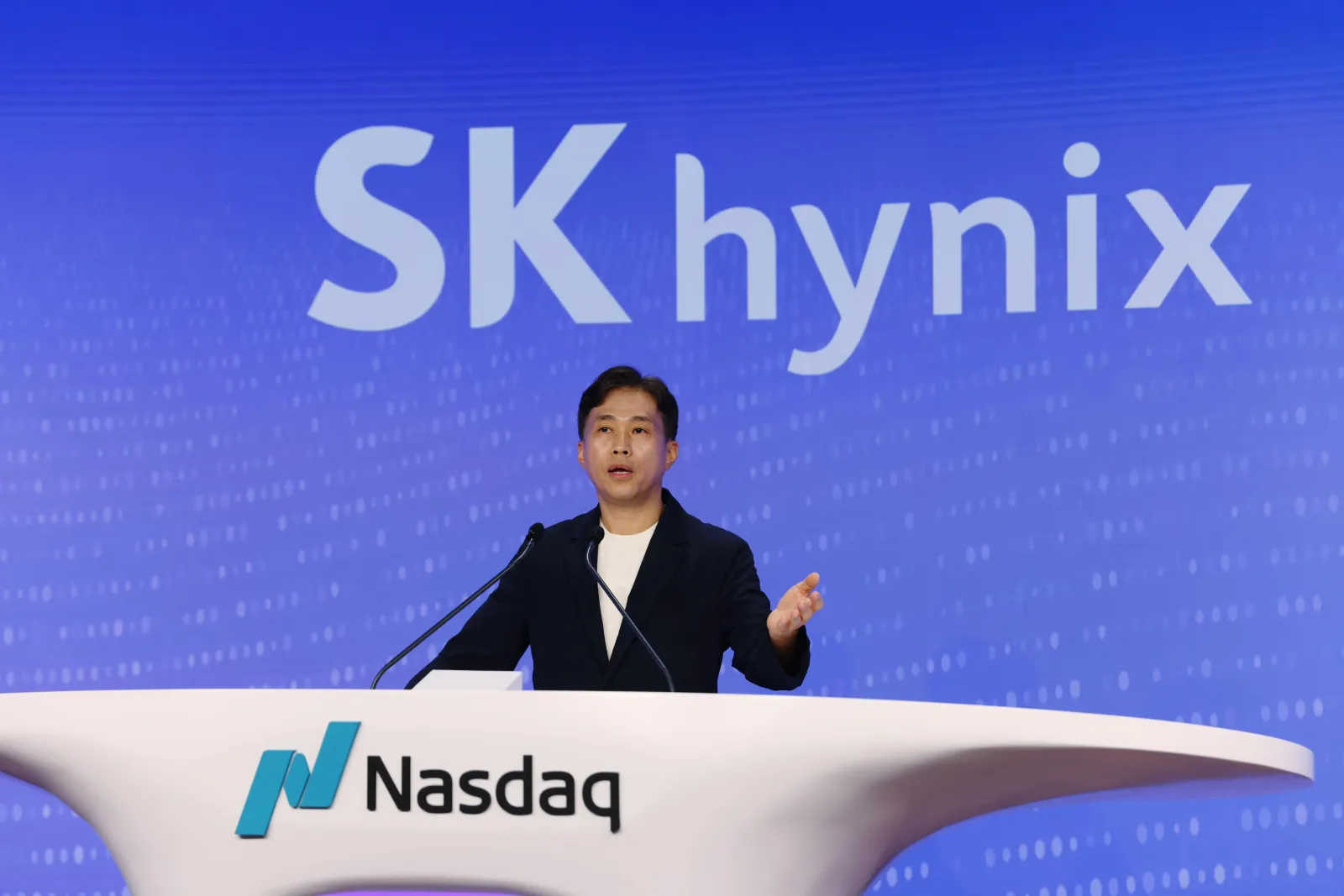
SK Hynix opens at $170, raises $26.5B, and tops foreign IPO records
In Friday's Wall Street debut, SK Hynix turns AI RAM demand into a $26.5B fundraising moment that rewrites comps.