
Citic Securities earns Fitch A-category rating, breaking China brokerage’s long “ceiling”
Fitch assigns A-minus long-term issuer default ratings with stable outlook to Citic Securities and Citic Securities International.
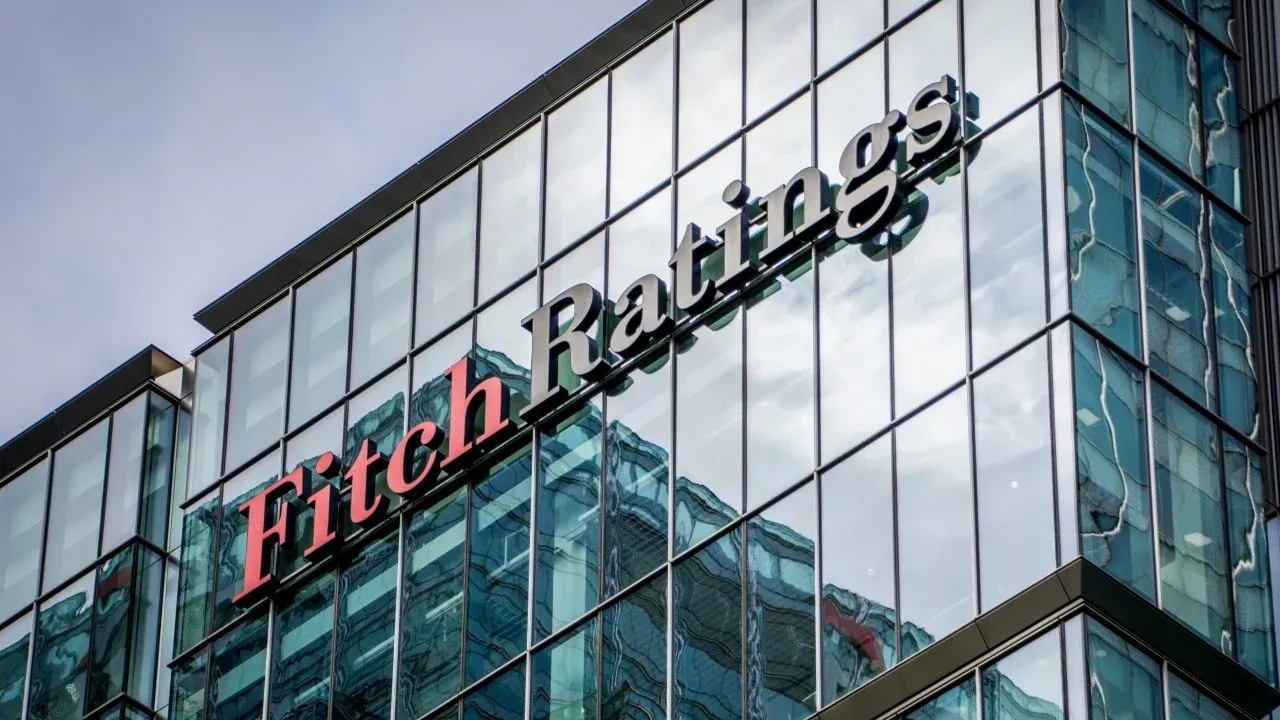
Citic Securities became the first mainland securities firm to enter the A-category under Fitch Ratings’ framework after Fitch assigned an A-minus long-term issuer default rating with a stable outlook to both Citic Securities and Citic Securities International on Tuesday. The upgrade signals how China’s drive for globally competitive investment banking is changing how risk is priced for local giants.
Citic Securities just crossed a threshold that matters more than it sounds: it became the first mainland securities firm to enter Fitch Ratings’ A-category. On Tuesday, Fitch assigned an A-minus long-term issuer default rating with a “stable” outlook to Citic Securities and its Hong Kong-based subsidiary, Citic Securities International.
For executives, boards, and investors, the immediate takeaway is simple. When one of the world’s three major ratings agencies moves a major Chinese brokerage into the A-category, it changes the benchmark others will try to beat. It also upgrades the credibility of Citic Securities’ risk profile in markets where international counterparties and issuers often lean heavily on ratings as shorthand for stability.
This matters in the context of how Chinese brokerage groups have been evolving. The article frames Citic Securities as China’s most profitable brokerage, and until recently as its largest by assets. That combination tends to put a firm at the center of regulatory attention and industry expectations: it is not just competing for customers, it is being used as a test case for whether mainland financial institutions can meet standards that travel well across borders.
Fitch is one of the world’s three major ratings agencies. Under its framework, “A-category” is not a marketing label. It is a risk classification that helps investors compare issuers across countries and business models. Fitch’s choice to assign an A-minus long-term issuer default rating with a stable outlook to both the mainland parent and the Hong Kong subsidiary suggests the rating logic is meant to hold at both levels of the corporate structure, not just within one local jurisdiction.
There is also a second-order message hidden in the specific scope of Fitch’s assignment. Citic Securities’ Hong Kong-based subsidiary, Citic Securities International, was included alongside the mainland entity. That alignment matters because Hong Kong is where many mainland firms look to interface with global capital markets. If a rating action cleanly spans the parent and the cross-border unit, it reduces friction for counterparties that want consistent signals. In practice, that can affect how a brokerage is perceived when it seeks funding, engages with international counterparties, or supports capital markets activities where credibility and risk tolerance are continuously negotiated.
The article positions this milestone as part of China’s efforts to build globally competitive investment banks. This is where the “ceiling” idea becomes real. If a mainland brokerage has historically been kept below an A-category ceiling in Fitch’s framework, that implies something about how international rating standards and local market conditions have interacted. When Citic breaks through, it sets a new reference point that other firms can treat as both proof of feasibility and a competitive target. Boards do not need to be told that benchmarks become operating pressure.
For decision-makers inside other brokerages, the implications are immediate even before any new business is signed. Ratings influence how risk is priced, how counterparties assess exposure, and how capital planning is discussed. A stable outlook is especially relevant for boards because it implies Fitch does not currently see an imminent deterioration risk that would force a reassessment. That can give management a window to execute strategy without the added uncertainty that rating volatility creates.
And for investors watching the sector, the story is not only about Citic Securities getting a better label. It is about what the rating outcome says about the direction of travel. The article’s framing ties Citic’s milestone to broader structural change in China’s push toward globally competitive investment banking. In other words, this is a marker on a scoreboard that matters for the entire industry, not a one-off trophy for a single firm.
Ultimately, the strategic stake is this: if Citic Securities can reach the A-category with an A-minus long-term issuer default rating and a stable outlook, peers will feel the gravitational pull toward the same target. For executives and boards across Chinese brokerages, the question becomes how to replicate the conditions that Fitch found acceptable. The rating action does not just reward past performance. It resets expectations about what “globally competitive” looks like in the language that international markets actually use.
This story's Key Insights and Take-aways are locked.
Create a free account to unlock Executive Actions for one credit.
Register to UnlockAlways free for Executives Club members. Join the Club
More in Business

SpaceX IPO: Wedbush calls a Tesla merger “holy grail,” Morningstar pegs $63 fair value
Trading starts June 12 at $135, but analysts are split over a $72-per-share “option premium” on orbital AI dreams.

Microsoft SkillOpt upgrades AI agent skills without changing model weights
Open-source framework turns markdown skill files into optimizable objects, boosting accuracy while keeping frozen model parameters untouched.

Britain’s regulator greenlights Novo Nordisk’s weight-loss pill on Thursday, needle-free win
Approval by Britain’s medicines regulator adds a new oral option and strengthens Novo Nordisk’s early lead versus Eli Lilly.