

Clacton byelection fallout: over half rate Farage and Reform “very sleazy”
What the latest polling signals for Andy Burnham’s early PM challenges, from Westminster auditions to Manchester power.
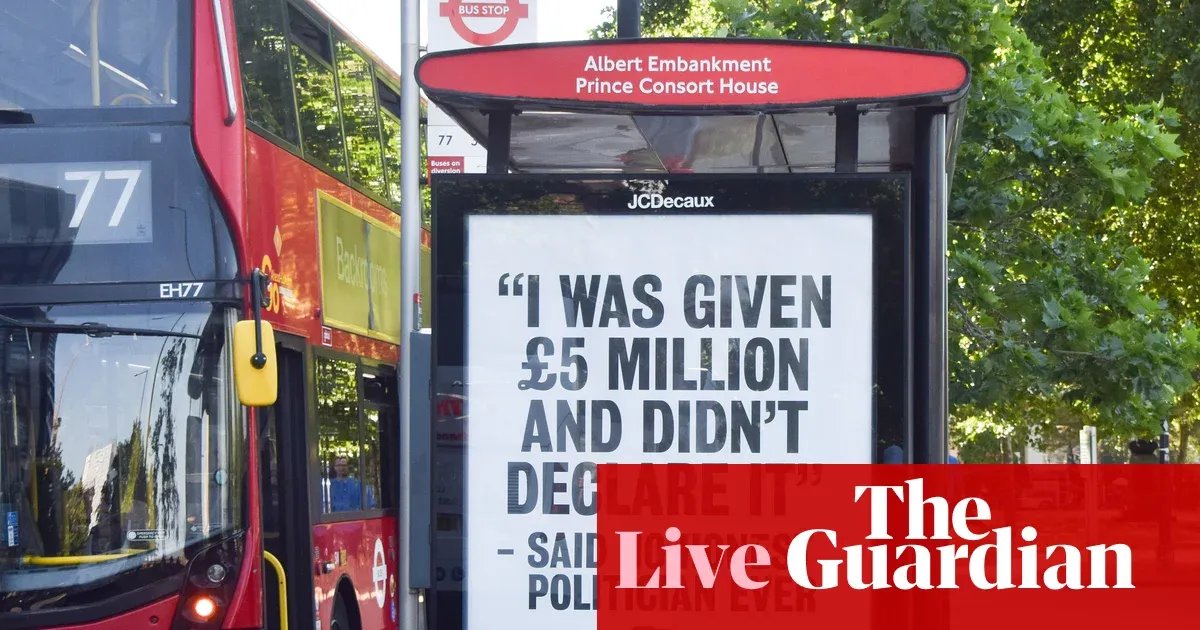
A polling expert says more than half of voters view Nigel Farage and Reform as “very sleazy”, adding to Andy Burnham’s early political headwinds. At the same time, reports say Burnham is considering a deputy PM role based in Manchester, while cabinet reshuffling and international contingencies are already on the radar.
More than half of voters view Nigel Farage and Reform as “very sleazy”, according to a polling expert cited in coverage tied to the Clacton byelection called for 13 August. That is not just a bad soundbite for Reform. It is a signal about how voters are framing a party and its leader, and it sets a tougher backdrop for any incoming government that needs to consolidate support fast.
For Andy Burnham, who is positioned as becoming PM in the near term, the negative perception is one acute challenge. The important part for decision-makers is that this kind of sentiment tends to compress timelines: governments cannot assume neutral conditions while they set policy priorities, they have to deal with political optics and contestation early, before momentum can stabilize. In other words, even if Burnham’s agenda is coherent on paper, the public narrative is already crowded.
The political calendar is also tightening. The Clacton byelection has nomination windows and registration deadlines that force parties to mobilize quickly. Potential candidates will have four days, from Tuesday 14 July to Friday 17 July at 4pm, to submit their nominations. Residents not already on the electoral register have until 28 July to apply to vote in time for the byelection, and until 5pm the following day, 29 July, to apply for a postal or postal proxy vote. When you see deadlines like this, it matters because campaigns become operational machines. Even slow-moving strategy gets pulled into the schedule.
At the same time, there are reports that Burnham is already thinking about how to run power differently. The Financial Times reports that Burnham is considering having a deputy PM based in Manchester running his No 10 North. The deputy Labour leader, Lucy Powell, is described as well placed to get the job. Burnham is expected to spend several days a month in Number 10 North, and Caroline Simpson, chief executive of the Greater Manchester Combined Authority, has been lined up to run the new office. The transition team has also raised the idea that the new unit could be given political direction by the next deputy prime minister, who would be based in Manchester, according to people close to the situation.
This is a classic governance incentive problem in new-administration form. Central departments in Westminster often win by default because they are physically close to the levers of control. Moving a key role like deputy PM to Manchester changes the coordination map. It creates a second center of gravity. And it forces the question of what gets decided where: which issues get elevated to the top, which get handled locally, and how fast the government can respond when the story breaks outside London. For executives who follow public policy implementation, this matters because cabinet process and staffing decisions determine execution speed just as much as legislation does.
Burnham’s team is also being told to prepare for immediate external shocks. John Bew, a former No 10 foreign policy adviser, told The Times that Burnham could face an international crisis within weeks of taking office. Bew said there’s a high likelihood of a series of quite challenging contingencies, including what he described as a horizontal or vertical escalation from Putin over the course of this summer and beyond, because the war in Ukraine is not going well for him. That framing is explicitly about timing, not just risk. When the first weeks of a new government overlap with heightened international volatility, every domestic reshuffle becomes harder, because the margin for error shrinks.
Even inside Westminster, the ground is shifting. Cabinet auditions continue across Westminster, and Business Secretary Peter Kyle is quoted by the Guardian saying, “I want to stay, I’ll just stay where I am.” He also declared Britain needs “Manchesterism.” In a separate intervention, David Miliband used his foreign policy speech last night to restate his support for electoral reform and back a Burnham-style transfer of power out of Westminster. Miliband had previously backed the Alternative Vote at the 2011 referendum while still an MP. Also in the foreign affairs orbit, Yvette Cooper revealed to Chatham House that she had spoken to Andy Burnham before heading to NATO, meaning she’s already giving him foreign affairs advice.
Zoom out for peers who care about governance capacity, not just headlines: this is a convergence of three pressures. First, the public narrative is already hostile to Reform and its leader, with more than half seeing them as “very sleazy.” Second, the institutional shape of the government is being debated now, with a potential Manchester-based deputy PM and a No 10 North office staffed with Caroline Simpson. Third, foreign policy risk is being framed as time-bound, with Bew suggesting contingencies within weeks. If Burnham gets the internal architecture right, he can spend less time firefighting and more time executing. If he gets it wrong, the political clock, the execution map, and the international calendar all punish the same weakness at once.
This story's Key Insights and Take-aways are locked.
Create a free account to unlock Executive Actions for one credit.
Register to UnlockAlways free for Executives Club members. Join the Club
More in Politics

Glacial collapse, not rain, killed 180 in Nepal's Himalayan flood
The Himalaya's extreme geography hid the true cause of Nepal's catastrophic flood, a glacial collapse that turned a geological battleground into a mass-casualty zone.

Iran’s Esmail Baghaei says Oman talks start shipping via Hormuz, not US talks yet
Temporary route plans with Oman aim to restart commerce while Tehran says Washington dialogue is not on the table.

Standards watchdog opens probe into Reform UK deputy leader Richard Tice over interests
The parliamentary standards commissioner says it began an investigation on 28 July into a possible undeclared interest.