

Cliff Bleszinski blames ego for LawBreakers failure, says “People are loyal to the game.”
The Gears of War co-creator says brand loyalty was overstated, incentives were misaligned, and “paper cuts” killed the shooter.

Cliff Bleszinski, co-founder at Boss Key and creator of Gears of War, says ego and incentive design helped sink LawBreakers. In an 80.lv interview, he argues publishing priorities and internal engagement decisions failed to align everyone around making the next big thing.
LawBreakers launched in 2017 to plenty of praise, then crashed commercially and was shut down by developer Boss Key just a year after release. In a recent interview with 80.lv, Cliff Bleszinski said part of the failure was not only strategy or execution, but ego. Specifically, he described how he wanted it to be “my show,” and argued that this belief led him to misunderstand what players actually stay loyal to.
Bleszinski laid out the core pivot in plain terms: “I wanted it to be my show, and that was the first step of my ego creeping in right there.” He then explained his mistake about loyalty. He believed there was “brand loyalty from the people who knew who I was,” but the outcome was different: “it turns out people are loyal to the game, but they're not necessarily loyal to the person.” That sounds obvious once you hear it, but it is exactly the kind of internal bias that can distort leadership decisions. If you assume your personal brand can substitute for product-market fit and live-service momentum, you can end up overinvesting in the wrong levers.
That matters because LawBreakers was not a tiny experiment. It was a major shooter with clear expectations around player traction, and it lived or died on whether it could build a community strong enough to sustain ongoing development. Bleszinski’s framing is a reminder that games are an odd hybrid of consumer product and media franchise. Players often do form attachment, but it is usually attachment to the experience, the identity of the game itself, and the social layer around it, not necessarily the individual behind the spotlight. When leaders over-index on personal authorship, they can misread what the market rewards.
Bleszinski also pointed directly at the incentive structure created by Boss Key’s publishing deal with Nexon. He said the deal had the wrong priorities, with Boss Key retaining the rights to its IP, but that the publishing side was not sufficiently incentivized to push the game as a “next big thing.” As he recalled it, “When the deal is so good for one side, the other side isn't as incentivized … they're not going to make it the next big thing because they're really not going to see that much of the profit.” In exec terms, this is a classic misalignment problem: even if one party protects long-term upside through IP retention, the other party’s short-term motivation to market, scale, and take risks can shrink if the economics do not reward them for intensity.
He adds more causes under the umbrella he calls “death by 1,000 paper cuts,” a phrase that is less dramatic than “one fatal mistake,” but often more accurate in product failures. For example, he said LawBreakers’ art could have stood out more, and he argued that an earlier launch on Xbox would have brought over more Gears of War fans, which he knew from his own history with that audience. He also connected personal capacity and leadership presence to outcomes, citing that his alcoholism played a role. Finally, he described feeling less involved than a lead should be, saying he would go home while others stayed late.
Putting those pieces together, the story reads like a multi-variable collapse, where the product, marketing timing, internal leadership culture, and business incentives all drifted off alignment. That is important for founders and investors, because it challenges the lazy takeaway that “the game wasn’t good enough.” Bleszinski repeatedly circles back to decisions and conditions around the game, not only the game design. In other words, LawBreakers’ failure can be understood as an ecosystem problem. Even a game that is “great” can fail if the incentives do not pull in the same direction, if launch timing misses key audience overlap, or if the team’s leadership bandwidth is inconsistent.
Second-order implications are especially relevant for anyone running or funding live-service-adjacent projects. Publishing deals shape who does what after launch: whether there is urgency around growth, how aggressively the title is positioned, and whether the publisher is willing to fund experiments that extend the runway. Likewise, executive engagement is not a vanity metric. If a lead is repeatedly less present when teams are working late, you can get slower feedback loops, softer prioritization, and a culture that normalizes “almost enough.” Bleszinski’s mix of ego, incentive misalignment, and “paper cuts” suggests a failure mode boards should watch for before things go off the rails.
Bleszinski ended the interview with a craving to make games again, saying, “At the end of the day, I want to create characters and worlds,” and adding that he wants to make stuff people will cosplay and even get tattooed. That is not a business plan, but it does explain why this story still matters. The same founder energy that built careers can also create blind spots, and the difference between a hit and a shutdown can come down to who the organization listens to, what incentives reward, and whether leaders treat the product and the audience as the center, not the ego of the author.
This story's Key Insights and Take-aways are locked.
Create a free account to unlock Executive Actions for one credit.
Register to UnlockAlways free for Executives Club members. Join the Club
More in Business

Uber buys Delivery Hero for nearly $15B, vaulting to top food delivery outside China
The deal doubles Uber's dual-services footprint and pushes a ride-and-eats bundling play into 50 more markets.

Epic and Google drop settlement bid, forcing rival Android app stores by July 22
Google told the court it is ready to carry third-party app stores starting Wednesday, July 22.
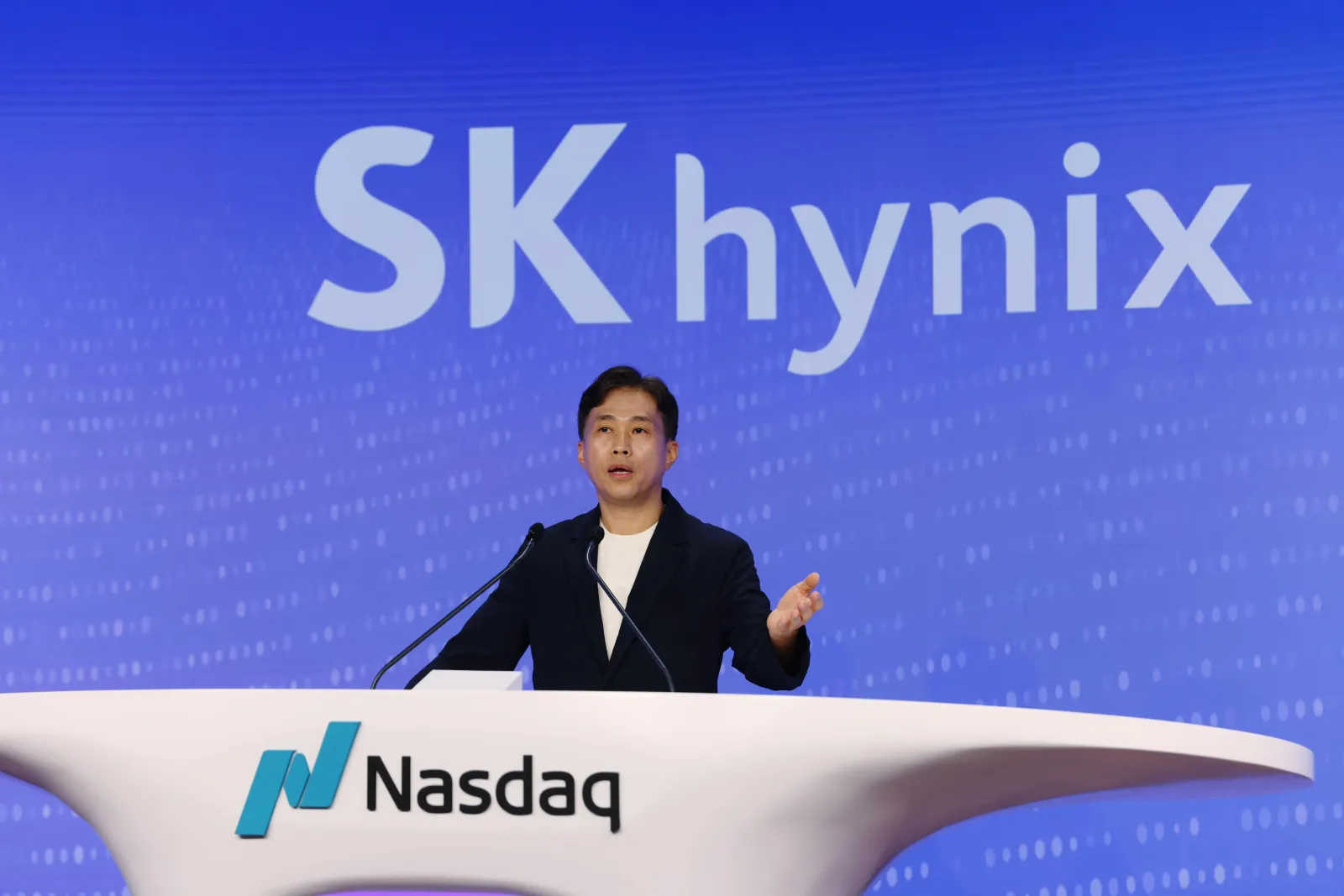
SK Hynix opens at $170, raises $26.5B, and tops foreign IPO records
In Friday's Wall Street debut, SK Hynix turns AI RAM demand into a $26.5B fundraising moment that rewrites comps.