

Cliff Bleszinski says LawBreakers launch was heartbreaking, then powered Hadestown
From CEO fallout after LawBreakers to redemption via a Tony-winning Broadway run, Bleszinski rebuilt his creative life.
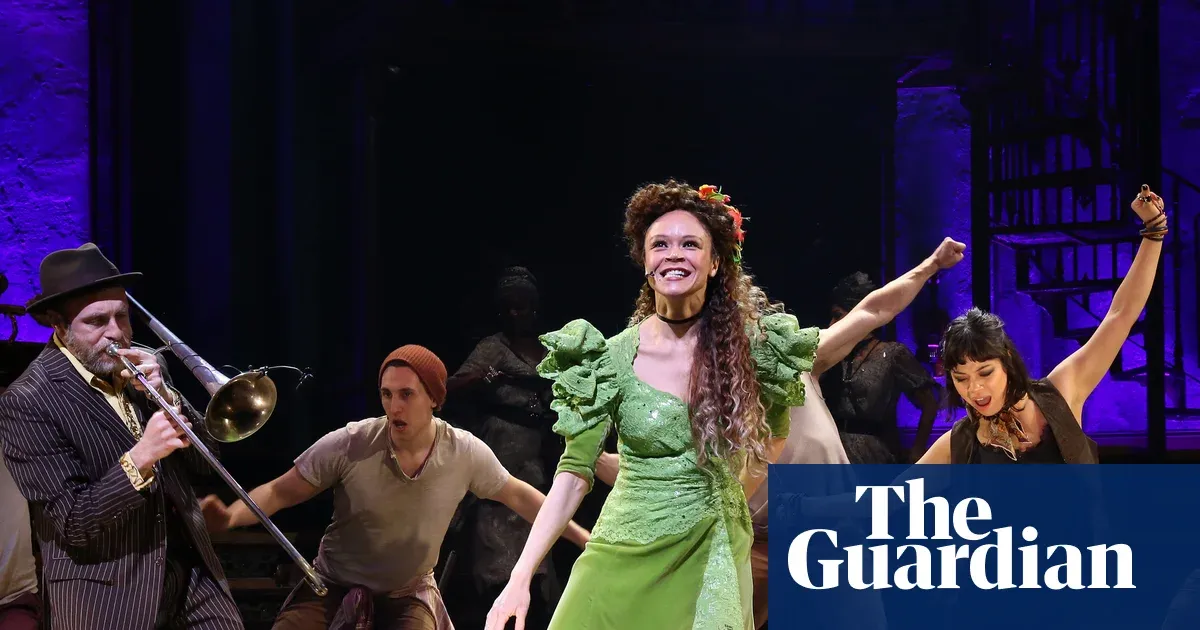
Cliff Bleszinski, the CEO of Boss Key Productions and the former creative figurehead behind Gears of War, recalls the launch of LawBreakers in 2017 as emotionally brutal. He later produced Hadestown, using the Tony-winning Broadway musical as his bounce-back after studio closure.
Cliff Bleszinski, Tony-winning Broadway musical producer and former “CliffyB” behind Gears of War, calls the launch of LawBreakers “utterly heartbreaking,” admitting it “certainly didn’t help with my drinking.” The arena first-person shooter, released in 2017, was his first project as CEO of his own studio, Boss Key Productions. In other words: this was not a gentle learning experience. It was a personal reckoning, in public, with a reputation riding on it.
Bleszinski frames the moment as a collision between ambition and reality. He says he “retired from Epic,” then “missed making neat stuff,” and his agent pushed him toward starting his own studio. The agent pointed to what Hideo Kojima was doing, and Bleszinski decided, essentially, “OK, if Kojima can do it, so can I.” He even labels the move: “Such hubris, right?” If you are an executive, operator, or investor, that is the part worth staring at. The story is not just about a game. It is about what happens when you translate creative drive into an organization, then try to win in a market where outcomes are brutally probabilistic.
LawBreakers matters because it sits right where modern game economics get tight: arena shooter competition, live-player expectations, and the high cost of iterating after launch. Boss Key Productions had to carry a lot of risk on its shoulders as a studio with one flagship bet. The source does not spell out every metric, but it does connect the emotional arc to the business arc. Bleszinski was a celebrity creator, then became a CEO. That shift is where many founders break: talent does not automatically become operational leverage.
The second-order effect is that online culture can turn ordinary failure into a kind of reputational pressure cooker. The source explicitly mentions “the schadenfreude of gamers online,” and that matters because it changes the incentives for everyone around the project. When audiences treat your launch like a sport, internal teams feel it. Boards and investors feel it. Even if the operational problems are the true driver, the narrative becomes its own factor. In this case, Bleszinski describes the personal fallout plainly: heartbreak, then drinking. Whether you agree with his self-assessment or not, that line is a reminder that mental health is not a side quest for executives. It is part of the system.
So how does someone bounce back from a studio closure story that includes that kind of public emotional damage? In Bleszinski’s telling, the pivot is creativity, but also control. Before LawBreakers, he was behind “hugely successful sci-fi shooter series” Gears of War. “When he was known to millions of gamers as CliffyB,” the source says. After retiring from Epic and missing the work, he tried to re-enter the fray with his own studio. The redemption, instead of staying inside shooters, comes through Hadestown, a Tony-winning Broadway musical. That is an unusual conversion of brand and production muscle: from interactive entertainment to stage storytelling.
The choice to produce Hadestown is interesting in an executive way because it is a different risk profile. Broadway is not “easy,” but it is a different kind of uncertainty. Games are experiments where engagement determines the economics in near real time. Theater is production plus runway plus audience reception, with established structures and, importantly, different regulatory and rights frameworks. The source does not give details on those frameworks, but the bigger point for decision-makers is that your next move does not have to be more of the same. Sometimes the rebound is a re-platform, not a restart.
There is also a governance lesson hiding in the background of his “if Kojima can do it” logic. He describes the thought process as hubristic. Many founder narratives are sanitized versions of that same impulse. But Bleszinski’s quote does the opposite. He underlines that copying a comparable creator is not the same as replicating the conditions that made the original work. Studio creation is not just ideation. It is hiring, pipeline, art direction, deadlines, marketing allocation, and the ugly work of making uncertain things ship.
For peers in similar roles, the stake is clear. If you are a creative leader stepping into CEO mode, your emotional tolerance and strategic patience become part of your competitive advantage or liability. Bleszinski’s story is a reminder that a “first project as CEO” can define years. And it also suggests that redemption can come, even after a brutal launch and a studio closure, if you can channel the same drive into a venue where your strengths carry over. He felt “utterly heartbreaking” about LawBreakers. Then he went on to produce Hadestown, a Tony-winning Broadway musical, turning the page with real momentum rather than denial.
This story's Key Insights and Take-aways are locked.
Create a free account to unlock Executive Actions for one credit.
Register to UnlockAlways free for Executives Club members. Join the Club
More in Entertainment
GTA 6 Standard vs Ultimate vs Physical: $79.99 jumps to $99.99 for extra vice-city goodies
Here is exactly what you get in each GTA 6 version, including the free Vintage Vice City Pack and what pre-orders unlock.
Wardogs CEO Joe Brammer says “cash is the best anticheat”
Bulkhead’s chief explains why paying out smartly can expose abnormal behavior in Wardogs’ anti-cheat strategy.
Peter Safran calls Supergirl’s box office weak, not a DC Studios panic
DC’s co-CEO acknowledges disappointment for the newest DC Universe entry, but says the broader plan stays intact.