
Climate change could shrink malaria by cooking mosquitoes in West and Central Africa
Warming may reduce mosquito survival in some regions, while shifting transmission pressure to places that have been less affected.
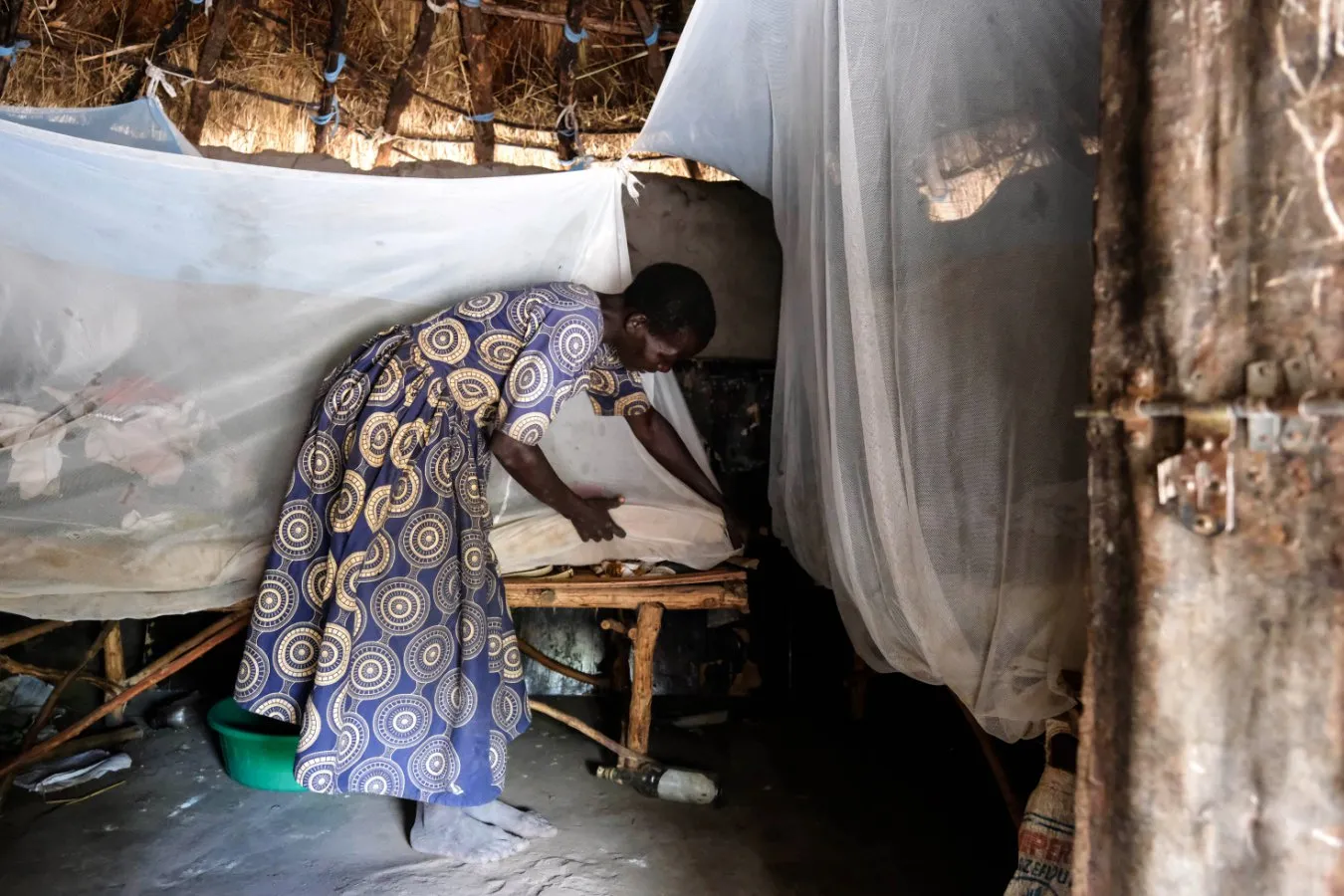
New Scientist reports that global warming could make parts of West and Central Africa too hot for malaria-carrying mosquitoes to survive. That outcome matters for decision-makers because it may not eliminate malaria overall, but re-allocate where the public health fight becomes hardest.
Global warming may make it too hot for malaria-carrying mosquitoes to survive in parts of Africa, and that could accelerate malaria’s decline in West and Central Africa. The twist, highlighted by New Scientist, is that this is not a clean win. Instead, it could shift the problem to areas that are currently less affected.
That “may” is doing a lot of work, but the direction of travel is clear: heat can be hostile to the insects that spread malaria. Malaria transmission depends on mosquitoes, and when conditions become unfavorable for mosquito survival, the chain breaks. In West and Central Africa, warming could push the environment toward thresholds that mosquitoes cannot tolerate. For leaders and planners, the immediate takeaway is that climate change may reshape malaria geography, compressing risk in some places while expanding it in others.
This is where public health meets the real-world mechanics of how incentives and systems are built. Malaria control is not just a science problem, it is an operations problem. Prevention and treatment require consistent funding, staffing, diagnostics, and supply chains. If malaria burden shifts geographically, the investment model has to shift too. A region that expects to keep scaling down programs might face a surge if mosquitoes and transmission move elsewhere. Meanwhile, areas that have not dealt with malaria as intensely could become new front lines, needing capabilities faster than bureaucratic timelines usually allow.
There is also a second-order implication for how governments and partners think about risk. Many health strategies are built on historical patterns: where malaria was yesterday largely determines where resources go today. Climate-driven redistribution undermines that assumption. The likely outcome described by New Scientist is a spatial reshuffle, not a universal collapse. That means decision-makers must plan for portfolio thinking in health, similar to how investors hedge: diversify coverage, keep surge capacity, and avoid over-optimizing for one geography.
For boards, funders, and executives overseeing health-adjacent programs, the policy question becomes: how do you fund adaptability? If warming reduces mosquito survival in some regions, the temptation is to reallocate budgets away from those areas. But New Scientist’s warning is that climate change could also shift the problem to less affected areas. In practice, that means withdrawing too fast from current hotspots may be a mistake if new hotspots emerge quickly or if transmission rebounds where mosquitoes can persist. The operational answer is to tie funding to surveillance and early warning, not just to current incidence.
Regulatory and program frameworks matter here because they define who can act, how quickly, and with what guardrails. Public health agencies typically operate under multi-year plans, procurement rules, and reporting requirements. Climate-related shifts in disease patterns stress these structures. If transmission moves, regulatory approvals for interventions, distribution of bed nets, deployment of diagnostics, and treatment access need to follow. That can require coordination across ministries, donors, and local implementers, with clear triggers for when reallocations happen.
Strategically, the stakes for decision-makers are simple: malaria control is too important to treat as a one-way trend. New Scientist frames global warming as a potential factor that reduces mosquito survival in some parts of Africa while relocating the burden. The strategic takeaway for peers in similar roles is to plan for a dynamic map of risk. Your mission is not only to reduce malaria where it is today, but to keep the system ready for where it moves next.
In other words, this is not a story of malaria getting “solved” by weather. It is a story of transmission pressure shifting as temperature conditions change. If you are responsible for planning public health programs, managing funding, or overseeing implementation partnerships, your job is to design for relocation: maintain surveillance, support rapid scaling where risk increases, and treat West and Central Africa’s potential cooling advantage as conditional rather than permanent.
This story's Key Insights and Take-aways are locked.
Create a free account to unlock Executive Actions for one credit.
Register to UnlockAlways free for Executives Club members. Join the Club
More in Science

Columnaris hits Brazilian fish farms as Flavobacterium appears for first time
Brazil becomes the new battleground for columnaris disease, expanding where a serious fish pathogen can show up.
Africa’s ghost lineage predates modern humans leaving, adding a third DNA contributor
A new “ghost lineage” in Africa suggests we interbred before modern humans left, reshaping the ancestry story.

AI finds 7 new quasar lens candidates in DESI data, published July 22
The seven gravitational lens systems could let astronomers study growing supermassive black holes without being blinded by quasars.