

Comcast splits to shield broadband: Brian L. Roberts’ NBCUniversal spin targets streaming pressure
Comcast will separate into two public companies in about a year, keeping the Comcast name for broadband while spinning NBCUniversal and Sky.

Comcast announced plans to split into two publicly traded companies, separating its NBCUniversal and Sky broadcasting businesses from its broadband and wireless operations. The move, led by CEO Brian L. Roberts, is designed to ring-fence the cash-generating network business as media faces intensifying consolidation and streaming competition.
Comcast has announced plans to separate itself into two publicly traded companies, and the person driving the vision is CEO Brian L. Roberts. Under the restructuring, Comcast will spin off its NBCUniversal and Sky broadcasting arms into a new media and entertainment business called “NBCUniversal,” while its broadband and wireless operations will retain the “Comcast” company name. The company says this split is expected to take approximately a year, and Comcast shareholders will own shares in both Comcast and NBCUniversal once the separation is complete.
So what is the real point of the knife? Comcast is trying to protect its most reliable asset, the profitable broadband and wireless brand that still carries the “Comcast” identity, from the growing headwinds squeezing traditional media. Comcast’s media and entertainment segment, now collectively named “NBCUniversal,” faces increasing pressure from industry consolidation and streaming rivals. In other words, the company is drawing a hard line between a business that tends to benefit from network economics and a business that is getting dragged into a tougher content and distribution fight.
This is not a random breakup for breakup’s sake. Media conglomerates have spent years trying to balance two different worlds inside one corporate shell: steady distribution and infrastructure on one side, and more volatile entertainment content and channel economics on the other. When the second world starts deteriorating faster than the first can offset it, markets and boards tend to get impatient. Even when the parent company is fundamentally profitable, investors often discount the media parts as if they were optional or temporary. A structural separation can be a way to stop that “sum-of-the-parts” drag.
Comcast is explicitly framing its split as a defensive move. By having the broadband and wireless business keep the Comcast name, it signals that the capital markets should view that unit as the continuing core. Meanwhile, the spun-off “NBCUniversal” becomes a separately traded entity, which can matter for everything from how investors price risk to how management targets performance. In the telecom world, cash flows and subscriber bases can look steadier. In the media and entertainment world, streaming rivals and consolidation changes the competitive terrain quickly, and the path to profitability can depend on content deals, audience behavior, and distribution leverage.
The timing also matters. The separation is expected to take approximately a year, which is long enough to plan the corporate mechanics, align governance, and prepare investor communications, but short enough to act while the competitive pressure is still actively reshaping the industry. From a board perspective, that means the decision is not just about today’s earnings. It is about whether the company can repackage its story to the market before the market re-evaluates the value of its assets again.
Governance is the other big chessboard. The source notes that current Comcast CEO Brian L. Roberts will be “actively i...” which indicates he is intended to play an active role through the transition. When an organization separates into two public companies, boards often have to manage more than legal structure. They have to decide how leadership incentives align with the future of each unit. Keeping Roberts involved can also be interpreted as continuity, signaling to investors and employees that the parent business will not treat the separation as a fire drill.
There is also an ownership and market-structure angle. Comcast shareholders will own shares in both Comcast and NBCUniversal after completion. That means the breakup is not a sale to a single buyer, and it is not a carve-out that simply hands control away. It is a redistribution of capital-market exposure. Investors who previously held one stock will, after the split, hold two. Some will prefer the more network-like profile of broadband and wireless, others will want direct exposure to media and entertainment. Either way, the market gets to decide the valuation for each piece independently, rather than through a blended conglomerate discount.
If you zoom out, Comcast is effectively betting that the future belongs to companies that can explain their competitive advantage clearly. Streaming, consolidation, and the pace of audience migration have made it harder for broad media portfolios to grow without difficult tradeoffs. By contrast, broadband and wireless businesses can often point to durable distribution infrastructure and ongoing connectivity demand. The strategic stake for peers is obvious: if Comcast can reframe and isolate its media pressure, other conglomerates may feel pressure to do the same, especially when investors start treating media risk as something that belongs in a separate bucket.
For decision-makers watching from other boards and C-suites, the takeaway is that structural separation is becoming a governance tool, not just a corporate event. Comcast is using the split to try to keep its profitable network business insulated, while giving the media and entertainment arm its own public-market identity. That could influence how capital is allocated, how talent is incentivized, and how quickly each company can respond to streaming rivals and consolidation dynamics. In a market that rewards focus and clarity, Comcast is choosing to separate what it can, and force investors to see the difference.
This story's Key Insights and Take-aways are locked.
Create a free account to unlock Executive Actions for one credit.
Register to UnlockAlways free for Executives Club members. Join the Club
More in Business
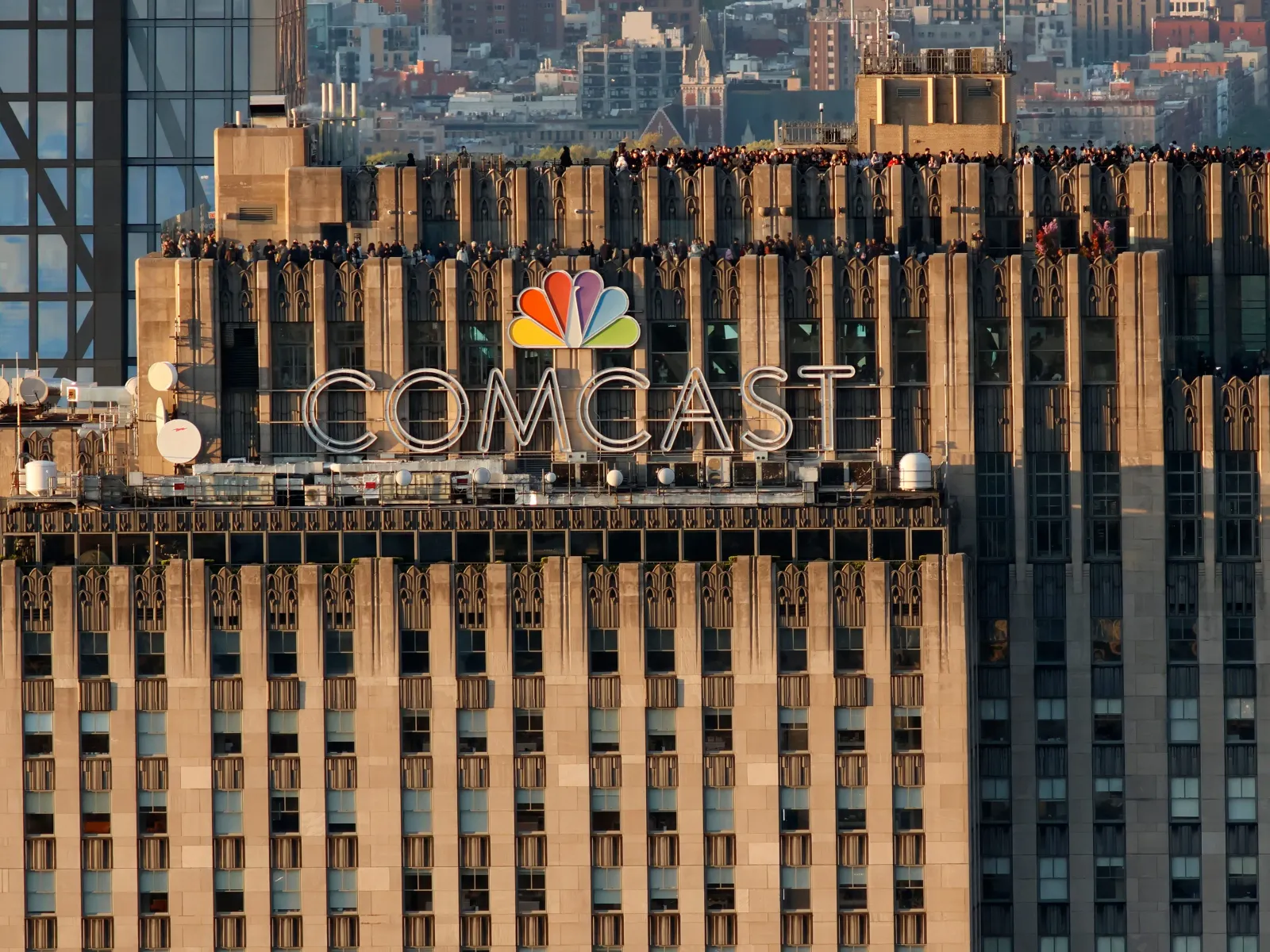
Comcast shares jump 25% as it plans to split NBCUniversal and Sky
The tax-free spin-off could reshape focus, funding, and competition across media and tech for years.

Bungie cuts most Destiny 2 staff as Sony says Marathon still matters
Herman Hulst confirms layoffs affecting most Destiny and some Marathon teams after Bungie admits Destiny fell short.

SK Hynix jumps 11% after seeking up to $29.4B in Nasdaq listing
The chip giant filed for a Nasdaq listing plan that could raise $29.4 billion, instantly reshaping investor expectations.