

Commodore’s $500 Sailfish flip phone deletes email, web, and social media on purpose
Callback launches with 48MP camera and privacy claims, betting nostalgia and screen-time discipline beat app addiction.
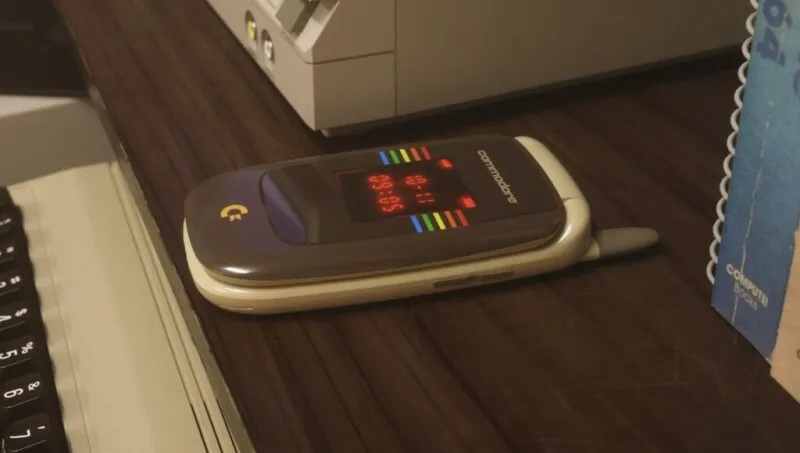
Commodore is launching Callback, a $500 flip handset built with Finnish company Jolla and its Sailfish OS, and it ships without email, social media, web browsing, or most smartphone essentials. For decision-makers, it is a high-visibility stress test of whether minimalist, privacy-forward phones can compete for mindshare and purchase intent.
Commodore is back in the phone business with a $500 flip handset called Callback, and it comes with a headline-grabbing design choice: it ships without email, social media, a web browser, or most of the things people buy smartphones to use. The company unveiled the device this week, positioning it as a privacy-focused antidote to doomscrolling. In other words, this is not a “lite smartphone.” It is a deliberate attempt to remove entire categories of modern mobile behavior from day one.
The bet is that buyers will trade convenience for control. Callback also removes workplace chat apps and AI assistants, while bringing back physical controls and T9-style texting. Instead of chasing app count, Commodore leans into a curated experience: a flip phone form factor, a 48 MP Sony camera, FM radio, HD audio support, a selection of Commodore-themed games, and what the company describes as enough Android compatibility to run “99 percent” of Android applications through Sailfish OS’s compatibility layer. That combination is the core tension of the product. It tries to feel familiar enough for mainstream utility, but strict enough to avoid the typical smartphone trap of infinite feeds, sign-ins, and data trails.
The engineering and ecosystem story behind Callback matters because Sailfish OS is not an off-the-shelf UI wrapper. The phone is built in partnership with Jolla, a Finnish outfit whose Sailfish OS traces its roots back to former Nokia engineers. Sailfish OS is Linux-based, and Commodore is effectively outsourcing the operating system foundation to a platform with its own history and philosophy. The practical question for executives and boards is whether Sailfish’s compatibility layer can deliver performance and reliability consumers expect, while still enforcing the “less stuff” experience Commodore is selling.
Then there is the privacy pitch, which is doing real commercial work in this launch. Commodore promises no hidden data collection, no account sign-ins, encrypted storage, and what it describes as a “private not profit” business model. The product’s messaging is trying to sidestep a problem that has become normal in mobile software: accounts, telemetry, and personalization pipelines. In regulatory terms, this is a familiar landscape. Europe and other jurisdictions have made consent, transparency, and data minimization more visible expectations for consumer tech, and phones are a particularly sensitive category because they combine location, contacts, messages, and browsing behavior. Callback’s framing is designed to resonate with that environment, but it also raises a governance question for buyers and enterprise influencers: how does “no hidden data collection” get measured, audited, and maintained over time.
It is also hard to separate this phone from Commodore’s emotional brand engine. Commodore International collapsed in 1994, but the name keeps getting resurrected, bouncing between various owners over the decades. For many tech veterans, the badge still evokes rooms full of beige machines, cassette tape loading screens, SID-chip soundtracks, and hours spent typing programs from magazine listings. That nostalgia is not just decoration. It is part of the go-to-market logic, because it converts a functional limitation into a lifestyle statement: hanging up the phone ends the conversation, you do not live inside it.
If nostalgia were enough on its own, this would be an easy story. But the source also gives a reality check. Privacy-focused minimalist phones have appeared regularly over the past decade, such as Punkt, usually attracting plenty of headlines and relatively few customers compared with the hundreds of millions of mainstream smartphones sold each year. That comparison is important for decision-makers because it suggests the market has attention for the concept, but demand may be constrained unless distribution, usability, and compatibility close the gap. Callback’s five initial versions are a signal that Commodore is exploring multiple entry points, from a $500 BASIC Beige model to a $640 Founders Edition complete with a 24-carat gold Commodore button. In plain terms: the company is trying to sell both discipline and status, and it is testing how much people will pay for the symbol.
So what is the strategic stake here for executives who are not Commodore? Callback is a stress test of whether “privacy and minimalism” can be more than a niche press cycle. It is also a reminder that platform decisions are product decisions. Commodore is betting that deleting email, social media, web browsing, and workplace chat is not merely a limitation, but a differentiation anchored to a buyer psychology that wants fewer inputs and fewer incentives to engage. If it works, it could nudge the broader mobile market toward more controllable experiences. If it does not, it will still clarify something valuable: nostalgia sells feelings, but daily utility and trust decide purchases. For boards weighing investments in hardware, OS partnerships, or new consumer platforms, Callback is an answer with an unusually loud question attached.
This story's Key Insights and Take-aways are locked.
Create a free account to unlock Executive Actions for one credit.
Register to UnlockAlways free for Executives Club members. Join the Club
More in Business

A flaw in PHP just forced governments to pull their own sites offline
European agencies from Belgium to Germany took websites dark to patch a critical weakness in the language behind almost 70% of the web, and the blast radius extends far beyond government portals.

BioWare shuts down, Mass Effect 5 dead after $55B EA buyout
The legendary RPG studio's closure lands months after a $55 billion investment group buyout of EA, raising tough questions for gaming's biggest acquirers.

Musk weighs Tesla-SpaceX mega-merger as boards form review panels
Special committees at both companies will examine a tie-up that could fuse electric vehicles and space launch, forcing a fresh look at governance and valuation.