

Costco CEO Ron Vachris vows the $1.50 hot dog price won't change while he's around
In a March Instagram reassurance, Ron Vachris and past CFOs frame the decades-old deal as core to Costco’s value promise.
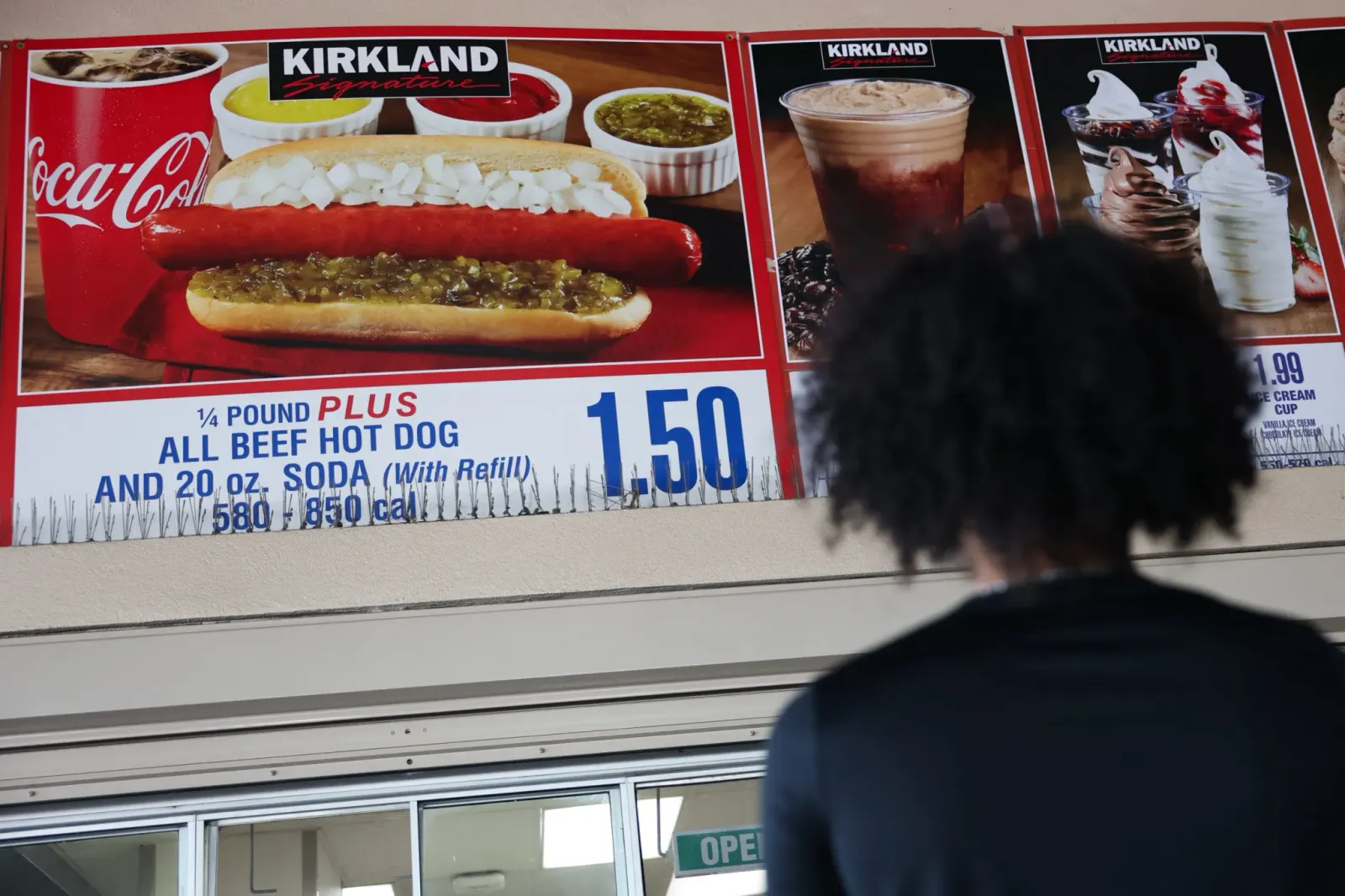
Costco CEO Ron Vachris said in a March Instagram video that the $1.50 hot dog price will not change as long as he’s around. For decision-makers watching retail margins and consumer stress, Costco is treating a single line item as a strategic, enduring signal.
If you needed proof that Costco still understands consumers, Ron Vachris just delivered it with a sentence: the $1.50 hot dog price will not change as long as he is around. He said it in an Instagram video posted in March, putting a specific, decades-old price point on the record at a moment when households are bracing for new waves of higher costs.
The key detail is also the whole point. Costco’s bargain hot dog and soda combo has been unchanged since 1985, and Vachris’s promise is essentially a public commitment to keeping that anchor fixed. In other words, this is not a “limited-time” promotion or a seasonal stunt. It is a durable offer that Costco can use to reduce friction for shoppers who are feeling squeezed.
Costco is leaning harder into that messaging lately, according to the source, because consumers have more reasons to feel unstable. The past couple of years have brought strain from tariffs, inflation, and the broader high cost of living. In that context, an item that hasn’t budged in 40 years becomes more than a deal. It becomes a symbol of predictability inside a shopping trip where nearly everything else can feel like it’s creeping upward.
This matters because Costco has spent years defending the idea that some of its “member value” economics are foundational. Richard Galanti, who stepped down in 2024 as chief financial officer, told Fortune’s Phil Wahba that both the $1.50 hot dog deal and Costco’s $5 rotisserie chicken are “foundational” to the warehouse chain’s success. Galanti didn’t just discuss it internally. In 2022, he told The Wall Street Journal the $1.50 hot dog was “sacrosanct,” and that its price would stay fixed “forever.” In 2024, Galanti’s successor, Gary Millerchip, echoed the same stance by saying, “I also want to confirm the $1.50 hot dog price is safe.”
So Vachris’s March reassurance fits into a pattern: leadership continuity around one specific value promise. When multiple execs across years keep repeating the same message, it suggests the company is treating the combo as part of the brand’s operating system, not a negotiable marketing line. And it’s not only the hot dog. The source also notes Costco is committed to keeping the soda part of the combo cheap, which matters because the combo’s perceived value depends on both pieces.
There’s also a commercial tightrope here, and Costco’s approach shows it. When Costco’s contract with Coca-Cola was up for renewal a decade ago, the company switched to Pepsi to save on prices. The source adds that Costco is back to serving Coke products now. That sequence matters for executives because it highlights how a “cheap” promise can require supplier and contract strategy, even if the customer-facing price stays constant. The product may look static, but the business work behind it can be anything but.
Now drop that into today’s macro backdrop. The source cites U.S. Consumer Price Index data showing “food away from home” prices rose about 4.1% from December 2024 to December 2025. That means Costco’s unchanged combo sits in a category where other staples and meals are moving. It’s one of the few things many consumers recognize as not inflated by the broader trend.
The story is also framed through a “K-shaped economy,” which is a fancy way of describing a split where spending power diverges by income. A Moody’s analysis of Federal Reserve data, per the source, says lower-income earners have spent only in line with inflation since the pandemic, with real spending growth coming from the top 20%. Moody’s chief economist Mark Zandi wrote in a 2025 report that for the bottom 80%, spending has kept pace with inflation rather than pulling ahead, while the top 20% has done much better. The source adds that spending among top-income consumers grew 4% in November 2025 year-over-year, nearly four times the pace of the lowest-income bracket, according to the Bank of America Institute.
For retailers and restaurant operators, this is the uncomfortable reality: when customers split into “can absorb increases” and “can’t,” value messaging becomes a competitive technology. The source notes other food-industry companies have leaned into deals to hold onto customers. McDonald’s extended its meal deal and launched a “McValue” menu with buy-one-get-one-for-$1 offers. Wendy’s rolled out $4, $6, and $8 mix-and-match value tiers. KFC introduced a $5 offering. Taco Bell launched Cravings Boxes starting at $5. Even Sweetgreen, known for premium prices, began offering $10 loyalty-member bowls, roughly a $6 discount, to stay competitive.
Costco’s contrast is that it does not need to keep swapping limited-time offers to get attention. The company’s signal is the endurance itself. Selling the $1.50 hot dog for 40 years tells shoppers what to expect, which is exactly what consumers struggling with inflation and cost pressure crave: fewer surprises, lower mental load, and a reliable “budget anchor” in the middle of a world that keeps raising the floor.
For executives on boards and in C-suites, the second-order takeaway is clear. Costco is using a single price point as governance: repeated confirmation across CEO and CFO transitions, supplier management behind the scenes, and messaging that gets louder when consumers are stressed. In an era where pricing power often depends on brand and customer willingness to absorb costs, Costco’s approach is to preserve affordability so completely that it becomes part of trust. That is a different kind of strategy, and it is one other operators may feel pressure to imitate, even if they cannot replicate the same economics.
This story's Key Insights and Take-aways are locked.
Create a free account to unlock Executive Actions for one credit.
Register to UnlockAlways free for Executives Club members. Join the Club
More in Business
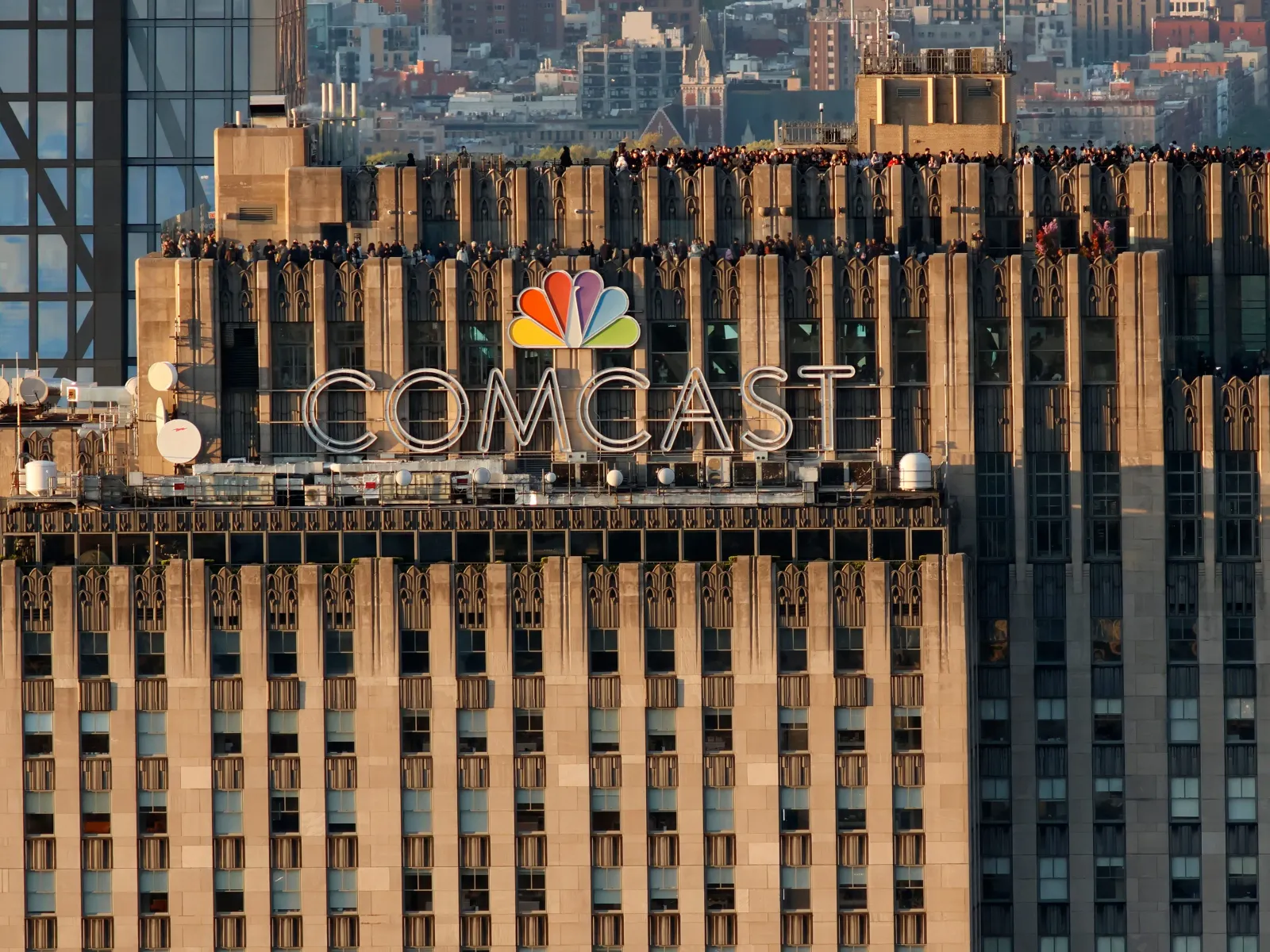
Comcast shares jump 25% as it plans to split NBCUniversal and Sky
The tax-free spin-off could reshape focus, funding, and competition across media and tech for years.

Bungie cuts most Destiny 2 staff as Sony says Marathon still matters
Herman Hulst confirms layoffs affecting most Destiny and some Marathon teams after Bungie admits Destiny fell short.

SK Hynix jumps 11% after seeking up to $29.4B in Nasdaq listing
The chip giant filed for a Nasdaq listing plan that could raise $29.4 billion, instantly reshaping investor expectations.