
Creative's Sound Blaster Katana V2X lets malware spread via USB without touching the PC
A researcher used a Linux tool to probe a Sound Blaster speaker transport and found a route to PC compromise.
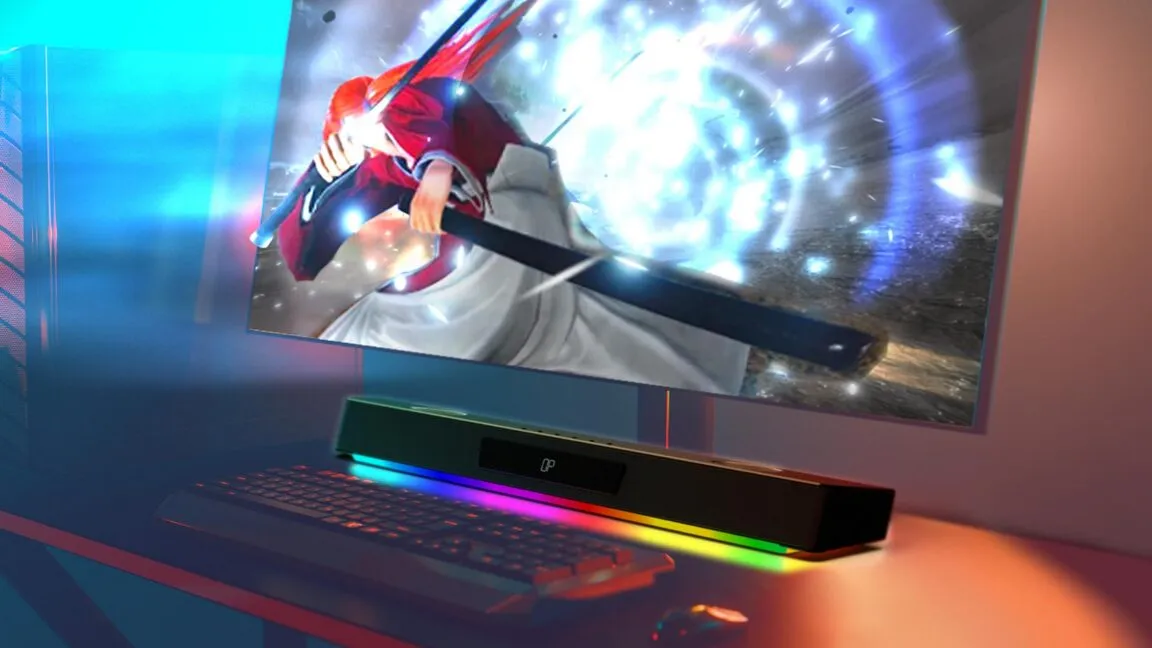
Rasmus Moorats, a security researcher, discovered a way a Sound Blaster Katana V2X speaker can infect a PC without being touched, using a Linux tool and a proprietary “Creative Transport Protocol.” Creative Technologies does not consider the behavior a vulnerability. For decision-makers, the key issue is governance: peripheral device channels can bypass assumptions about “remote” and “local” attack surfaces.
It starts with a speaker that costs $283 and ends with a PC getting infected without ever being touched. Rasmus Moorats, a security researcher, found that the Sound Blaster Katana V2X, a soundbar that connects to PCs, Macs, and Linux devices over USB or Bluetooth, can act like a bridge into the target machine. The twist is how the speaker communicates internally: Moorats built a Linux tool to interact with it, and he was able to do that through a proprietary mechanism he guesses is short for Creative Transport Protocol, or CTP.
Moorats’ work is the kind that makes security teams sit up because it undercuts a comfort many organizations have: that operating system protections reduce “remote” risks to scenarios that require elaborate bypasses. Ars Technica notes that OS makers take steps to prevent their software from accepting commands from remote devices. Those safeguards usually force hackers to jump through hoops to bypass measures. But the Katana V2X behavior shows a different pattern, where the attack can be practical when a peripheral device is reachable through a device transport, not by being physically handled.
To understand why this matters, zoom out to how endpoints are usually governed. PCs are hardened against arbitrary control from the network, but many environments also assume that a speaker is just that, a speaker. Moorats’ accidental discovery came after he purchased the Katana V2X and got curious enough to test whether he could create a Linux tool to communicate with it. That curiosity is relatable. It is also exactly how supply chain-ish and peripheral-to-host issues often surface, because someone tries to integrate, control, or automate a device and learns the device will accept commands in ways that were never meant to be adversarial.
The transport detail is the heart of the story. The Katana V2X offers two connection paths: USB and Bluetooth. Moorats did not just test whether the speaker worked. He dug into the “how” by using CTP, which he guesses is Creative Transport Protocol. The source does not give a full technical blueprint for the exploit path, but it does establish the core observation: the speaker’s communications can enable PC compromise. In other words, the speaker is not only an audio endpoint, it can be a command endpoint. And if an OS only expects well-behaved peripherals, a proprietary command mechanism can become the missing assumption.
Now add incentives and accountability, because the story does not end with a neat “vulnerability report, CVE, patch, done.” Creative Technologies, the Singapore-based seller of the Katana V2X, does not consider the behavior a vulnerability. That position matters to decision-makers because it affects how risk is categorized and handled internally. If a vendor frames a behavior as not a vulnerability, organizations may face delays or ambiguity around patching, mitigations, and incident response language.
This is where the second-order board-level concern kicks in: what your risk policy considers in-scope. Many enterprise security programs focus on remote services exposed on the internet. Ars’ framing is a reminder that protections are designed for remote devices and malicious attacks that require bypassing OS safeguards. But peripheral ecosystems and proprietary transports create alternative pathways. A “speaker within range” mental model, even if the specific details vary, can become an attack model that security teams have to treat as real.
Regulatory and compliance angles follow the same logic. Regulations and standards generally push organizations to manage cyber risk across the full environment, not only the parts with public IPs. When a peripheral device category can plausibly become part of an attack chain, auditors may ask hard questions about device management: inventory completeness, firmware update processes, approval workflows, and monitoring. The Katana V2X is “widely acclaimed,” with numerous reviews praising its sound and performance, which means it likely sits in places where people do not want to think about security controls. That mismatch between consumer polish and security posture is exactly the kind of thing that turns a small lab finding into a real operational headache.
For executives and security leaders, the strategic stakes are simple: peripheral-host trust is harder than network-host trust. If a device connected over USB or Bluetooth can provide a route into a PC, then “air gaps” and “local-only” assumptions become less reliable. Moorats stumbled on this behavior after purchasing the speaker and building tooling, which is also what makes it durable as a risk pattern. Teams can debate whether Creative’s view is correct, but boards still have to decide how to treat the consequence: what they deploy, how they update it, and how they control who can connect which devices to which endpoints.
The bigger message is about surface area. Today it is a Sound Blaster soundbar. Tomorrow it could be another accessory that looks harmless until someone learns its proprietary transport channel well enough to turn it into a pathway. And in a world where endpoints are increasingly managed through device ecosystems, ignoring that lesson is how “just a speaker” becomes a headline for the wrong reasons.
This story's Key Insights and Take-aways are locked.
Create a free account to unlock Executive Actions for one credit.
Register to UnlockAlways free for Executives Club members. Join the Club
More in Technology

OpenAI says 10,000 agents cracked a 90-year math problem in 88 hours
The company's claim is audacious, but one mathematician is pushing back. Here's what it means for AI-driven discovery.

Meta still serves child sexual abuse ads on Instagram in India - BBC report
A new report following the BBC Eye investigation says the ads are still there - what it signals for every platform with a self-serve ad engine.

White House yanks 'Build the Wall' game after Tetris Company copyright warning
The administration's arcade game vanished in hours - and the takedown playbook every brand can learn from.