

Crew-13 leadership briefs Aug. 3, 12 p.m. EDT, on SpaceX Dragon mission to ISS
NASA and partners set two news conferences for Crew-13 as launch slips no earlier than mid-September.
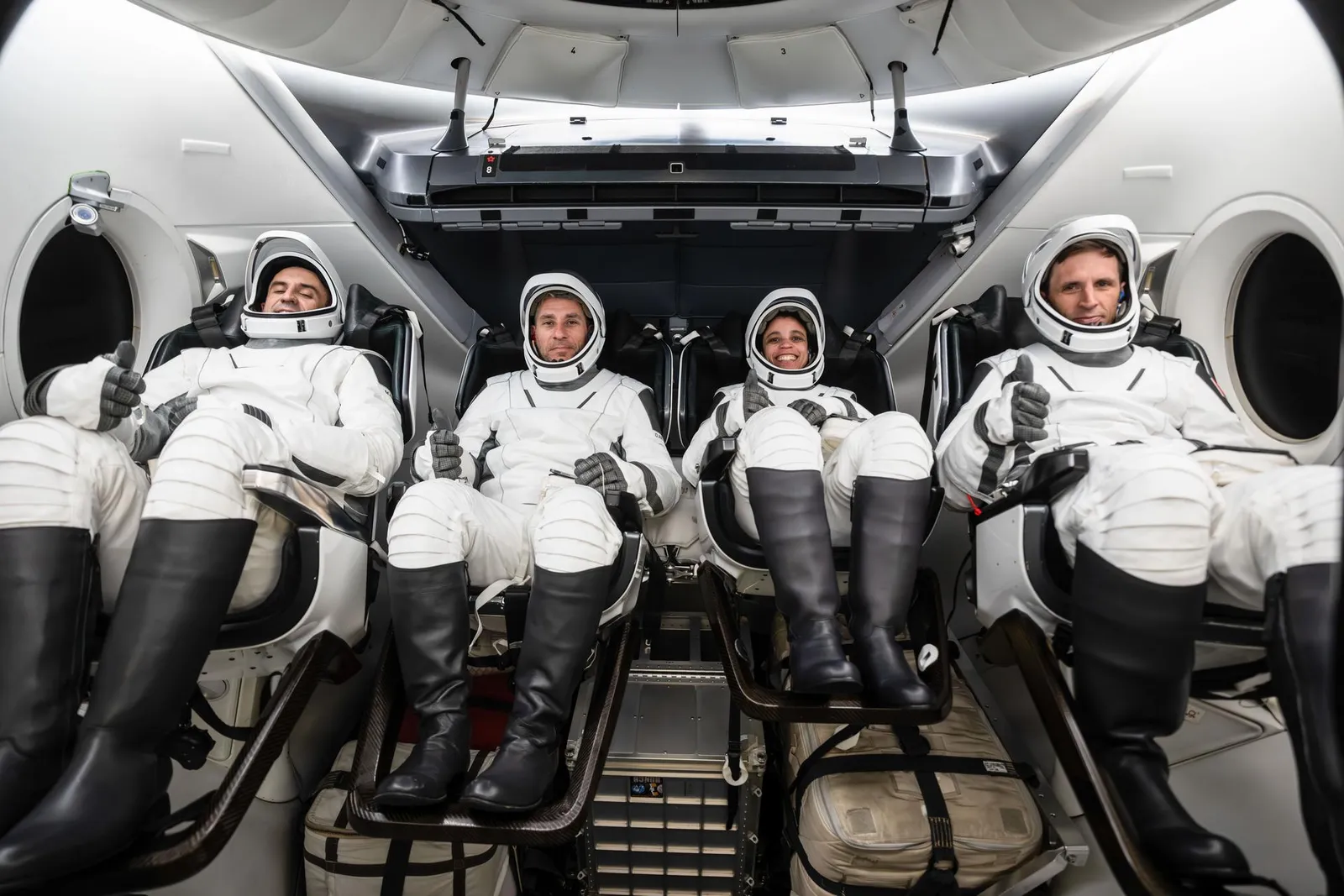
NASA’s mission leadership will brief SpaceX Crew-13 for its International Space Station rotation during two news conferences on Monday, Aug. 3, from Johnson Space Center in Houston. For decision-makers, the schedule, roles, and upcoming Falcon 9 Dragon timeline shape how partners plan media, oversight, and on-ramp execution pressure before launch.
NASA and its partners are about to walk through the next International Space Station crew rotation in real time. On Monday, Aug. 3, NASA will hold two news conferences at the agency’s Johnson Space Center in Houston, streaming both live. Mission leadership will provide an overview of NASA’s SpaceX Crew-13 mission at 12 p.m. EDT, followed by the crew discussing training and mission preparations at 2 p.m. EDT.
If you are tracking commercial crew operations and the choreography between NASA and SpaceX, this is one of those “small scheduling details, big operational signal” moments. Crew-13’s final media availability before traveling to NASA’s Kennedy Space Center in Florida for launch means what gets emphasized at the briefing is also what matters before the team shifts from training mode into launch execution.
Here is who is going. Crew-13 will carry NASA astronauts Jessica Watkins and Luke Delaney, CSA astronaut Joshua Kutryk, and Roscosmos cosmonaut Sergey Teteryatnikov to the orbiting laboratory. The public-facing plan is straightforward: the crew will launch aboard a SpaceX Dragon spacecraft on the company’s Falcon 9 rocket from Space Launch Complex 40 at Cape Canaveral Space Force Station in Florida, no earlier than mid-September. And yes, NASA will stream these events live at https://www.nasa.gov/live.
The partner stack is also the point. This crew is not just “NASA plus a contractor.” It is a multinational rotation that includes Roscosmos and the Canadian Space Agency, with mission leadership and crew roles split across agencies. That matters because international participation affects everything from training coordination to how communication lines stay open when schedules tighten and systems evolve. For executives, it is the difference between “one team building one vehicle” and “multiple organizations aligning around a shared mission timeline.” The Aug. 3 briefing is designed for that alignment, not just publicity.
The briefing schedule is laid out with times and named participants, and those details tell you how NASA structures accountability. At 12 p.m. EDT, the Mission Overview News Conference will feature Joel Montalbano, deputy associate administrator, Human Spaceflight Mission Directorate, NASA Headquarters; Dana Weigel, manager, Low Earth Orbit Program, NASA Johnson; Mathieu Caron, director, Astronauts, Life Sciences, and Space Medicine, CSA; and Julianna Scheiman, director, NASA Science and Dragon Programs, SpaceX. At 2 p.m. EDT, the Crew-13 News Conference shifts to the people actually executing the plan: Jessica Watkins, commander, NASA; Luke Delaney, pilot, NASA; Joshua Kutryk, mission specialist, CSA; and Sergey Teteryatnikov, mission specialist, Roscosmos. After the news conference, the crew will be available for limited media interviews, with all interview requests due by 5 p.m. on July 30 to the NASA Johnson newsroom.
There are also concrete media logistics that boards and operators should notice, because they often reveal operational maturity. International media attending in person must email jsccommu@mail.nasa.gov by 5 p.m. Tuesday, July 21. United States-based media attending in person must respond by 5 p.m. Thursday, July 30. Media joining virtually must respond by 10 a.m. the day of the event. NASA notes that its media accreditation policy is available online. If you run anything mission-adjacent, you know: the “boring paperwork” is how you avoid chaos when high-stakes schedules collide with public timelines.
Now the crew backgrounds, because Crew-13 is not just another set of names on a schedule. Watkins will be the first NASA astronaut to launch aboard a SpaceX Dragon spacecraft twice. She was selected as a NASA astronaut in 2017, grew up in Lafayette, Colorado, and earned undergraduate degrees in geological and environmental sciences from Stanford University and a doctorate in geology from the University of California, Los Angeles. As a geologist, she studied the Martian surface and was a member of the Curiosity rover science team at NASA’s Jet Propulsion Laboratory in Southern California. She first launched to the space station on the SpaceX Crew-4 mission, spending a total of 170 days in space across space station Expeditions 67/68 in 2022. This is valuable operationally: it is continuity in the systems, the cadence, and the lived reality of operating at station.
Delaney brings a first spaceflight profile with a test-pilot backbone. Selected as a NASA astronaut in 2021, he earned a bachelor’s degree in mechanical engineering at the University of North Florida and a master’s degree in aerospace engineering at the Naval Postgraduate School. He is a Florida native and a distinguished naval aviator who participated in exercises throughout the Asia Pacific region and conducted missions in support of Operation Enduring Freedom. As a test pilot, Delaney evaluated developmental aircraft systems and served as a test pilot instructor, and he worked as a research pilot at NASA’s Langley Research Center in Hampton, Virginia, supporting airborne science missions. This is his first spaceflight.
Kutryk and Teteryatnikov round out the first-flight mix and the cross-agency skill overlap. Kutryk’s first spaceflight also matters because he was selected as a CSA astronaut in 2017 after serving as a CF-18 fighter pilot, flying missions supporting Canada’s NATO, U.N., and North American Aerospace Defense Command commitments. Teteryatnikov’s first trip to the orbiting laboratory is similarly detailed: he graduated from the Naval Academy, St. Petersburg, Russia, in 2011, served in various naval engineering roles including undersea vessels and specialized engine room operations, was selected for the Gagarin Research and Test Cosmonaut Training Center Cosmonaut Corps in 2021, and has served as a test cosmonaut since 2023.
So what should executives and operators take from an Aug. 3 briefing? The headline story is communication, but the real stake is coordination under a fixed external dependency: a Falcon 9 Dragon launch from Space Launch Complex 40 with liftoff timing “no earlier than mid-September.” When a crew rotation is this multinational and this tightly scheduled, the public briefing is also a readiness checkpoint. For anyone managing vendor performance, mission assurance, or program risk across commercial and government stakeholders, Crew-13’s media availability schedule, leadership lineup, and crew readiness narrative are a reminder: the window between training and launch is where plans either harden or start to slip.
This story's Key Insights and Take-aways are locked.
Create a free account to unlock Executive Actions for one credit.
Register to UnlockAlways free for Executives Club members. Join the Club
More in Science

Alaska's 1,580-foot tsunami had warning signs. Scientists just found them.
Rapid glacier retreat, heavy rainfall, and thousands of tiny tremors preceded Alaska's 1,580-foot tsunami, a warning for every coastal community in a warming world.

The rare mutation that lets high-risk brains dodge Alzheimer's
Scientists found a natural defense against protein buildup, opening a new path to preventive treatments.

3,000 steps a day may halve Alzheimer's decline, study finds
New research links a modest daily walk to less tau buildup and nearly half the cognitive and functional decline, even for those with early signs.