

Criston Cole’s suicide mission flips into “nihilism” in House of the Dragon S3E5
Fabien Frankel explains why Ser Criston Cole is no longer trying to live honorably, and what it signals.
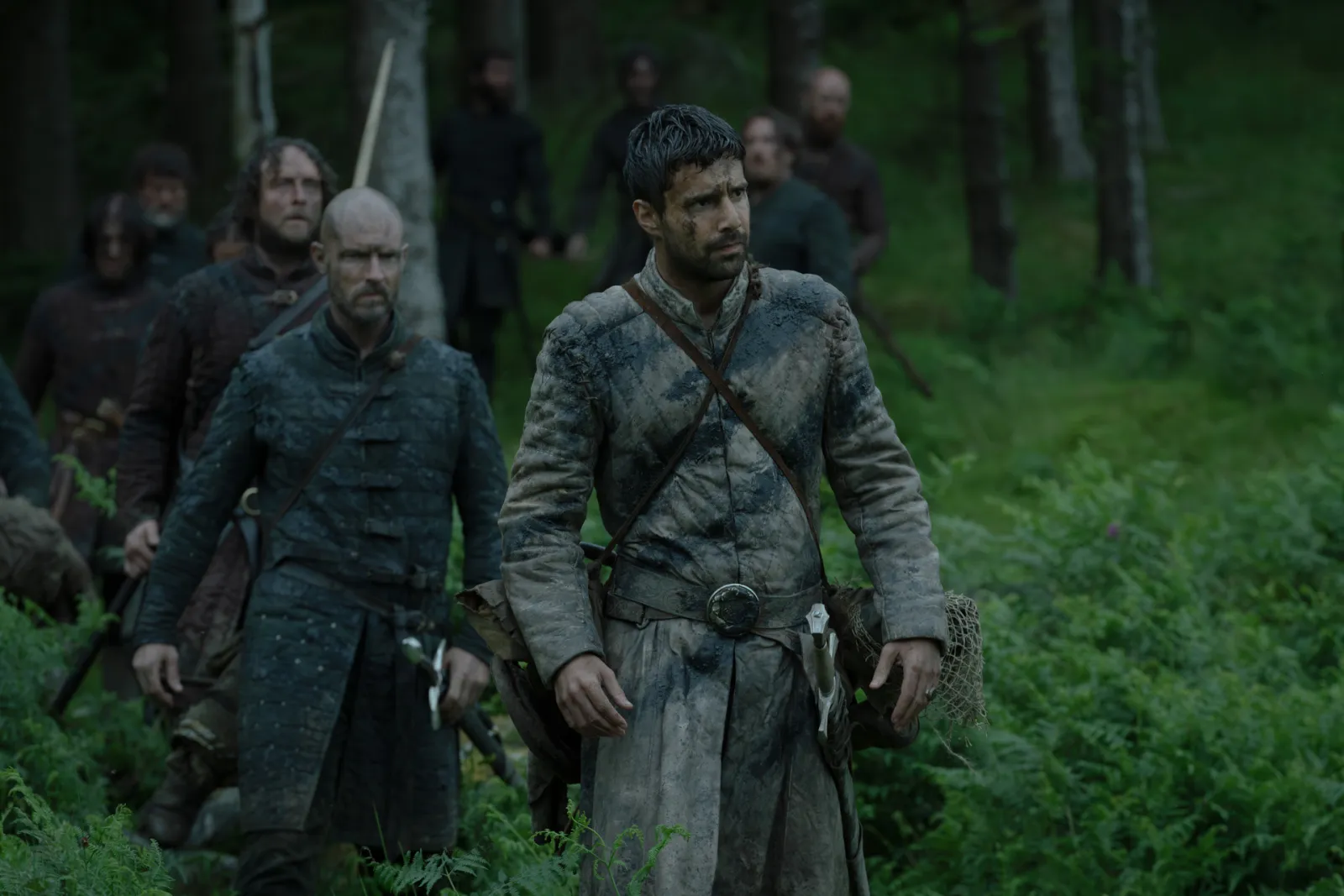
Fabien Frankel, who plays Ser Criston Cole on HBO’s House of the Dragon, talks about Criston Cole’s Season 3, Episode 5 decision to proclaim he is ready to die. The consequence for decision-makers is a clear read on how “honor” can turn into loss of purpose, changing how rivals and allies interpret the next move.
Spoiler alert: this briefing is about Season 3, Episode 5 of House of the Dragon, now streaming on HBO Max. In the episode, Ser Criston Cole (played by Fabien Frankel) proclaims that he is ready to die, framing it as something he can do “honorably” while the war for the Iron Throne rages on. That line matters because Criston Cole is not just making a dramatic statement. He is making a claim about his own motives, his own limits, and his willingness to turn the battlefield into a one-way ticket.
Frankel’s framing goes even further: he links Criston Cole’s stance to “nihilism.” In other words, this is not presented as bravery that still believes in a future where effort pays off. It is a grim pivot toward losing the will to motivate, where the internal story shifts from “I can win” to “it does not matter.” Frankel describes Criston Cole as “losing the will to motivate,” with the character effectively unraveling from mission mode into something colder and more final.
Why this is interesting beyond the plot is that it is a behavioral signal. In any high-stakes environment, from corporate turnarounds to military campaigns, people interpret decisiveness differently depending on what power source is driving it. “Ready to die honorably” reads like controlled sacrifice. But when it is also tied to nihilism, it reads like reduced agency. It implies the person is no longer bargaining with time, morale, or probability. That changes how everyone around them assesses risk. Allies become less able to “manage” outcomes through persuasion, because persuasion assumes the person still wants something.
In House of the Dragon, that affects the wider capture-the-Iron-Throne dynamic. The episode lands in the middle of a war, and the war’s basic logic is resource allocation: armies, leverage, and timing. When a key actor signals that they are effectively done trying, they become less predictable in the direction of escalation. This kind of character shift can accelerate moves by rivals who previously expected hesitation. It can also punish allies who were counting on Criston Cole’s discipline. If you are planning around the assumption that someone will still fight for a “reasonable” end state, nihilism breaks that model.
There is also a second-order implication for how institutions handle internal crisis. In most organizations, leaders want “honor” to translate into resilience. But nihilism is resilience without direction. It can look like toughness, it can even look like courage, yet it is often a sign the system has lost its feedback loop with meaning. Boards and senior operators watch for this in real life too, because motivation is the engine of execution. When someone is losing the will to motivate, performance can become brittle. The person may still take action, but it may be action without a strategic horizon.
If you zoom out from the story to the real-world pattern executives recognize, this is the moment where a team stops treating the individual as a negotiable variable and starts treating them as a fixed constraint. That can be a communications problem, too. In wars, and in organizations, messages are not just about feelings. They are about incentives. A proclamation of readiness to die tries to lock in a narrative: “this is the honorable path.” But Frankel’s “nihilism” interpretation complicates the narrative. It signals that the proclamation is not merely about performing honor for others. It is about resignation from the belief that outcomes will justify effort.
Strategically, for anyone who operates near conflict, this episode underscores a harsh truth: the same sentence can carry different operational meaning depending on internal state. “Honor” can be a commitment to win. Or it can be a farewell to motivation, a switch flipped when the character’s internal calculus collapses. The war for power creates space for bold moves, but nihilism changes the cost of boldness for everyone else. Rivals might interpret Criston Cole’s next decision as a fuse that burns down fast. Allies might interpret it as a signal to reposition their plans, because a person who is no longer trying to live honorably is not playing the same game.
This story's Key Insights and Take-aways are locked.
Create a free account to unlock Executive Actions for one credit.
Register to UnlockAlways free for Executives Club members. Join the Club
More in Entertainment

12TB Steam 'teraleak' goes beyond Valve: GTA 3, Mafia 2 prototypes exposed
A 12-terabyte dump of Steam data reveals prototypes and builds of third-party classics like GTA 3 and Mafia 2, plus unreleased Valve content, rewriting game history.

LinkedIn's romance problem: 1 in 4 workers say dating on it is fair game
A new survey shows a quarter of U.S. employees treat the professional network as fair game for romance, even as LinkedIn bans it and removes hundreds of thousands of offending posts.

Enhypen's first No. 1 album breaks K-pop's Billboard 200 streak
The K-pop group's 98,000-unit debut tops the chart while Dolly Parton's catalog reentry shows how death reshapes streaming.