

Cyborg cockroaches can now carry cameras and inject medicine on command
A WIRED report shows electrodes, cameras, and injection devices turning live roaches into remote medics for disaster rescue.
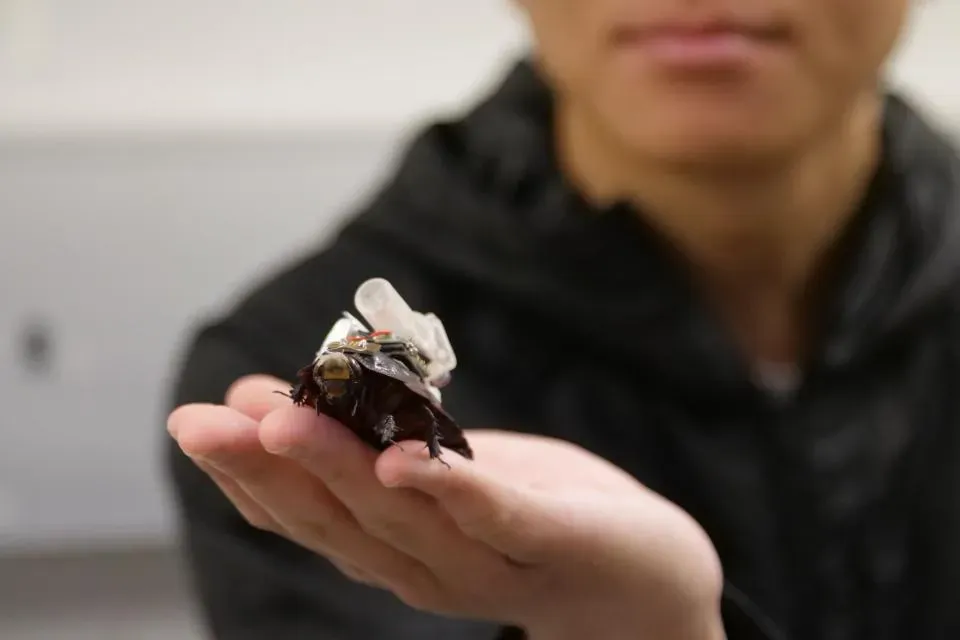
Researchers embedded electrodes into live cockroaches and equipped them with cameras and injection devices to deliver medication via remote control. The development pushes insect-machine hybrids from surveillance tools toward active medical responders, a shift with real implications for emergency management and medtech.
The rescue worker of the future may not be a drone or a robot dog. It may be a cockroach. A research team embedded electrodes into live cockroaches and fitted them with cameras and injection devices, creating remotely steerable cyborgs that can carry medication into places humans cannot safely reach. The work, reported by WIRED, turns a pest into a potential lifesaver: a biobot small enough to crawl through rubble and now wired to deliver a dose on command.
The headline promise holds up. These are not chips glued to a shell. Electrodes embedded into the insects' bodies let operators steer the roach with electrical pulses, while the onboard camera streams what the insect sees. The injection device allows medication to be delivered remotely. That combination matters because in a collapsed building, a chemical leak, or a war zone, the first minutes after injury are often decisive. A steerable, camera-equipped, drug-carrying cockroach could reach a trapped victim before a human or a large robot could.
The approach sits inside a larger field of insect-machine hybrids that researchers have chased for years. Scientists have previously explored steering beetles in flight and guiding moths toward signals, using implanted electrodes to influence natural movement. Cockroaches are a practical choice because they are hardy, squeeze through tight gaps, and can carry relatively heavy payloads for their size. Adding an injection system extends the idea from surveillance to intervention. It is one thing to see a victim through a camera. It is another to send help on six legs.
For emergency-response leaders, the appeal is speed and access. Standard search-and-rescue gear remains heavy, expensive, and often too large to enter voids. Remote-controlled cockroaches can be carried in a pocket and deployed by the dozen, and their small profile lets them navigate obstacle courses that defeat wheeled robots. The camera turns the insect into an eye; the injection device turns it into a first responder. That combination could reduce the time between finding a victim and delivering critical medicine, whatever that medicine needs to be for the mission.
For medical and regulatory teams, however, the path from lab to life is long. Any device that delivers medication into a human body would need to clear safety and efficacy reviews, and biobots raise unusual questions. How do you sterilize a living insect? How do you ensure the dose is accurate if the roach moves mid-injection? What happens if a cyborg wanders off course before reaching the target? Those are not reasons to dismiss the work. They are the standard checklist for any new medical device, and the novelty of a living platform makes the checklist longer, not impossible.
The deeper shift is in how we think about responders. Full-size rescue robots are expensive to build and maintain, while insects are cheap, mass-produced by nature, and already adapted to confined spaces. That economics, plus the payload capacity of a cockroach, creates a strong incentive for research teams exploring biobots. The same logic will force public agencies to draft new rules about when and where cyborg insects can be released. A lost drone is an insurance claim. A lost cyborg cockroach is a different kind of liability.
For decision-makers in emergency management, defense, and biotech, the takeaway is not that cyborg cockroaches will replace ambulances. It is that the practical barriers to remote intervention are falling. When a living insect can carry a camera, an antenna, and a syringe, the gap between knowing someone is trapped and doing something about it narrows. Agencies that monitor this research now will be ready to integrate it into protocols. Agencies that dismiss it as science fiction may find themselves behind when the first approved medical biobot reaches the field.
The WIRED report is short, but the signal is clear. Cyborg cockroaches are no longer a lab curiosity with a parlor trick. They are a working platform for remote diagnosis and remote treatment, and the missing pieces are regulatory runway and the will to use them. For founders and operators building in disaster tech, that is an opening. Build the battery, the camera, the delivery mechanism, or the command-and-control software, and the next big responder may not have a face. It may have antennae.
This story's Key Insights and Take-aways are locked.
Create a free account to unlock Executive Actions for one credit.
Register to UnlockAlways free for Executives Club members. Join the Club
More in Technology

Google quietly links your phone number to every Android account on your SIM
Adding a SIM now ties your phone number to all Google accounts - and future accounts inherit it. Here's the security and privacy stakes.

Hijacker AI 'Skynet mode' runs 100,000 attack steps against exposed models
Symantec caught a criminal AI agent that borrows other models, steals data, and mines crypto; the only relief is no confirmed victims yet.

Nvidia's AI-financier shift faces its first big test as neoclouds stumble
A rout in neocloud stocks is forcing investors to weigh Nvidia's hidden exposure as both supplier and lender to the AI buildout.