
Cyborg cockroaches in 3D suits can breathe underwater for up to 3 hours
What looks like a sci-fi gimmick is becoming an underwater robotics platform with potential for disaster zones and Mars scouting.
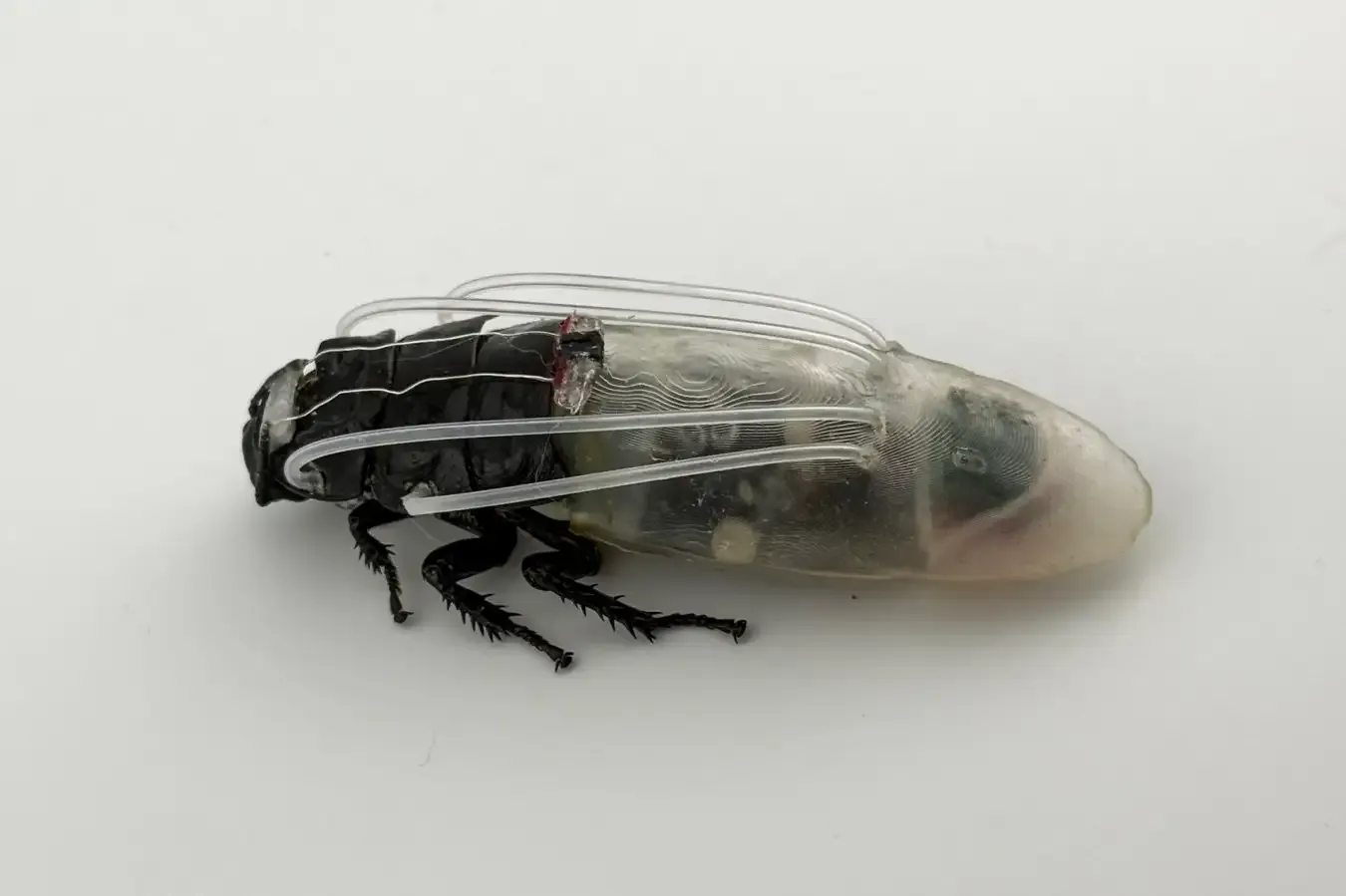
Researchers have developed tiny 3D-printed diving suits that let cockroaches walk underwater for up to 3 hours with no ill effects. For decision-makers, this signals a new path for low-cost, swarm-style exploration where traditional robots struggle.
A cockroach swarm that can actually survive underwater for hours is not just a cute lab demo. New Scientist reports that tiny 3D-printed diving suits allow cockroaches to walk underwater for up to 3 hours with no ill effects, essentially giving insects the one capability most underwater robots fight for: time underwater without the biology falling apart.
The key phrase is “up to 3 hours,” and it is doing a lot of work. The suits are not described as fragile or temporary in the original reporting, but as enabling the insects to keep functioning for that duration. That matters because underwater operations often fail for boring reasons: power limits, buoyancy challenges, sealing issues, and the difficulty of keeping small systems working long enough to be useful. If you can put legs onto water, even for a limited window, you can start thinking about missions that are measured in hours, not minutes.
So why cockroaches, of all things? The underlying concept is straightforward: insects are small, mobile, and naturally adept at moving through complex terrain. In many real-world environments, that is exactly what makes exploration hard. Disaster zones are messy. Flooded infrastructure is full of cracks, cables, and unpredictable surfaces. Underwater spaces can be even worse, with uneven bottoms and limited visibility. A swarm that can navigate on foot, rather than only through propellers or tethers, changes the kind of coverage you can realistically get.
This is also a supply chain story, not just a science story. The reported mechanism uses “tiny 3D-printed diving suits.” 3D printing is, in practice, a way to produce customized hardware quickly. That does not magically remove engineering burden, but it does shift part of the process from specialized manufacturing to iterative fabrication. For boards and operators, that can influence how quickly a concept can be prototyped, tested, and reworked when sensors, seals, or suit geometry need adjustment.
Zoom out to the broader robotics and defense-adjacent market context. Underwater robotics already exists, but it is constrained by cost, size, and maintainability. Many underwater platforms are expensive, require skilled operators, and can be hard to deploy in large numbers. Swarm concepts aim to reduce the risk of single points of failure by distributing effort across many units. An insect swarm also hints at a different risk profile: if individual units are smaller and potentially replaceable, the mission can be designed around “coverage and redundancy,” rather than “one hero robot must not fail.”
There is also a regulatory and ethics angle that executives should take seriously, even when the underlying science is exciting. Any technology that involves living organisms in operational environments, especially if it is “remote-controlled,” will attract scrutiny. Regulators and stakeholders will want clarity on welfare, containment, environmental impact, and control mechanisms. The original reporting does not add those details, so the responsible takeaway for decision-makers is not to assume the path is clear. It is to recognize that a working underwater insect platform will quickly become a governance conversation, not just an engineering one.
Then there are the second-order implications that come from the destination implied by the story. New Scientist notes that the technology “could enable a cyborg insect swarm to explore disaster zones and perhaps even Mars.” Mars is not an engineering spec in this summary, and the source does not claim a deployed mission. But “perhaps” is doing strategic work. If you are thinking about analog environments, extreme conditions, and long-range exploration constraints, the ability to move in hostile surroundings with a small, swarmable system is the kind of capability that can attract attention from space agencies, research labs, and mission contractors.
For executives in adjacent roles, the stakes are simple: underwater exploration and contingency response are high-value problems where failure is expensive. A cockroach swarm that can “breathe underwater” for “up to 3 hours” is a credible new building block. It suggests a future where exploration platforms are not only machines with thrusters, but swarms of tiny units engineered to survive, move, and collectively cover space when humans and conventional robotics cannot reach safely. If you are tracking competitive differentiation in robotics, sensing, or mission operations, this is the kind of capability that can redraw what is practical.
This story's Key Insights and Take-aways are locked.
Create a free account to unlock Executive Actions for one credit.
Register to UnlockAlways free for Executives Club members. Join the Club
More in Science

Alaska's 1,580-foot tsunami had warning signs. Scientists just found them.
Rapid glacier retreat, heavy rainfall, and thousands of tiny tremors preceded Alaska's 1,580-foot tsunami, a warning for every coastal community in a warming world.

The rare mutation that lets high-risk brains dodge Alzheimer's
Scientists found a natural defense against protein buildup, opening a new path to preventive treatments.

3,000 steps a day may halve Alzheimer's decline, study finds
New research links a modest daily walk to less tau buildup and nearly half the cognitive and functional decline, even for those with early signs.