
David Bisbal returns to Operación Triunfo for its U.S. debut
The singer who launched his career on the show in 2001 is now judging its Telemundo launch, signaling how legacy formats can be re-packaged for new audiences.
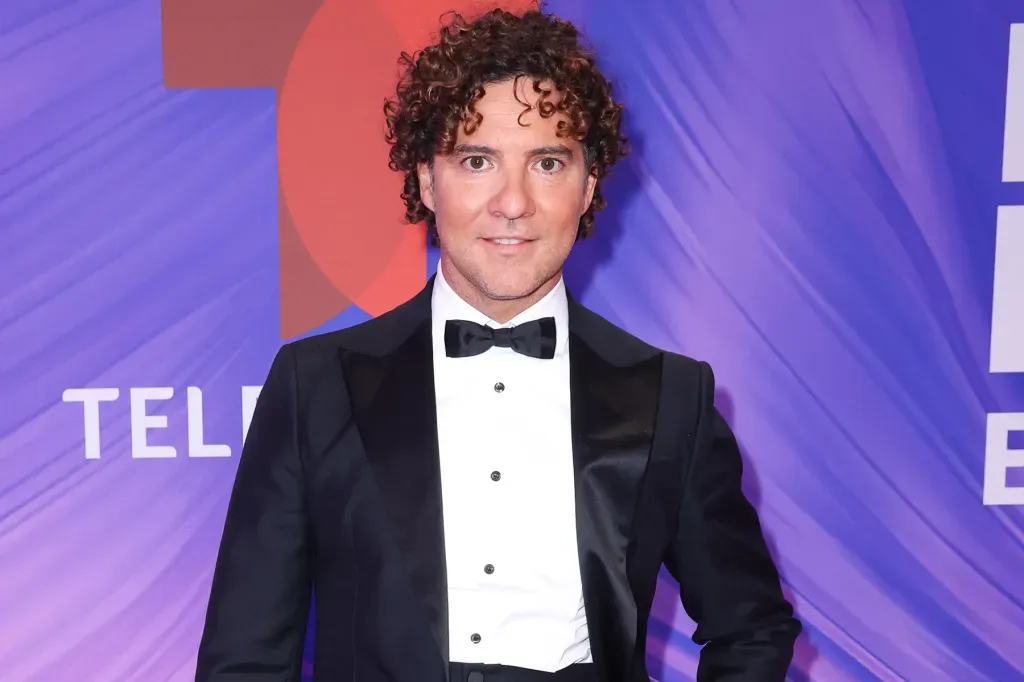
David Bisbal will serve as a judge on Operación Triunfo as the Spanish singing competition makes its U.S. debut on Telemundo this summer. The move gives the reboot immediate credibility, while also showing how broadcasters can lean on familiar talent and proven formats to bridge old-school TV and younger, more fragmented audiences.
David Bisbal is coming back to Operación Triunfo, and this time he is not the contestant. He will be a judge on the Spanish singing competition as it makes its U.S. debut on Telemundo this summer, making him the first judge and artist to be revealed for the new version. For anyone following TV reboots, this is the cleanest kind of casting move: the show is using one of its most famous alumni to signal that the U.S. edition is not a watered-down export, but a continuation of a format with real cultural memory.
The irony is the point. Bisbal launched his international career on the first season of Spain’s Operación Triunfo in 2001, where he finished as runner-up to Rosa López. Now he is helping judge the franchise as it tries to do in the U.S. what it already did in Spain: turn aspiring singers into widely followed personalities. In his press statement, Bisbal said, “This was where my career began and my life changed forever,” adding, “It is an honor for me to be part of this moment, and I am excited for the opportunity to support, motivate, and witness the musical growth of this new generation of talented artists with big dreams.” That quote does a lot of work. It frames the show as both nostalgia and apprenticeship, which is exactly what a talent competition needs if it wants viewers to feel the stakes instead of just scrolling past another reality format.
The broader setup matters too. Operación Triunfo first aired in Spain in 2001 and follows a group of aspiring singers who live together in an “academy,” where they get professional training and compete in weekly competitions. The show is not just a contest, it is a transformation machine. Javier Pons, chief content officer and head of Telemundo Studios, previously told Billboard that “‘Operación Triunfo’ is a format with an incredibly strong legacy and a proven emotional connection with audiences of all ages, particularly younger generations, many of whom were not consuming traditional broadcast television. Over time, it became a true cultural phenomenon in Spain.” He also said: “The essence of ‘Operación Triunfo’ will remain intact, as it is central to its global success … The magic of [the reality show] lies in the fact that it transcends a traditional singing competition, emerging instead as a true platform for transformation”. That is the business case in plain English: legacy formats still matter when they come with an emotional engine, a repeatable structure, and a built-in story arc audiences understand in seconds.
For Telemundo, the U.S. launch is a bet that the ingredients that worked in Spain can travel, even in a media market where viewers are increasingly spread across streaming, social video, and fewer traditional broadcast habits. Pons’ comments about younger generations are especially telling. The format’s draw is not just that people like singing competitions, it is that the show creates attachment over time. Viewers do not merely watch performances, they invest in contestants as they train, clash, improve, and compete week after week. That is valuable in any market, but especially in an environment where attention is expensive and easy to lose. A show with a strong emotional hook can help a network cut through the noise without having to build everything from scratch.
Bisbal’s involvement also gives the new version something every reboot needs but cannot fake: proof. He is a living example of the show’s promise. He did not just appear on Operación Triunfo, he used it as the launchpad for an international career. That matters because talent competitions often sell aspiration, but audiences are more likely to buy in when the franchise can point to a real success story. In this case, the judge is not a random celebrity panelist parachuted in for ratings. He is part of the show’s origin story, which helps Telemundo link the Spanish legacy to the American rollout in one clean move. It is the kind of casting decision that says, without saying it directly, that the network expects the format to carry weight beyond opening night.
The timing is interesting as well. News of Bisbal joining the judging panel comes on the heels of his announcement of the Eternos Tour, which will begin on Dec. 9 at The Wiltern in Los Angeles and wrap on Dec. 19 at the James L. Knight Center in Miami. That gives the singer a visible U.S. footprint right as the television launch is being introduced, which should help keep his profile active across both TV and live events. For peers in media, music, and entertainment, the lesson is straightforward: familiar IP still has leverage, but only when it is paired with recognizable faces, a clear emotional premise, and a format that can be explained in one sentence. Telemundo is not just importing a show. It is importing a story about transformation, and putting one of that story’s original characters back on stage to sell the sequel. In a crowded attention economy, that kind of continuity is not sentimental. It is strategy.
This story's Key Insights and Take-aways are locked.
Create a free account to unlock Executive Actions for one credit.
Register to UnlockAlways free for Executives Club members. Join the Club
More in Entertainment

Christopher Nolan’s “The Odyssey” posts his biggest Tuesday haul, surpassing “The Dark Knight’s” record
The film’s Tuesday breakout reframes Nolan’s box-office ceiling and forces competitors to rethink timing, budgets, and release strategy.

Kacey Musgraves cancels Aug. 20, 29, Sept. 2 Middle of Nowhere shows
Ticketmaster emails are telling fans refunds are coming, while the tour still starts Aug. 21 in Chicago.

Billie Joe Armstrong launches Epiphone Les Paul Junior and Marshall 1959BJA signature gear
Two limited releases turn decades of Green Day’s tone into branded hardware, including Marshall’s first artist amp in 14 years.