
David Gaider says Dragon Age is likely dead after Veilguard flop
The creator of the fantasy RPG series doubts it has a future, but hints at what he would do if asked again.
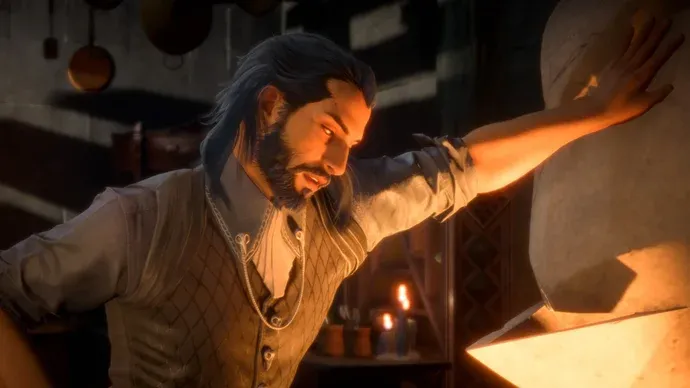
David Gaider, Dragon Age creator, says he believes BioWare's Dragon Age series is likely dead following the poor commercial performance of 2024's Dragon Age: The Veilguard. For decision-makers, it is a rare, inside-the-room signal about how creative risk, publisher economics, and studio incentives are converging after a high-profile flop.
David Gaider, the Dragon Age creator, believes the series is likely dead after the poor commercial performance of 2024's Dragon Age: The Veilguard. That is a brutal sentence from someone who knows exactly what Dragon Age is supposed to feel like, and it lands at the worst possible moment for BioWare and its parent ecosystem: when the industry is trying to figure out whether big, narrative RPGs are still buyable at scale.
Gaider did not stop at the eulogy, though. He also said that if he ever got the chance to work on a new Dragon Age, despite no longer being at BioWare, he would be interested in taking it in a “dark and dangerous” direction. He framed that idea as doing “things that will make people upset.” In other words, even if he thinks the franchise itself is likely dead, he is not describing creative burnout. He is describing a mismatch between what players, budgets, and risk models reward.
To understand why this matters beyond fandom, it helps to remember what “poor commercial performance” actually triggers inside publishing. A big-budget RPG is not just an art project, it is a multi-year bet that has to clear several hurdles: unit sales, revenue mix, engagement retention, and marketing efficiency. When a flagship release underperforms, the board and leadership do not just ask “what went wrong creatively.” They usually ask “how do we change the next portfolio decision so this does not happen again.” That often means tighter production planning, different release pacing, or a shift toward safer genres and recognizable formulas.
Gaider is not giving a business breakdown of The Veilguard in the source, but his comments point at something executives already recognize. When studios like BioWare have a marquee franchise, the internal incentive becomes less about experimentation and more about protecting outcomes. And outcomes tend to be judged quickly, particularly when publishers have to answer for cash flow and forecasts. After a flop, risk appetite can shrink fast, sometimes even when the underlying talent is still there.
There is also the studio identity angle. BioWare is historically tied to player expectations around narrative depth and character-driven worlds. If the market verdict is “not enough people bought this,” then the next leadership conversation is often about whether the brand can tolerate another high-variance swing. Gaider saying the series is “likely dead” is effectively a signal that the external market pressure is overpowering the internal love for the IP.
That “likely dead” framing is especially notable because games do get revived. Studios buy back teams, new leadership reboots pipelines, and publishers sometimes spin up remasters or spin-off projects to keep an IP monetizable. But revival takes permission from economics, and economics can be unforgiving when the prior mainline release disappoints. So when a creator as close as Gaider offers a pessimistic outlook, it reads less like internet drama and more like a recognition of how hard it is to re-earn financial trust.
At the same time, Gaider’s “dark and dangerous” pitch highlights another tension: the difference between what creators want to do and what risk committees will underwrite. If making players “upset” is part of the creative ambition, that is the opposite of what a conservative portfolio strategy tries to maximize. Boards generally prefer experiences that broaden the audience, avoid high backlash, and minimize the probability of a miss. Creative choices that polarize can raise the chance of a sales disappointment, even if they might produce a cult legacy.
Zoom out further, and the second-order implication becomes clearer for anyone running adjacent studios, investing, or overseeing publishing strategy. When a franchise creator publicly suggests the IP may be effectively over, it can influence how teams plan their long-range roadmaps, how marketing budgets are allocated, and even how talent evaluates future projects. If you are an executive building a pipeline, you want to know whether the market is rewarding your studio's core strengths, or punishing it, and Gaider’s framing suggests the latter may have happened here.
Ultimately, Gaider’s remarks give two signals at once: Dragon Age might not be coming back soon, and even if it did, he would push it toward a tone that is intended to provoke. For decision-makers, the stake is straightforward. The next big RPG bet is not just about funding production. It is about whether the organization can align creative intent with a risk posture that a publisher and board will actually finance. And if they cannot, even beloved worlds end up as post-mortems, not roadmaps.
This story's Key Insights and Take-aways are locked.
Create a free account to unlock Executive Actions for one credit.
Register to UnlockAlways free for Executives Club members. Join the Club
More in Entertainment

12TB Steam 'teraleak' goes beyond Valve: GTA 3, Mafia 2 prototypes exposed
A 12-terabyte dump of Steam data reveals prototypes and builds of third-party classics like GTA 3 and Mafia 2, plus unreleased Valve content, rewriting game history.

LinkedIn's romance problem: 1 in 4 workers say dating on it is fair game
A new survey shows a quarter of U.S. employees treat the professional network as fair game for romance, even as LinkedIn bans it and removes hundreds of thousands of offending posts.

Enhypen's first No. 1 album breaks K-pop's Billboard 200 streak
The K-pop group's 98,000-unit debut tops the chart while Dolly Parton's catalog reentry shows how death reshapes streaming.