

David Senra turned Founders into CEO cult homework, then turned down $50 million
The one-person podcast built with zero audience for 5.5 years now pulls in billionaires and a $44B-backed advertiser.
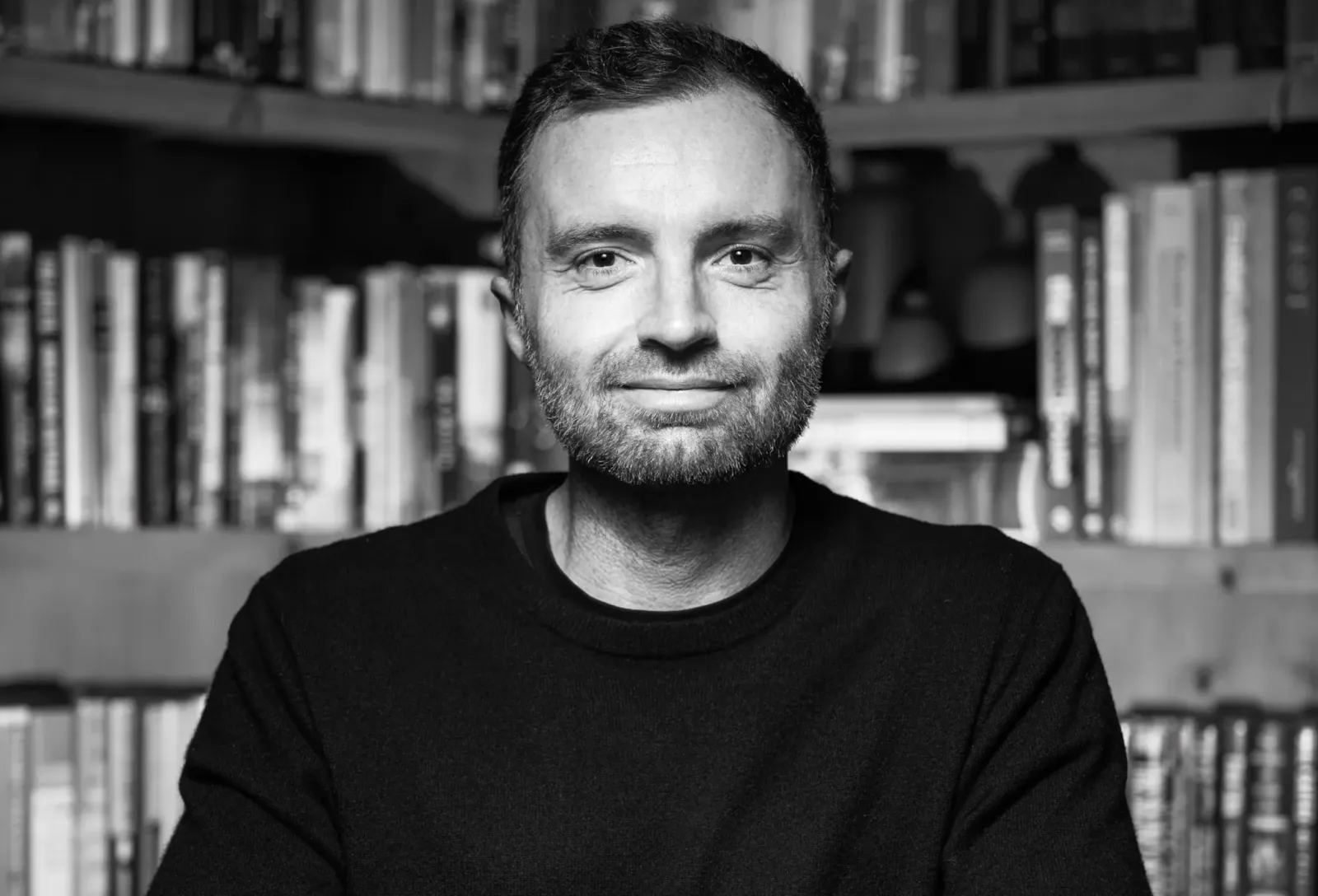
David Senra built Founders from his Miami kitchen in 2016, funding it himself for years before it reached elite listeners including Jeff Bezos and Michael Dell. For decision-makers, his unconventional advertising and ownership stance show how media can become an acquisition-grade distribution channel without scaling like everyone else.
David Senra did not start Founders for clout. He started it for himself, and it took 5.5 years before anybody meaningful listened. For five and a half years after launching the podcast in 2016, he says “almost nobody did listen,” and he described the early rhythm in painstaking terms: one business biography per week, hard copy, annotated with a pen and a six-inch ruler, then recorded his thoughts alone before publishing. In his telling, he explicitly committed to the work regardless of traction, even with a “single listener,” and the proof is still visible in the RSS feed: the show’s original title, “Autotelic,” remains in the code. The consequence of that stubbornness is the point. Founders didn’t build a brand first. It built a library of decision-grade thinking, episode after episode, until the people with actual power started showing up.
Senra’s audience now includes Jeff Bezos, Shopify CEO Tobi Lütke, Coinbase CEO Brian Armstrong, Michael Dell, and Spotify CEO Daniel Ek, which is about as close as podcasting gets to “board member only” access. And the moment that made the story feel different for everyone else was not a viral clip. It was money. Senra turned down offers to buy Founders with valuations upwards of $50 million, and when asked about what today’s bids might look like, he says he doesn’t know what people would offer “today.” This matters because it frames Founders as something unusual in media: not a business being optimized to maximize exit value, but a business being optimized to protect control and a specific kind of audience. Senra makes a great living and says the business generates millions of dollars a year in profit, while also keeping it lean: he is the lone employee and does everything from reading and recording to editing, publishing, and promoting.
If you’re a founder or investor, the temptation is to reduce this to “quality wins.” That’s partly true, but the more interesting angle is incentive design. Senra’s publishing discipline sounds like personal ritual, but it doubles as a quality control system. There is no audience-driven hustle in the background. There’s no content calendar sprinting to chase algorithms. He named the show “Autotelic,” a word for an activity done purely for its own sake, and he never changed it even after the audience arrived. That self-imposed rule is why Founders became something executives treat like reference material. Senra told Fortune that typical listeners are builders who want “game tape,” people who want to study how the greats thought and executed and lived before.
Once you have that audience, you can sell to it in a million ways. Senra sells in one way: flat partnership rates, a minimum one-year commitment, and in most cases a single advertiser per show, with no cost per mille (CPM) metric. For context, CPM is the standard digital marketing measure that tells advertisers the cost per 1,000 impressions. Founders is the opposite of that commoditized approach. Instead of packaging attention into a generic unit, Senra ties distribution to the specific companies he uses himself, and he is explicit that he chooses Founders and operator-oriented advertisers rather than CMOs of consumer products. They come to him. He doesn’t pitch. That “approval by builders” dynamic is part of the reason the show behaves more like private capital than like mainstream media.
The clearest example is Ramp. Senra’s largest advertiser is now Ramp, the corporate card and expense management company backed by Iconiq and valued at $44 billion. The path to that partnership started with a text from Eric Glyman, one of Ramp’s founders. Glyman said he had been at Michael Dell’s house and Dell could not stop talking about Senra’s podcast. Glyman then told Senra something that sounds like a CEO-level confidence trick but came from the story itself: Dell reportedly said he knows 10 to 15 billionaires personally who listen to the show, and Ramp needed to figure out a way to work together. Senra’s own description of Ramp’s posture is bluntly supportive: “We’re going to back everything David does,” whether it’s Founders or a new show, “and we want to be involved in every single thing he does.” Glyman, for his part, described discovering Founders the way you might describe a conversion: he doesn’t usually listen start-to-finish, but he kept coming back, and he heard that when someone had encountered Founders, the reaction was “religious.”
That partnership didn’t just mean bigger ad dollars. It changed the way Ramp treats podcast strategy. Not long after the partnership began, Ramp asked Senra to audit its existing podcast advertising strategy. Senra found a small budget spread across 35 different shows without a coherent rationale. He reviewed the list line by line, and Glyman recounts the outcome as a directive: fire 32 shows, then double down on three. Ramp says it is “very happy with the effect” of partnering with Senra, confirming that the move was not just a brand experiment. This is the second-order takeaway for boards and CFOs: Founders can act like a rational filter that forces budget discipline, not a vending machine for impressions.
All of this also raises a more structural question: how does a one-person media operation become an acquisition-grade distribution channel for billion-dollar businesses without scaling production? Part of the answer is that Senra’s process is meant to stay valuable even as the audience grows. Senra declines to be specific about profit beyond “millions of dollars a year,” and he keeps the company small, but the bigger constraint is cultural. He wants the “club exclusive,” and he says if the podcast ever gets as big as Huberman, he would have done something incredibly wrong, because that would imply he no longer has a “valuable audience.” Whether you interpret that as eccentricity or strategy, it’s consistent with the pricing model and the advertiser selection criteria.
So why does any of this matter beyond media nerds and podcast collectors? Because Founders is now a compounding network effect in disguise. The show attracts listeners who are builders, and those builders become advertisers that can reallocate millions by pruning the rest of the podcast spend. The podcast generates serious outcomes that listeners cite directly, too: Brad Jacobs, the serial acquirer who has launched eight separate billion-dollar companies, wrote that a single Founders episode where he was interviewed resulted in $750 million in investments from listeners. And when executives see their peers treating a podcast like “game tape,” distribution stops being entertainment and starts being tooling. Senra’s choice to keep control, even while offers topped $50 million, is a reminder that media brands can be built for longevity rather than maximize-the-multiple. If you run a company in a world that feels like every channel is for sale, that is either a warning or a blueprint.
This story's Key Insights and Take-aways are locked.
Create a free account to unlock Executive Actions for one credit.
Register to UnlockAlways free for Executives Club members. Join the Club
More in Business

BioWare shuts down, Mass Effect 5 dead after $55B EA buyout
The legendary RPG studio's closure lands months after a $55 billion investment group buyout of EA, raising tough questions for gaming's biggest acquirers.
Musk barred from the room as Tesla, SpaceX boards weigh $3.5 trillion merger
The CEO of both companies is a 'conflicted party' watching independent directors negotiate a tie-up that would create a $3.5 trillion giant he would own about a third of.

Elon Musk just showcased a flying car - and it wasn't at Tesla
The Tesla CEO's latest reveal came at SpaceX, not Tesla, signaling where vertical mobility is headed.