

De la Fuente vs Scaloni: Spain's control tests Argentina's resilience in World Cup final
The Spain-Argentina showdown in New York pits patient possession against the defending champions' comeback DNA.
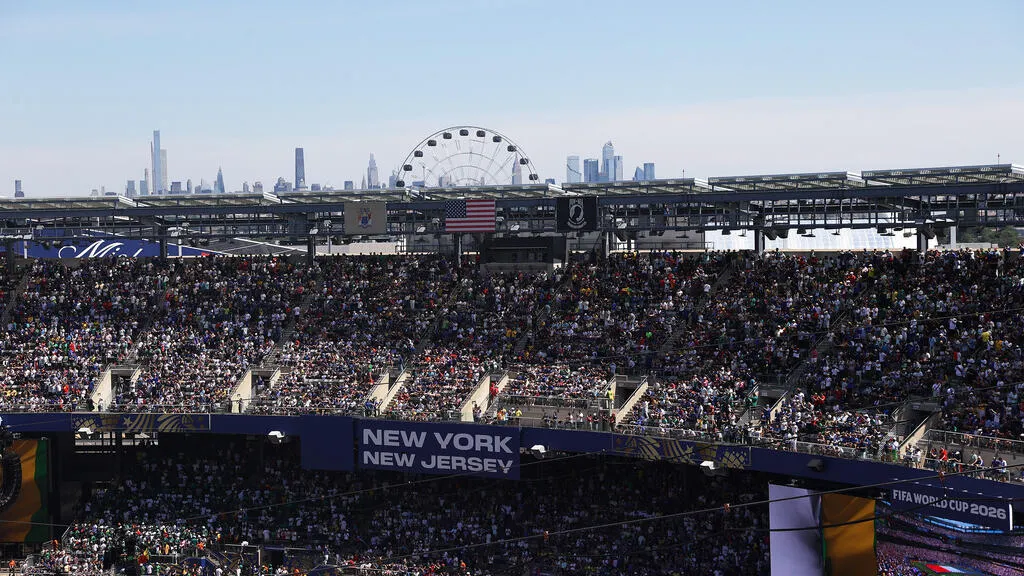
Spain coach Luis de la Fuente faces Argentina manager Lionel Scaloni in the World Cup final in New York on Sunday. The match sets up a tactical duel between Spain's polished possession play and Argentina's resilience as defending champions.
Spain coach Luis de la Fuente and Argentina manager Lionel Scaloni will face off in the World Cup final in New York on Sunday, and the story writes itself in the contrast. La Roja are built around patient possession, turning games into controlled sequences where opponents have to chase shadows. Argentina, the defending champions, are the opposite kind of problem. The Albiceleste have made a habit of surviving against the odds, then flipping momentum when it matters.
On paper, that makes the final feel like a clean matchup: Spain's most polished style against a team that has repeated a survival playbook at the biggest possible moments. De la Fuente, Spain's coach, represents the tournament's version of composure. Scaloni, once a coaching student of de la Fuente, now runs Argentina. Their history adds an extra layer of tension. It is not just two teams meeting. It is a teacher's system tested by a former student who has translated lessons into something stubbornly effective.
But the real stakes for decision-makers are what happens when style meets pressure. Possession football is often described as calm, but it can also be read as risk management. Spain typically wants the ball because it dictates tempo. If you control pace, you reduce the number of uncontrolled moments where chaos can break your structure. In executive terms, it is like running a process that limits exposure: you are not trying to win every single exchange, you are trying to win the distribution of exchanges.
Argentina's approach is the counterpart. Resilience is not merely grittiness. It is a system for staying functional when your plan is failing. A team that makes a habit of surviving against the odds suggests a midfield and defensive identity designed to absorb pressure without collapsing. And when opportunities arrive, they can act quickly enough to make the opposition's effort feel wasted. In business, this resembles optionality. You assume not everything goes your way, so you preserve enough structure to benefit from small openings.
That clash matters because finals remove shortcuts. There is no extra time to tinker your way out of a bad pattern. If Spain's possession becomes too predictable, Argentina's resilience turns into patience of its own, waiting for the moment to interrupt rhythm. If Argentina's survival starts to look like denial, Spain's ability to keep the ball could gradually wear down the defending champions. The tension is that both identities are coherent. This is not a final where one side is just “better at football” and the other is scrambling. It is a final where two competitive logics collide.
The headline comparison, polished vs resilient, is also a reminder that the tournament rewards more than aesthetics. The World Cup final is not a league match you can re-run next week. It is the kind of event where reputations get locked in. For Argentina, the label “defending champion” is a performance credential, but it is also a stress test. Every subsequent tournament game is measured against the last time they won. For Spain, the pursuit is different. They are not proving a legacy in the moment so much as proving they can convert control into trophies when control is contested.
And the personal storyline, de la Fuente versus Scaloni, turns tactical scouting into something more intense. Scaloni is not an outside opponent trying to copy a rival. He is the former coaching student of de la Fuente, which means he can recognize patterns not only in Spain's match plan, but in what Spain might do when the plan does not work. If Spain tries to build the match through steady possession, the question becomes whether Argentina can keep that possession from turning into inevitability.
Second-order implications follow naturally. When a possession-first team meets a resilience-first defending champion, the winning model is not just “who plays better.” It is “whose game management holds under maximum pressure.” Executives watching other high-stakes arenas can take the lesson: control is only as valuable as your ability to prevent it from becoming predictable. Resilience is only as valuable as your ability to transform survival into decisive execution. In New York on Sunday, Spain's patience and Argentina's comeback resilience will determine which philosophy is more robust when the margin for error disappears.
This story's Key Insights and Take-aways are locked.
Create a free account to unlock Executive Actions for one credit.
Register to UnlockAlways free for Executives Club members. Join the Club
More in Entertainment

12TB Steam 'teraleak' goes beyond Valve: GTA 3, Mafia 2 prototypes exposed
A 12-terabyte dump of Steam data reveals prototypes and builds of third-party classics like GTA 3 and Mafia 2, plus unreleased Valve content, rewriting game history.

LinkedIn's romance problem: 1 in 4 workers say dating on it is fair game
A new survey shows a quarter of U.S. employees treat the professional network as fair game for romance, even as LinkedIn bans it and removes hundreds of thousands of offending posts.

Enhypen's first No. 1 album breaks K-pop's Billboard 200 streak
The K-pop group's 98,000-unit debut tops the chart while Dolly Parton's catalog reentry shows how death reshapes streaming.