

Death of a Salesman revival takes 6 Tony Awards, including a top prize
John Lithgow and Lesley Manville star as Arthur Miller's revival dominates the night with six wins overall.
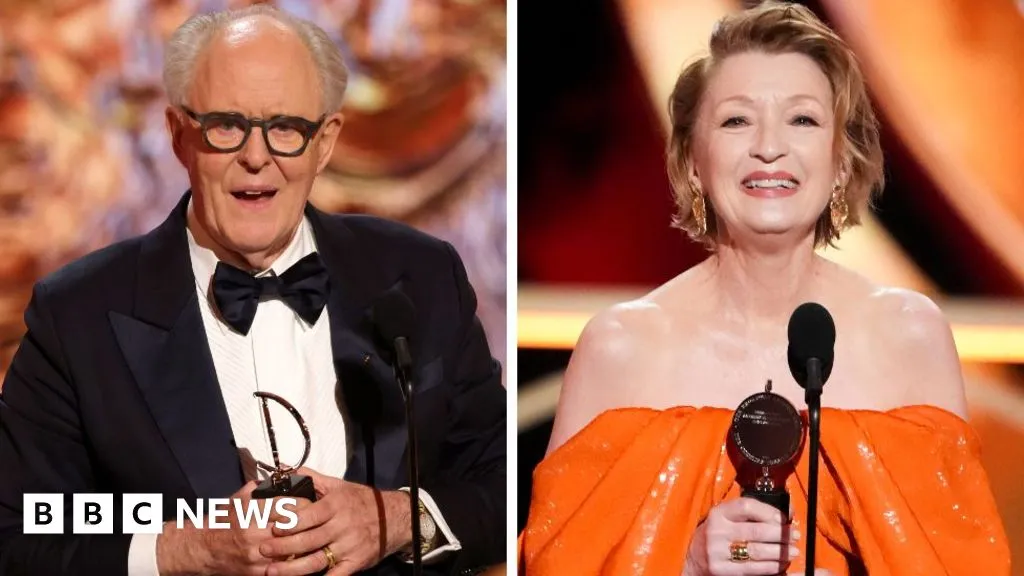
John Lithgow and Lesley Manville lead Tony Award winners as a revival of Arthur Miller's Death of a Salesman takes the night with six awards overall. The takeaway for decision-makers: when prestige capital concentrates, the entire production and talent pipeline re-prices quickly.
A revival of Arthur Miller's Death of a Salesman was the night's big winner with six awards overall, setting the tone for Broadway's next cycle of deals and attention. The production's haul mattered not just for bragging rights, but because awards like these often act like a funding signal in disguise. When a show sweeps, investors, producers, agents, and casting directors adjust expectations fast. They assume audience pull, media reach, and future ticket demand will follow the recognition.
The headline names the stars, and the story starts with them: John Lithgow and Lesley Manville lead Tony Award winners, with the Death of a Salesman revival standing out as the top performer. That combination is a specific kind of flywheel. Big-name talent increases perceived quality and marketability, while a major sweep validates that perception at scale. Together, they compress the time between “this could work” and “let's back it,” because the market has a short-hand number to point at.
To understand why executives should care, you have to treat the Tony Awards like a high-visibility scoreboard in a market that is otherwise noisy. Broadway is not a stable subscription business where you can forecast revenue with spreadsheets alone. Productions have front-loaded costs, thin margins if a show misses, and a dependence on timing. Awards shift timing. They extend the spotlight, keep a production in conversations, and can influence what comes next: which scripts get optioned, which directors get approached, and which performers become “obvious choices” for leading roles.
There is also the talent pipeline effect. A production that wins multiple Tonys is effectively telling the talent ecosystem that its cast and creative decisions are both artistically and commercially legible to the people who decide. For agents and managers, that can change negotiation posture in the next round of meetings. For producers, it can re-rate the risk of hiring similar talent or creative teams. For theater operators and venues, it becomes easier to defend booking decisions internally because the awards provide external proof, not just internal taste.
From a governance and “boardroom dynamics” lens, awards sweeps can be a kind of strategic forcing function. If your board is weighing whether to greenlight a revival, a new work, or an expansion into higher-budget staging, a multi-award night changes the debate. The board can point to an outcome that is hard to argue with. It does not guarantee profit, but it can reduce the perceived downside on reputation and traction. That matters when decisions are time-bound and spending has already started. In these moments, the board is often trying to answer one question: does the market now treat this as lower risk than it did last week?
Second-order implications show up in distribution too. Even when Broadway stays centered on live performance, media coverage and public attention behave like a currency. A six-award sweep increases the probability of longer press cycles, more social amplification, and a stronger narrative hook for reviewers and cultural outlets. That can influence downstream economics like touring interest, licensing conversations, and the visibility of cast members for screen and streaming opportunities. In other words, the Tony outcome can echo beyond the theater doors.
So what does this mean for executives and decision-makers watching from adjacent worlds, like entertainment investors or operators managing creative portfolios? It suggests that prestige concentration is not just cultural. It is commercial. When a revival of Arthur Miller's Death of a Salesman earns six Tony awards overall, the industry takes that as a signal to lean in: lean into similar themes, lean into proven creative leadership, lean into casting choices that look good on paper and can deliver in public.
The strategic stakes are clear. Broadway has a short memory, but it also has an institutional memory for what wins. John Lithgow and Lesley Manville leading Tony Award winners alongside a Death of a Salesman revival that takes the night with six awards overall means competitors have to respond: either with a show that can match the recognized standard, or with a differentiated angle that still captures attention. The market will not wait. It will re-price interest based on what was rewarded on opening night, and it happened here decisively.
This story's Key Insights and Take-aways are locked.
Create a free account to unlock Executive Actions for one credit.
Register to UnlockAlways free for Executives Club members. Join the Club
More in Entertainment

Entertainer Russell Brand denies 7 sex charges amid accuser's 'couldn't breathe' claim
The alleged victim's account sharpens the reputational and legal stakes for Brand, his platforms, and any business tied to a public figure under criminal scrutiny.

Russell Brand's accuser 'bewildered and confused' as he denies 7 sex charges
The criminal case against the comedian is a live test of how media companies manage talent risk when serious allegations go public.

'It's a Magic Trick': Ballet Experts Say Rosalía's SNL Pose Is Impossible
Three ballet experts tell Rolling Stone Rosalía's gravity-defying SNL stillness shouldn't be possible - and why the debate is now part of the show.