

Deep-sea expedition recreates Shackleton and Scott shipwrecks in 3D
Scientists captured polar-voyage wreck data 1,000ft down, turning hard-to-study remains into investigable digital models.

Canadian scientists digitally recreated shipwreck remains associated with polar explorers Ernest Shackleton and Robert Falcon Scott after a deep-sea expedition in the Labrador Sea. The work matters because it accelerates how teams can study, protect, and plan future shipwreck investigations without constant dives.
The bow appeared in the dark, then the rest of the ship did too. According to The Guardian, Canadian scientists visited the remains of polar exploration vessels off Canada after seeing skeletal wreckage emerge from silt more than 1,000ft (305 metres) below the surface in the Labrador Sea.
That moment is the hinge. Moments after “devouring the final glimmers of light,” the seafloor offered only darkness and silt, and then the skeleton of the final ship used by polar explorer Ernest Shackleton appeared in its silty grave. The expedition is now being translated into 3D digital form, allowing researchers to recreate these shipwrecks digitally rather than relying solely on fragile, limited, and hard-to-repeat physical access.
Why this is a big deal beyond the cool science montage is simple: shipwreck investigation is time, logistics, and weather limited. Getting to 305 metres down is not like popping into an archive. It is a specialized operation that demands equipment, planning, and risk management, and it is constrained by the realities of ocean conditions and mission windows. When a wreck can only be visited rarely, the “learning cycle” is slow. Digital recreation changes the cycle. It turns a one-time observation into something more repeatable that other teams can inspect, compare, and model.
The piece frames this as part of a “golden era for shipwreck investigating,” and that phrasing matters for decision-makers. When new methods arrive, they tend to reshape what gets prioritized. In this case, the shift is from purely observational documentation toward investigable 3D reconstructions. That can improve how researchers study historical material, interpret what they see, and test hypotheses about how vessels degraded over time underwater. It can also reduce the number of visits needed for certain kinds of analysis, which matters for sites that are protected, sensitive, or difficult to disturb.
There is also a second-order operational effect: 3D models create a new kind of “asset.” In practical terms, once you have a high-fidelity digital representation of a wreck, it becomes easier to coordinate across institutions. Teams that were never in position to perform the deep-sea work can still work the dataset. That is relevant for universities, museums, heritage organizations, and research groups that compete for funding and need to show impact. A digital workflow lets them convert expensive field time into durable outputs.
For boards and executives overseeing science platforms, the implication is not that 3D makes ocean exploration obsolete. It does not. Instead, it makes the outputs of exploration more portable and more scalable. When a project creates reusable digital artifacts, it can justify larger program budgets, attract collaboration, and extend the value of a mission beyond the immediate dive. If the “golden era” is real, it is because investigators can now do more science per expedition, not just more expeditions.
There is also a governance angle. Shipwrecks sit at the intersection of research, heritage, and protection. The deeper you go, the more you need careful rules around disturbance, documentation standards, and long-term stewardship. Digital reconstruction does not eliminate those requirements, but it can change compliance strategy. For example, if detailed measurements can be extracted and shared digitally, the temptation to revisit a site repeatedly for baseline information can drop. That is likely to be beneficial for preserving fragile remains, even while enabling ongoing study.
Finally, this matters for anyone tracking the broader trend in industrial and scientific digitization. Underwater archaeology has historically been constrained by access. The Guardian describes a specific set of events off the coast of Canada, in the Labrador Sea, with the wrecks of Shackleton and Scott recreated after a deep-sea expedition. That is a clear signal that the digital transformation of hard-to-reach domains is moving from concept to capability. If you are an executive deciding where to allocate attention, capital, or partnerships, the lesson is that “data capture” is becoming “data leverage.” The competitive advantage is shifting toward teams that can convert rare field moments into digital assets that keep paying off long after the expedition returns.
This story's Key Insights and Take-aways are locked.
Create a free account to unlock Executive Actions for one credit.
Register to UnlockAlways free for Executives Club members. Join the Club
More in Science

Beta Pictoris d is 100x fainter than b, hiding for over a decade in VLT data
Astronomers finally confirm the faint planet by reanalyzing ESO’s VLT archive, turning 10-year noise into a headline.

UK Met Office: 20th century climate is gone, and cold mountain areas are disappearing
A new UK climate report from the Met Office warns the UK has moved past its last century’s baseline.
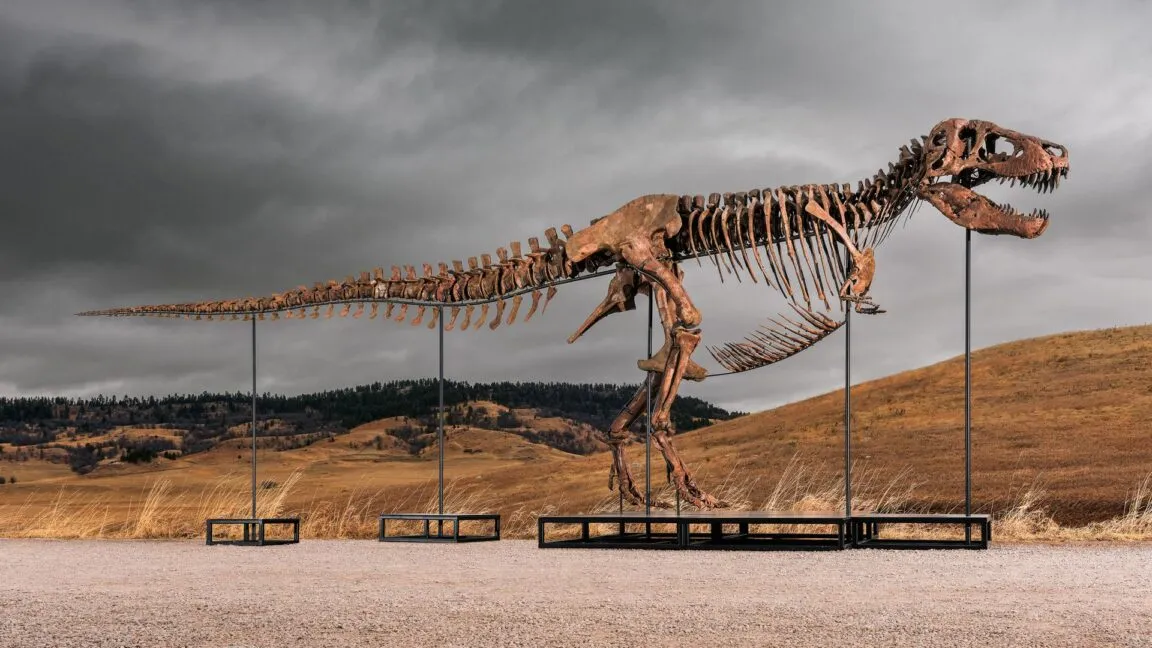
Sotheby's July 14 T. rex Gus auction targets up to $30M as collectors outbid museums
Private buyers are grabbing fossils like luxury assets, and scientists say auction hype is accelerating the loss to study.