
Deep-sea oil drilling is accelerating as ecosystems get the final say, Nature warns
Engineers are pushing fossil fuel searches deeper, but ecological risks are the constraint that could set the pace.
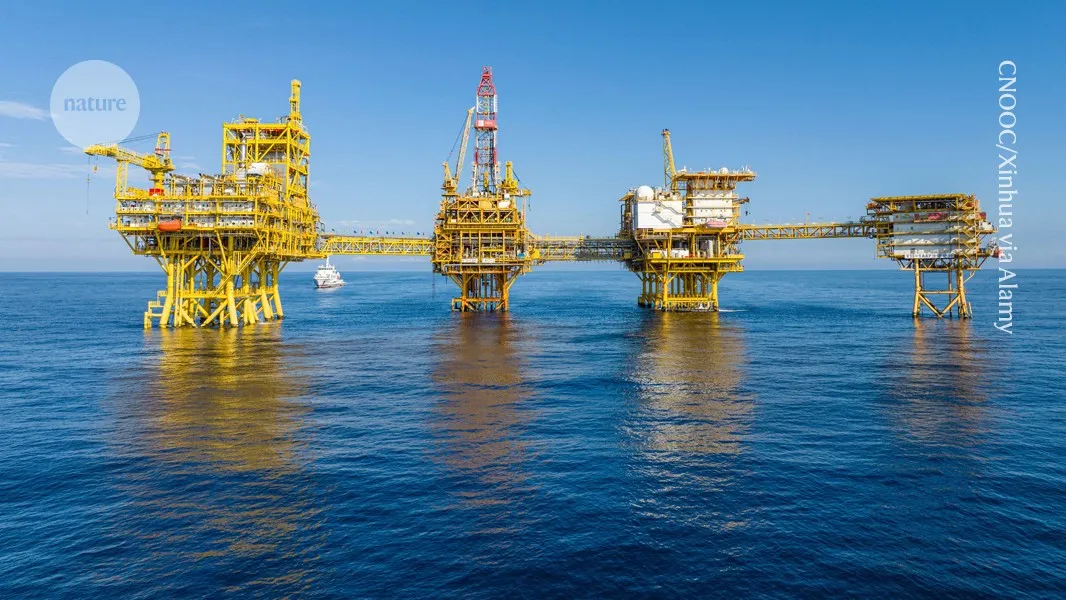
Nature reports that technologies are taking the search for fossil fuels to the deepest parts of the ocean. The consequence for decision-makers is simple: engineering capability is now constrained as much by ecology and oversight as by access and cost.
Nature, published online 21 July 2026 (doi:10.1038/d41586-026-02232-x), says oil and gas drilling is shifting to the deep sea because technology is extending where fossil fuel exploration can realistically reach. That is not a niche story for oceanographers. It is an operational and governance story for anyone who funds, permits, or signs off on long-horizon energy projects.
The core point is straightforward and urgent. As drilling moves into deeper ocean environments, engineers must keep ecological risks manageable. Nature frames this as a practical requirement, not a philosophical preference. Deep-sea ecosystems tend to be less resilient to disturbance, and the operational challenges of working at depth increase the chances that something goes wrong and becomes hard to contain. If you are running an upstream program, this changes what “risk” means in the full decision stack: it is no longer only about cost overruns and mechanical failure. It is also about maintaining acceptable ecological outcomes when you are far from easy intervention.
To understand why this matters for executives and boards, zoom out to how oil and gas tends to behave. When accessible resources become harder to find or more expensive to develop, the industry follows the remaining options down the cost curve and outward into more complex environments. “Deep sea” is basically the ultimate complexity tier. Drilling at depth requires systems that can withstand harsh conditions while staying reliable over long timeframes. Reliability itself is capital intensive, and the deeper you go, the more the engineering story becomes entangled with permitting realities and monitoring requirements.
Regulation and oversight are part of that entanglement, and they usually do not move at the speed of technology. Even when regulators are not explicitly trying to block development, they often require risk assessments that can cover worst-case scenarios, mitigation plans, and long-term monitoring. For deep-sea operations, ecological risk management becomes a gating item: you may be able to build the hardware, but you still need a credible plan for how ecological impacts will be measured, minimized, and handled if events occur. Nature’s emphasis on “keeping ecological risks manageable” signals that governance is now a direct design input.
There is also a second-order governance effect. Boards are used to receiving risk reports that translate into financial exposures: likelihood, downtime, remediation costs, and reputational damage. Deep-sea ecological risk adds variables that are harder to quantify and may carry timelines that do not line up with project accounting. Ecological consequences can extend beyond a quarter, beyond a permit cycle, and beyond the operational window. That mismatch puts pressure on how boards think about liability horizons and how management builds contingencies into budgets. In other words, ecological risk management may force more conservative assumptions and longer monitoring commitments, even when the core drilling economics look attractive on paper.
Then there is the market signaling piece. When Nature highlights a shift to the deepest parts of the ocean, it is implicitly reminding industry peers that this is where future capability is headed, and that ecological risk management will be part of the differentiator. Companies that can demonstrate robust controls, transparent monitoring, and credible mitigation processes can reduce friction with regulators and stakeholders. Companies that cannot may find that “technical feasibility” is not the end of the story. It is the beginning of a compliance and risk management test that can slow decisions, increase costs, or limit scope.
For decision-makers across energy, infrastructure, and capital markets, the strategic stakes are clear. Deep-sea drilling is moving from the edge of engineering possibility toward mainstream planning, and Nature’s message is that ecological risk management has to keep up. If it does not, the constraint will become governance and ecology, not hardware. That is the real headline behind the deep-sea framing: the deeper the drill goes, the more the ocean itself becomes the limiting factor.
This story's Key Insights and Take-aways are locked.
Create a free account to unlock Executive Actions for one credit.
Register to UnlockAlways free for Executives Club members. Join the Club
More in Science

Alaska's 1,580-foot tsunami had warning signs. Scientists just found them.
Rapid glacier retreat, heavy rainfall, and thousands of tiny tremors preceded Alaska's 1,580-foot tsunami, a warning for every coastal community in a warming world.

The rare mutation that lets high-risk brains dodge Alzheimer's
Scientists found a natural defense against protein buildup, opening a new path to preventive treatments.

3,000 steps a day may halve Alzheimer's decline, study finds
New research links a modest daily walk to less tau buildup and nearly half the cognitive and functional decline, even for those with early signs.