

DeepSeek grabs $7.4B in its first raise, smashing China AI funding records
The Hangzhou lab’s $7.4B round at a $50B+ valuation signals how China’s AI capital race keeps accelerating.
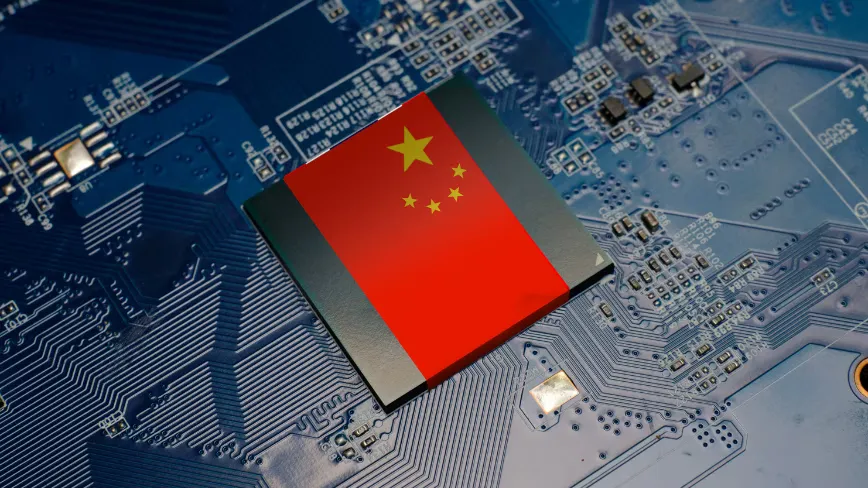
DeepSeek, the Hangzhou AI lab led by founder Liang Wenfeng, closed a $7.4bn first-time funding round at a valuation above $50bn. For decision-makers, it is a live datapoint in China’s AI “cash surge” amid U.S. pressure, reshaping expectations for rivals and capital strategy.
DeepSeek’s first major capital raise landed at $7.4bn, and it did it with record-setting speed. The Hangzhou lab closed what The Next Web describes as the biggest first-time raise by a Chinese startup, valuing it above $50bn. Just as important as the headline number is the implied math behind it: this is not a startup that got easy money early. DeepSeek reportedly ran for three years on founder Liang Wenfeng’s own wealth, which means the business did not start life as a standard “funding and faith” story. It already had momentum, and investors still showed up at a valuation that signals serious ambition.
That $7.4bn figure matters to anyone tracking where the next batch of AI winners will come from, because it reinforces a broader pattern: China’s AI sector is not short of cash. If anything, American pressure is described as “pumping more in.” In other words, capital is flowing even as geopolitics tightens certain lanes. DeepSeek is being used as the clearest example of the pattern, which tells you how observers are interpreting the last stretch of AI funding. This is not a pause. It is an escalation.
To understand why an AI round like this can be so strategically loud, you have to remember what “first-time raise” usually means. Early rounds often happen before a company becomes a credible target for large-scale talent, expensive compute, and iterative product work. When a first raise is also the biggest by its category, it suggests the market believes there is enough execution already in place to justify scaling quickly. That is exactly what the source hints at when it notes DeepSeek’s three-year run on Liang Wenfeng’s own wealth. Self-funding for that long can be a signal to investors: the founder was willing to keep going without waiting for outside validation.
Now layer in the incentive structure that typically sits behind mega-rounds like this. Large investors do not just fund to “support innovation.” They fund to gain optionality on model leadership, product distribution, and the data and infrastructure advantages that tend to compound. In AI, optionality has a cost, because training, inference, and model development can be compute-hungry. Even without adding any new numbers beyond what The Next Web already states, the logic is straightforward. A $7.4bn round is a statement that the company expects a long runway of scaling. It also means competitors must assume DeepSeek will move faster, hire more aggressively, or invest more deeply in whatever technical and operational bottlenecks sit between research and deployment.
The geopolitical angle is the other half of the story. The source frames American pressure as something that is pushing more money into China’s AI sector rather than stalling it. This is not automatically surprising in markets: when supply chains tighten or access limits appear, capital often looks for adjacent routes to keep progress moving. If AI is becoming a strategic priority, then funding can become even more concentrated around homegrown teams and local infrastructure. DeepSeek’s raise, described as one symptom of this “cash surge,” fits a world where investors and founders read regulation and export restrictions not only as obstacles, but as signals about where demand and compute will be forced to concentrate.
There is also a signaling effect that boards and executives should not ignore. A valuation above $50bn for a startup in its first-time funding moment does not just reward the founders and early believers. It sets a reference point that can influence how future rounds are priced across the ecosystem. When one company establishes a high watermark, other startups must decide whether to follow it, differentiate from it, or accept a “reality discount.” That can influence board-level conversations about timing, fundraising strategy, and how aggressively to pivot between training-first and product-first roadmaps.
For decision-makers in the AI space, the second-order implications cut in two directions. First, this kind of funding confirms that competitors are likely to have the financial stamina to outlast setbacks, because they can pull forward expensive bets. Second, it suggests that the broader market narrative is tightening around cash availability as a competitive variable, not just technical capability. If the sector is flush, then the competitive center of gravity moves toward execution speed: hiring, iteration cycles, and the ability to turn model improvements into real-world value.
DeepSeek’s $7.4bn first raise is therefore more than a funding headline. It is a benchmark for what investors are willing to underwrite in China right now, and it is a reminder that capital is responding to pressure rather than freezing. If you are running an AI company, sitting on a board, or allocating venture and corporate capital, the question is not whether AI funding will happen. The question is whether your plans assume “enough cash to sprint,” or “cash to survive.” DeepSeek’s story, with Liang Wenfeng previously self-funding for three years and then raising $7.4bn at above $50bn valuation, is a concrete answer to that question.
This story's Key Insights and Take-aways are locked.
Create a free account to unlock Executive Actions for one credit.
Register to UnlockAlways free for Executives Club members. Join the Club
More in Business

A flaw in PHP just forced governments to pull their own sites offline
European agencies from Belgium to Germany took websites dark to patch a critical weakness in the language behind almost 70% of the web, and the blast radius extends far beyond government portals.

BioWare shuts down, Mass Effect 5 dead after $55B EA buyout
The legendary RPG studio's closure lands months after a $55 billion investment group buyout of EA, raising tough questions for gaming's biggest acquirers.
Musk barred from the room as Tesla, SpaceX boards weigh $3.5 trillion merger
The CEO of both companies is a 'conflicted party' watching independent directors negotiate a tie-up that would create a $3.5 trillion giant he would own about a third of.