

Deisseroth, Hegemann, Nagel win 2026 Nobel for making brain cells obey light
The prize cements optogenetics as a cornerstone of neuroscience, with implications for brain research and future therapies.
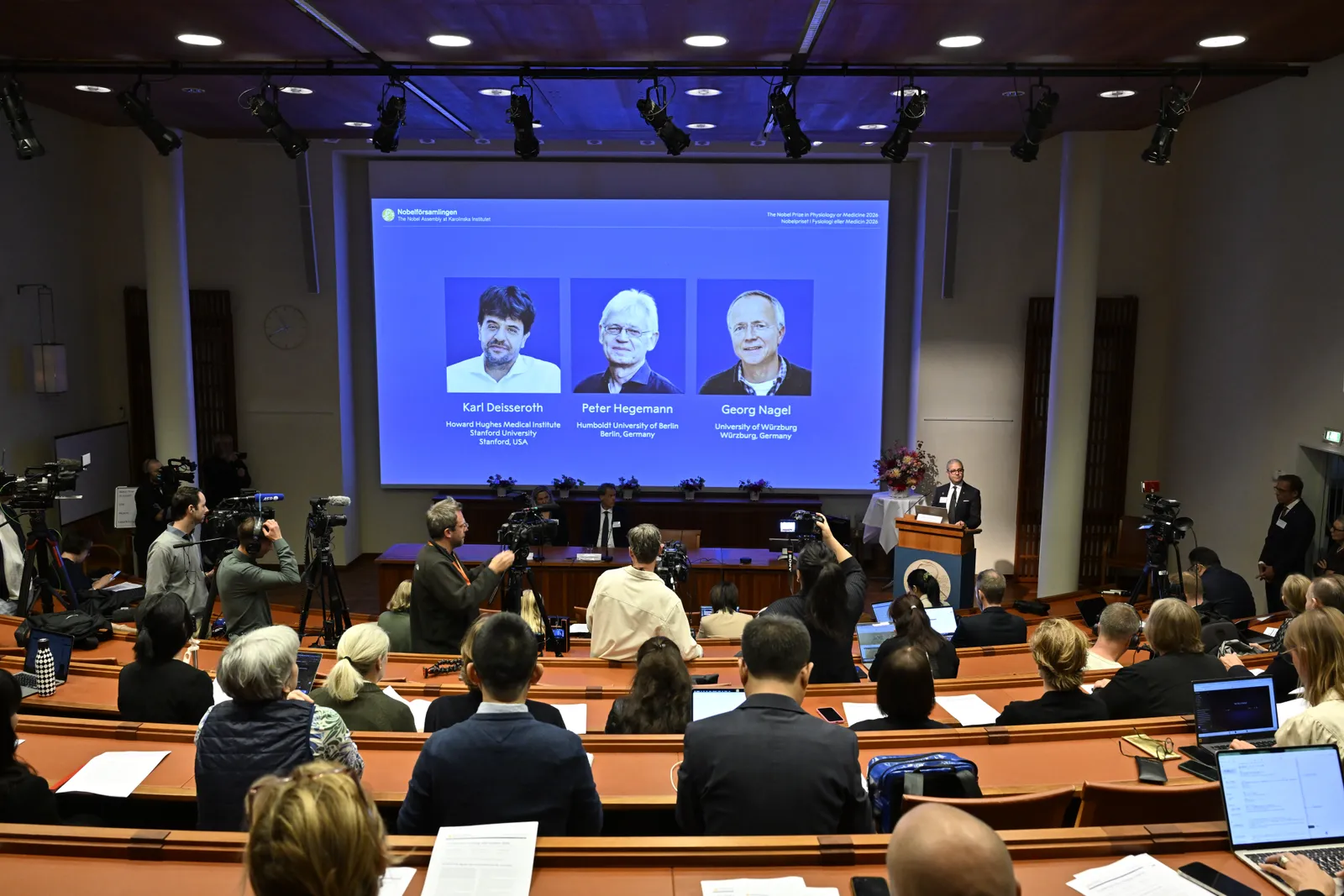
Karl Deisseroth, Peter Hegemann, and Georg Nagel have won the 2026 Nobel Prize in Physiology or Medicine for developing optogenetics, a technique that uses light to control brain cells. The recognition underscores a body of work that has transformed neuroscience and opened new avenues for studying and potentially treating brain disorders.
The 2026 Nobel Prize in Physiology or Medicine has gone to Karl Deisseroth, Peter Hegemann, and Georg Nagel for optogenetics, the technique that lets scientists use light to switch brain cells on and off. The American and two German researchers share the award for a method that has become a cornerstone of modern neuroscience, giving labs a precision tool that was unimaginable a generation ago.
At its core, optogenetics fuses optics and genetics. Researchers genetically modify neurons to express light-sensitive proteins, then use lasers or LEDs to activate or silence those cells with millisecond precision. That means scientists can now ask questions like: what happens when we turn off a specific set of neurons involved in memory? Or: can we restore movement by stimulating a damaged motor circuit? The technique has been widely adopted in neuroscience research, enabling experiments that were previously impossible. It allows researchers to target specific cell types and circuits, rather than relying on drugs or electrodes that affect broad regions of the brain.
The award also highlights the power of cross-disciplinary science. The three researchers, working across the Atlantic, combined insights from microbiology and neuroscience to create the technique. Their work spanned basic questions about how light interacts with biological tissue and applied questions about how to control brain activity. Before optogenetics, neuroscientists had limited tools to manipulate neural activity with precision. Optogenetics changed that, offering a way to dissect neural circuits with surgical accuracy. This precision has opened new avenues for understanding how the brain processes information, forms memories, and controls behavior.
The path to the Nobel was not a straight line. The technique emerged from years of fundamental research on light-sensitive proteins and how they respond to light. The three researchers, each with their own expertise, contributed to different pieces of the puzzle. Their collaboration, spanning continents and disciplines, turned a basic biological curiosity into a tool that has reshaped neuroscience. The award is a testament to the value of long-term, curiosity-driven science, and it underscores the importance of investing in basic research without immediate commercial expectations.
For the business world, the Nobel Prize is more than a scientific honor. It is a validation of a platform technology with commercial potential. Historically, Nobel-winning discoveries have drawn increased investment and licensing activity. The 2026 prize could similarly boost funding for optogenetics research and development. For executives in biotech and pharma, the award is a reminder that fundamental science can take years to mature, but when it does, it can reshape entire therapeutic categories. Companies that have already built intellectual property around light-sensitive proteins or neural interfaces may find themselves with assets that are suddenly more valuable. The prize also signals to venture capitalists that neurotech is a sector worth watching, potentially accelerating deal flow in the space.
The award also underscores the importance of long-term research investment. Optogenetics emerged from decades of basic science, and its recognition is a signal to funders and boards that patient capital pays off. For decision-makers, the takeaway is to watch the neurotech space more closely. Optogenetics is not just a lab tool; it is a proof point for a broader trend toward precision neuromodulation. The same principles are being applied to other techniques, such as chemogenetics and focused ultrasound, which aim to control brain activity with similar specificity. The Nobel Prize puts a spotlight on this entire field, and that attention can translate into talent flow, capital, and partnerships.
The prize also raises questions about the future of medicine. If light can control brain cells, what else can it do? The technique's potential for clinical applications is a subject of active research, with scientists exploring ways to restore vision, treat movement disorders, and modulate pain. While these applications are still in early stages, the scientific foundation is now Nobel-validated. That matters for regulators, investors, and patients who are waiting for new options. The recognition could also spur new collaborations between academic labs and commercial developers, as the technology moves from bench to bedside. For regulators, the prize may prompt earlier conversations about how to evaluate therapies that combine genetic modification and optical implants, a novel combination that does not fit neatly into existing frameworks.
In the end, the 2026 Nobel Prize in Physiology or Medicine is a story about the power of curiosity-driven science. Three scientists, driven by questions about how light interacts with living tissue, built a tool that has changed how we study the brain. For the executives and investors who read this briefing, the lesson is simple: the next breakthrough may be hiding in a basic science lab, and the companies that know how to spot it early will be the ones that lead the next wave of neurotechnology.
This story's Key Insights and Take-aways are locked.
Create a free account to unlock Executive Actions for one credit.
Register to UnlockAlways free for Executives Club members. Join the Club
More in Science

Alaska's 1,580-foot tsunami had warning signs. Scientists just found them.
Rapid glacier retreat, heavy rainfall, and thousands of tiny tremors preceded Alaska's 1,580-foot tsunami, a warning for every coastal community in a warming world.
The rare mutation that lets high-risk brains dodge Alzheimer's
Scientists found a natural defense against protein buildup, opening a new path to preventive treatments.

3,000 steps a day may halve Alzheimer's decline, study finds
New research links a modest daily walk to less tau buildup and nearly half the cognitive and functional decline, even for those with early signs.