

DHL Express cuts jet-fuel pain with reroutes and sustainable supply as kerosene doubles
With 295 planes exposed to Strait of Hormuz chaos, DHL Express Europe says it diversified fuel, rerouted flights, and adjusted surcharges.
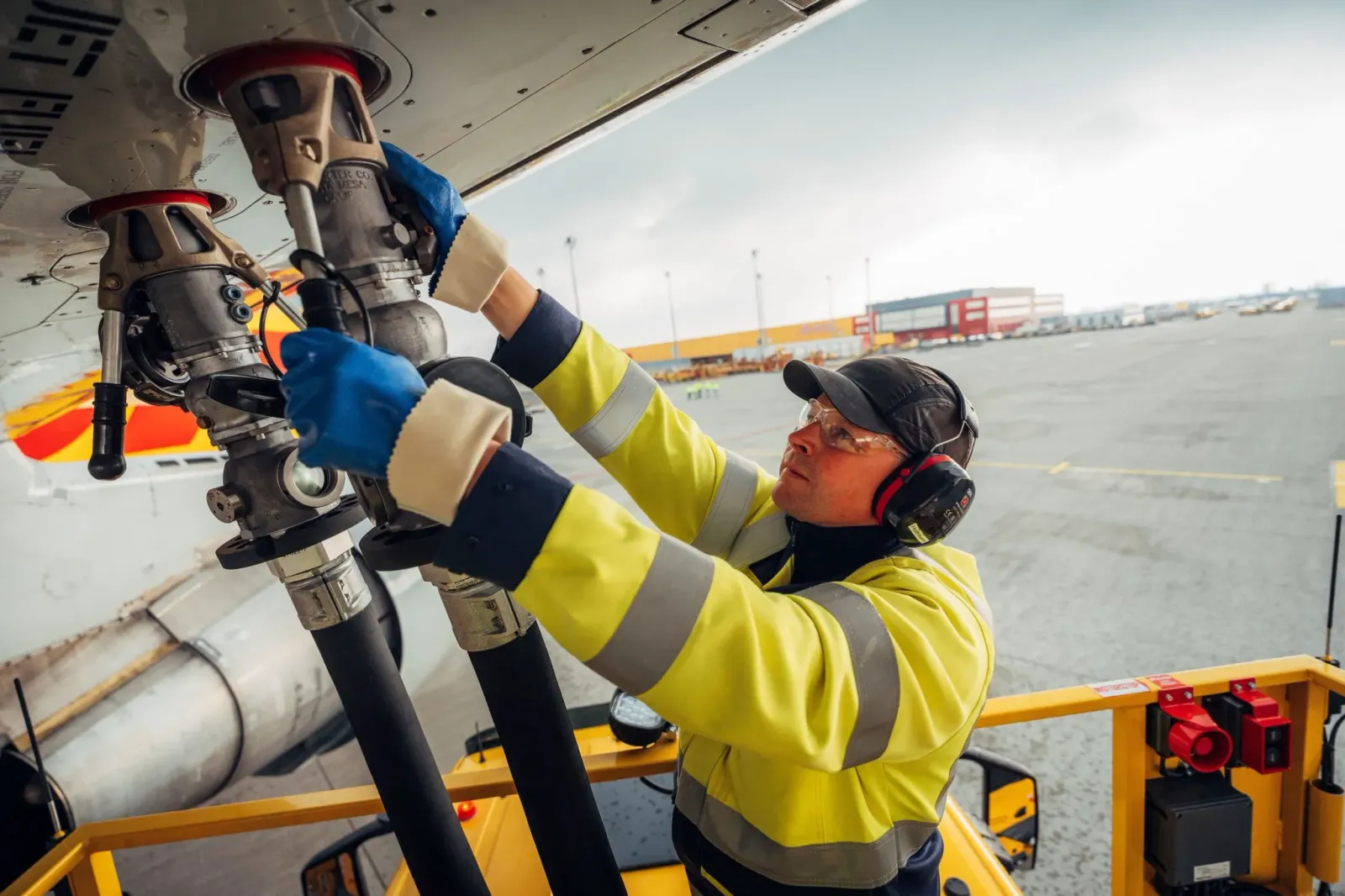
DHL Express Europe is navigating the U.S.-Iran conflict fallout, after jet fuel prices more than doubled from $800 per tonne to a peak of $1,903 in April, pushing kerosene to $918 per tonne. CEO Mike Parra says the company’s fuel strategy hinges on diversified purchases, tankering, sustainable aviation fuel, and network planning controls.
Jet fuel has doubled during the U.S.-Iran conflict, and DHL Express Europe is treating the problem like an operational fire drill it can keep repeating. Since the closure of key shipping lanes in the Strait of Hormuz, supply chains have been stressed and jet fuel has become a particularly expensive line item: more than doubling from about $800 per tonne before the conflict to a peak of $1,903 in April, with kerosene at $918 per tonne in the latest Argus Media figures. For most companies, a fuel spike is a spreadsheet headache. For DHL Express, it is a network reliability issue, because its delivery model runs on air.
DHL Express Europe, led by European CEO Mike Parra, operates a fleet of 295 planes, including third-party aircraft and charters, delivering shipments to 220 countries. In other words, disruptions in air fuel supplies do not stay contained. DHL Express Europe delivered 248 million shipments worldwide last year, so fuel cost volatility flows into routing, payload math, and pricing decisions in near real time. Parra says its diversified approach has helped the company navigate the fuel crisis and secure kerosene supplies through the summer months.
So what does “diversified” actually mean when your airplanes keep moving? The strategy DHL describes has three moving parts. First, DHL diversified where it buys fuel, with production increasing in the U.S., South Korea, and Nigeria. Second, it uses tankering, which means intentionally loading aircraft with extra fuel so it can avoid refueling at destinations where prices are higher. That can be cost-effective, but it is also a trade-off, because flying planes full of fuel takes a hit on payload.
Third, it built up a sustainable fuel supply. DHL says it is one of the largest purchasers of sustainable aviation fuel, derived from waste and residue oils and fats. One-tenth of its air fuel is sustainable, and it has set a target for 30% to be sustainable by 2030. That matters beyond ESG optics because sustainable fuel can change the fuel basket a carrier relies on, especially in a world where traditional supply chains can be disrupted by geopolitical shocks.
Behind these tactics sits an internal control system that Parra frames as central to execution. He calls DHL’s network planning team the “central nervous system of the business.” The team, he says, analyzes fuel prices and decides where it is best to fuel planes. There is a lot going on in that decision: if you add fuel to avoid a higher refuel price, you may reduce how much cargo you can carry, and routing becomes a multi-variable optimization problem. DHL says its internal shipment tool VISTA also helps employees review aircraft weight and balance to work out cost-effective and efficient routes. Parra’s takeaway is blunt: “We can’t predict the volatility, but we can manage the complexity that goes around it.”
Even when you do everything operationally right, you still have to protect margins. DHL Express says it has increased its fuel surcharge for air shipments to offset spikes in fuel costs. The surcharge, used to offset fuel cost swings and calculated on the average daily price of kerosene, peaked at 48.75% and currently stands at 40.75%. Parra emphasizes it is not designed to make money, but to protect costs. The mechanics are also important: it is updated weekly and calculated on a monthly lag to account for the frequent rise and fall in fuel costs. Historically, DHL says this was based on prices over an eight-week period and was updated monthly. Translation: pricing policy is getting more responsive, because volatility is not waiting on monthly reporting cycles.
The Middle East risk does not end at fuel pricing. Conflict in the region also impacts operations directly. DHL Express introduced a security risk surcharge for deliveries into war-impacted areas such as Israel and Lebanon, aimed at offsetting increased aircraft insurance prices. Parra says flights can require urgency on the ground: landing fuel, turning around, and getting out, because the alternative is leaving an asset idle where risk is high. DHL Express also implemented road “linehaul” routes in the Middle East, using trucks and vans to distribute packages to territories where it is not safe to land a plane. Parra says that added complexity may require more fuel, but it also enabled the company to “bounce back” quickly.
This is where the investment and resilience story gets real. Despite the current conflict in the Middle East and the operational challenge it brings, DHL Express says it remains committed to the region. Last year, DHL announced plans to invest more than €500 million in the Middle East, focused on Gulf markets of Saudi Arabia and the UAE. Parra also says Israel is a strong market and one DHL expects to continue seeing growth in. That is the strategic tension for logistics leaders right now: where to place capital when geopolitical risk can disrupt both cost and service levels.
There is also a second-order lesson DHL points to from the pandemic, when complexity multiplied in a different way. Parra describes adapting to complexity as a “second-hand skill” after operations were tested during COVID, including health and safety risks to employees and an overnight boom in e-commerce. DHL says it was also the biggest transporters of vaccines, working with governments and organizing escorts after planes landed. Between December 2020 and May 2021, DHL helped distribute 440 million Pfizer vaccines to 92 countries. The company argues that experience building operational muscle for complicated constraints helps now, when the constraints are geopolitical instead of biological.
Internally, DHL says uncertainty is showing up in employees, too. Parra has noticed more staff mentioning personal challenges during one-to-one meetings or in coaching sessions, including being impacted by crises going on or rising prices. He notes the U.K. is not a cheap place, and worries are increasing. DHL Express responded by increasing the number of staff trained in mental health first-aid to 202 mental health first-aiders and implementing a five-step wellbeing strategy with connection, staying active, learning, giving, and being present. The relevance for executives is clear: resilience is not only about routes and fuel procurement. It is also about workforce stability when stressors stack up.
For businesses exposed to fuel and routing risk, DHL Express Europe’s approach reads like a playbook built for the era of accelerating uncertainty. Jet fuel volatility plus conflict-driven operational constraints force you to manage complexity across procurement, network planning, pricing, and workforce support. Or as Parra puts it, DHL cannot predict volatility, but it can manage the complexity around it. Peers watching the same turbulence will take the same lesson: if you operate the kind of network where 295 aircraft touch your economics daily, your fuel strategy is not a procurement project. It is company strategy.
This story's Key Insights and Take-aways are locked.
Create a free account to unlock Executive Actions for one credit.
Register to UnlockAlways free for Executives Club members. Join the Club
More in Business

Comcast shares jump 25% as it plans to split NBCUniversal and Sky
The tax-free spin-off could reshape focus, funding, and competition across media and tech for years.

Bungie cuts most Destiny 2 staff as Sony says Marathon still matters
Herman Hulst confirms layoffs affecting most Destiny and some Marathon teams after Bungie admits Destiny fell short.

SK Hynix jumps 11% after seeking up to $29.4B in Nasdaq listing
The chip giant filed for a Nasdaq listing plan that could raise $29.4 billion, instantly reshaping investor expectations.