
DJ Yousuke Yukimatsu quit festivals after seizures, now tours UK for topless peace
His brain-cancer survival story is powering a techno mission: survive today, push back on a worsening world, publicly.
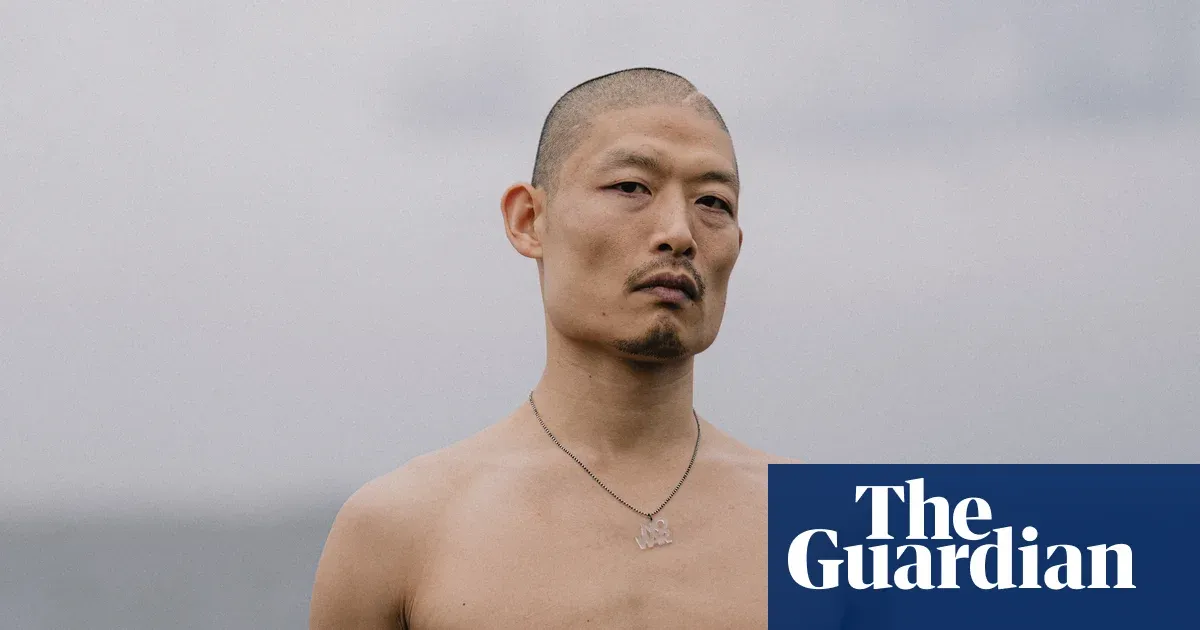
Japanese DJ Yousuke Yukimatsu says a decade ago he survived an epileptic seizure and was later diagnosed with a brain tumour, after festival organizers contacted friends in Osaka who found him collapsed at home. Now on a UK tour, he couples experimental techno with a political message, arguing the world is getting worse and musicians should speak up.
He survived an epileptic seizure, a brain tumour, and two craniotomies. Then, in the middle of the aftermath, he did something that is easy to miss if you only treat DJs like entertainment: he turned his career into a full-time mission.
Ten years ago this month, Japanese DJ Yousuke Yukimatsu had an epileptic seizure. When he did not show up for a festival booking, organisers got in touch with his friends in Osaka. They found him collapsed at home and he was taken to hospital, where doctors diagnosed a brain tumour. “If no one had contacted me, I might have died,” Yukimatsu posted on a crowdfunding platform several months later. That sentence is the real origin story, not the genre playlist. It frames everything that follows: why he now insists on living for tomorrow, and why he treats performance as something closer to civic duty than career branding.
In the black-and-white photograph accompanying his crowdfunder, Yukimatsu leans toward the camera with a buzz cut growing out around a thick ragged scar that curves from his left ear to the top of his hairline. The visible mark mirrors what he describes elsewhere in the reporting: he had been through two craniotomies, plus extensive chemo and radiation therapy. The illness also pushed him into a new economic and creative reality. He says it gave him a realization that he needed to make DJing his full-time job, to dedicate himself to his craft and make the world a better place. “If we can keep living [for] tomorrow, if I can encourage people … that’s what I’m always trying to do,” he says now.
And then comes the part that can feel out of place in a music story, but is actually the point. Yukimatsu argues that the world is getting worse than when techno was born in the mid 1980s. He says “Weapons are being developed; it’s getting easier to commit a massacre.” That is not abstract moralizing in the way some public statements are. It is tied to his bigger claim about cultural incentives and fear: “In Japan, if a musician speaks about politics, they can be hugely criticised.” He still says it is “really important to speak up.”
To understand why this matters beyond the dancefloor, look at how touring and booking typically work. A DJ like Yukimatsu sits at the intersection of promoters, venues, and an audience that expects a certain kind of experience. When you add political messaging, you change the risk profile. It can mean backlash, pressure on organisers, or unwanted media framing. Even in cases where the content is not a direct legal trigger, reputational risk can translate into business risk. The source does not name specific legal actions against him. But it does give a regulatory-flavored context by pointing to culture and consequences: in Japan, musicians can face huge criticism for speaking about politics. That is a reminder that “regulation” is not only statutes and regulators. It is also social enforcement.
For decision-makers in media, events, and creator ecosystems, this kind of personal risk becoming public strategy has second-order effects. First, it shapes audience expectations. If the narrative is “survival plus mission,” fans may show up differently, and they may tolerate less bland neutrality. Second, it changes the conversation a promoter has to have internally. If you are booking talent who explicitly talks about politics and the state of the world, your risk is not just about noise, it is about how your event is interpreted.
Third, it ties into the funding and ownership logic behind creative independence. Yukimatsu’s story includes crowdfunding support several months after his post-seizure crisis. That detail matters because it signals alternative funding when conventional channels might be constrained by uncertainty, health, or messaging risk. Crowdfunding also creates a direct accountability loop with supporters, which can reinforce an artist’s willingness to speak plainly, especially after nearly dying. The story never says “crowdfunding made him brave.” It shows the sequence: crisis, community contact, recovery, then a pledge to encourage people and dedicate himself full-time.
So what is the strategic stake for executives, investors, and operators watching creators like Yukimatsu? It is not “topless raves” as a gimmick, even though that is in the headline framing. The stake is how artists who have lived through extreme vulnerability turn that experience into a long-term platform with explicit political intent. When you blend survival credibility with a worldview that warns about escalating violence and insists musicians should speak up, you are effectively changing the product. You are selling an event that is also a statement.
Yukimatsu is on a UK tour now, armed with a blend referenced in the reporting: experimental techno, Beastie Boys, and Taylor Swift. That mix is musically vivid, but the deeper mix is cultural. He takes the energy of rave culture, then directs it toward “make peace,” a phrase that signals his intention to counter the deterioration he describes. For boards, partnerships, and event strategists, the lesson is sharp: the next era of entertainment brands will be judged not only on sound quality or venue logistics, but on whether creators can credibly attach meaning to risk. In a world he says is getting easier to massacre, his answer is to keep living, encourage people, and speak up while the lights are still on.
This story's Key Insights and Take-aways are locked.
Create a free account to unlock Executive Actions for one credit.
Register to UnlockAlways free for Executives Club members. Join the Club
More in Entertainment

12TB Steam 'teraleak' goes beyond Valve: GTA 3, Mafia 2 prototypes exposed
A 12-terabyte dump of Steam data reveals prototypes and builds of third-party classics like GTA 3 and Mafia 2, plus unreleased Valve content, rewriting game history.

LinkedIn's romance problem: 1 in 4 workers say dating on it is fair game
A new survey shows a quarter of U.S. employees treat the professional network as fair game for romance, even as LinkedIn bans it and removes hundreds of thousands of offending posts.

Enhypen's first No. 1 album breaks K-pop's Billboard 200 streak
The K-pop group's 98,000-unit debut tops the chart while Dolly Parton's catalog reentry shows how death reshapes streaming.