

DNC picks South Carolina for Jan. 22, beating Nevada and reopening the 2028 fight
The early-primary calendar shifts South to the front, scrambles Midwest influence, and tees up a messy DNC debate in Austin.
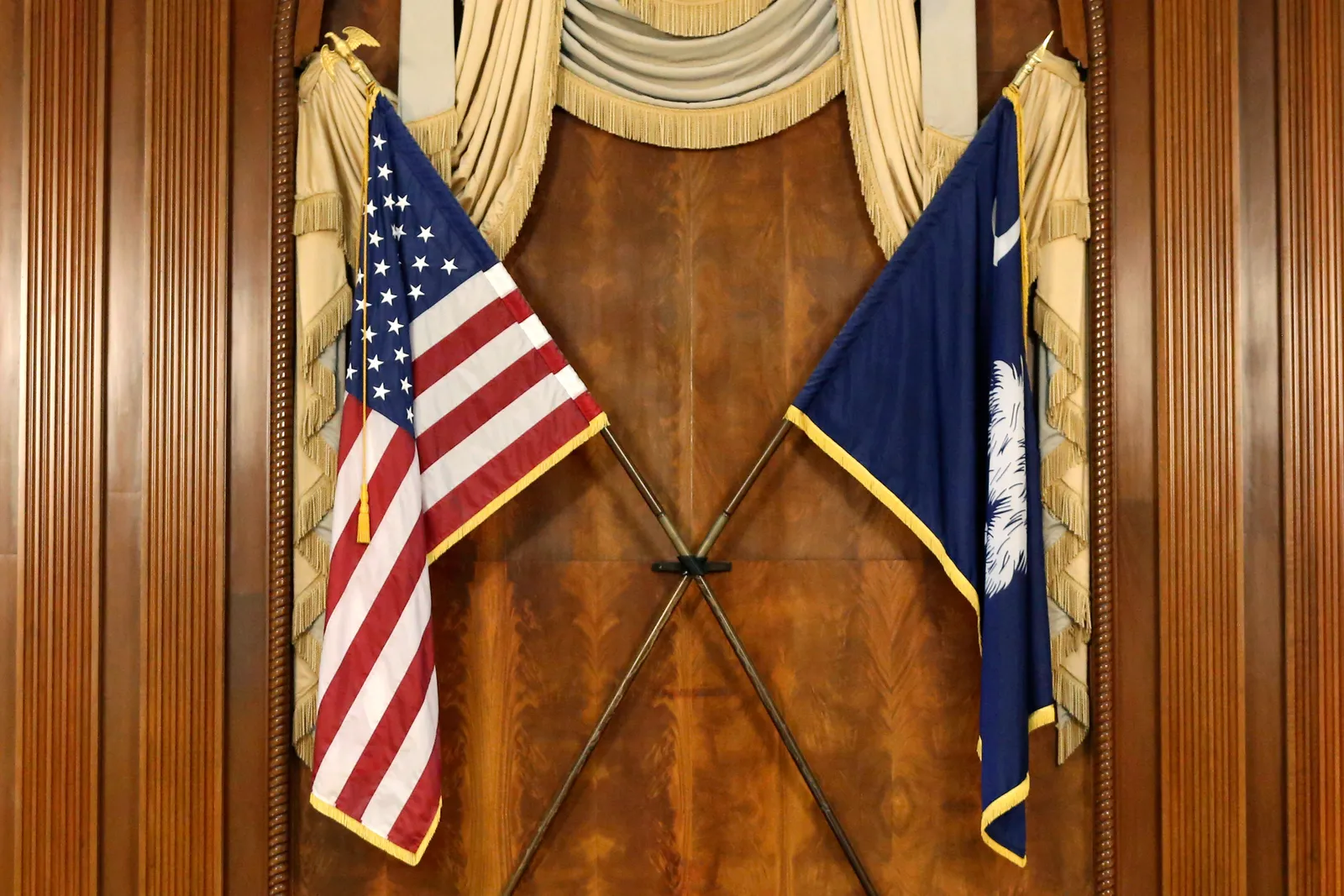
The Democratic National Committee’s Rules and Bylaws Committee voted Friday to make South Carolina the first presidential primary state for 2028, scheduling it for Jan. 22 and tentatively setting the rest of the early calendar. For decision-makers, the new order reshapes regional leverage, delegate momentum, and the political incentives across battleground states heading into the August Austin vote.
Democrats just rerouted the starting gun for the 2028 presidential race. The DNC’s Rules and Bylaws Committee voted Friday to make South Carolina the first presidential primary state, setting its date for Jan. 22, edging out Nevada for the top spot.
South Carolina’s leadoff placement will be followed by Nevada, New Hampshire, New Mexico, Michigan, and Virginia, with the full adopted calendar to be voted on by the entire DNC at its August meeting in Austin. The headline stake is simple: whichever region starts first can set the narrative, attract donors, and drive delegate momentum. The more interesting part is why this happened now, and why it looks less like a clean strategy and more like a high-stakes scramble under real constraints.
The committee’s logic centered on operational risk and on the party’s post-legal-change search for a more powerful coalition. Democrats said they were concerned about Nevada’s ability to process election results quickly. They also framed the decision as part of strengthening Black voting power in the South after the Supreme Court significantly restricted the Voting Rights Act earlier this year, a move that triggered redistricting efforts. In other words, the calendar is not just pageantry. It is a mechanism for who gets early attention, and who gets to test (and potentially validate) campaign messages.
The swap also rearranged long-standing expectations in the Northeast and Midwest. New Hampshire, which had gone second in most past cycles, got bumped back to third. And Michigan, historically second fiddle to Iowa in the Midwest’s early rhythm, ended up winning the Midwest slot over Iowa. That departure matters, because Iowa led the calendar for decades through 2020, and many DNC members treat that legacy like part of the party’s operating system. The result: frustration from Midwestern members once the order put the Midwest at fifth.
The meeting itself turned tense around how regions should be represented in the early window. Rep. Debbie Dingell (D-Mich.) argued, “We had four regions for a reason, and we should be respecting that,” adding, “For too long, Democrats flew over the Midwest.” Her complaint is not just emotional. Calendars translate into who shows up first, who builds infrastructure for retail politics first, and whose issues get treated as baseline rather than boutique.
Layered on top of the regional fights were procedural details that changed how one state could fit into the early round. The committee voted to add Virginia and New Mexico to host early-state primaries for the first time. But Democrats proposed that New Mexico vote on Feb. 15, before Michigan, because Democrats in Michigan cannot move their primary date unilaterally. That is a major departure from a months-long, widely agreed upon plan from DNC members to give one of the first four early states to the South, Northeast, West, and Midwest. The adopted calendar leaves the Midwest, described as “a crucial region for Democrats’ path to victory in 2028,” represented fifth. Several Midwestern members were clearly not thrilled to see the logic of “four regions” stretched.
It also explains why this calendar may feel, even to insiders, like it happened partly by accident. Jane Kleeb, chair of the Nebraska Democratic Party, said the mid-September deadline to move a state’s primary date caught her and other members by surprise, and that it ultimately cost Michigan an even more prominent placement. Kleeb said many assumed they had until Jan. 15. Dennis Speight, a DNC member from Texas, supported moving New Mexico into the early round, arguing that it would have gotten lost if it were stuck between two larger states. He said New Mexico might have gotten lost if it had been “sandwiched” between Michigan and Virginia, given their delegate heft.
DNC chair Ken Martin, previously Minnesota Democratic Party chair, responded to the Michigan concern by promising it would not be overlooked, pointing to delegate numbers coming out of Michigan and Virginia compared to other states. Dingell, after the vote, similarly said Michigan’s role as the first large state on the calendar should prevent it from being overshadowed, adding that candidates will “be there” and “they’re going to have to talk about the issues.” Those statements are doing double duty: reassuring the Midwest, while also signaling to the rest of the party that they should treat the Midwest as strategic, not symbolic.
Beyond the meeting room, the change reflected months of intense lobbying by politicians and operatives across battlegrounds. Politico describes public letters, private drinks, handwritten notes from New Mexico Gov. Michelle Lujan Grisham, and even “literal sweeteners in swag bags” of local goods. This is how delegate math meets ground game. It is also how state-level leadership tries to cash in early national attention without fully controlling the rules that decide who gets it.
South Carolina and Nevada emerged as frontrunners as Democrats who had bemoaned the lack of diversity in Iowa and New Hampshire looked for ways to make increased overtures to Black and Latino voters. That desire intensified after the Supreme Court’s Voting Rights Act restriction and the resulting redistricting. Virginia’s elevation as an early state also fit the narrative of expanding the South within the earliest window. Some Democrats pointed to South Carolina’s role in propelling former President Joe Biden to the nomination in 2020: Biden won the state resoundingly, rebounding after underwhelming performances in Iowa and New Hampshire, then won big across the Black-heavy South on Super Tuesday.
And for 2028’s political field, the ripple effects are immediate. The calendar elevates the South and Southwest, regions with large populations of Black and Latino voters, while weakening the Northeast and Midwest voices earlier in the process. It is a shift in bargaining power inside the DNC, but also a shift in the incentives for campaigns planning where to spend, when to tour, and which issues to lead with before the race is fully formed. Some potential 2028 candidates have already visited South Carolina, including former Vice President Kamala Harris, Maryland Gov. Wes Moore, Sen. Cory Booker (D-N.J.), Sen. Ruben Gallego (D-Ariz.), and former ambassador Rahm Emanuel, with other visits including California Gov. Gavin Newsom, Kentucky Gov. Andy Beshear, and Rep. Ro Khanna (D-Calif.) last summer.
Nevada fought for the leadoff spot with an argument about fit: it is union-heavy, has a diverse electorate and a large Latino population, and lawmakers backed the case through the Congressional Hispanic Caucus and Xavier Becerra, running to be the first Latino governor of neighboring California. But RBC members worried Nevada’s “grace period for counting late-arriving mail ballots” could delay results and inject chaos into the nominating process if Nevada was first.
Meanwhile, New Hampshire and Iowa Democrats decried the proposed calendar for overturning premium positions from past cycles, saying it is “wrong for Democrats, wrong for New Hampshire, and wrong for the country,” in a statement by Sens. Jeanne Shaheen and Maggie Hassan and Reps. Chris Pappas and Maggie Goodlander. Iowa Democratic Party chair Rita Hart said it is another example that National Democrats are out of touch with voters, arguing “Iowa is the center of the political universe right now.” DNC attempts to add Georgia to the early window in 2024 also failed, with Peach State Democrats citing the need to flip the governor and secretary of state offices in November, a gamble RBC members seemed unwilling to make. North Carolina also faced logistical hurdles.
Put it together and you get a calendar that is both a political instrument and a governance problem. South Carolina’s Jan. 22 start is now real, but the DNC full membership still votes in August. For executives, investors, and political operators watching the discipline of coalition-building, the lesson is that these early-state decisions are not minor. They shape attention markets, narrative velocity, and who gets treated like the center of gravity before campaigns even fully commit.
This story's Key Insights and Take-aways are locked.
Create a free account to unlock Executive Actions for one credit.
Register to UnlockAlways free for Executives Club members. Join the Club
More in Politics

Zelenskyy names 43-year-old Mykhailo Drapatyi commander in chief after Fedorov ouster
Front-line troops think his tech-minded, listen-first style can speed reforms they say cost lives under old command.

Mesh networks could keep activists online when authoritarian governments block or monitor internet traffic
A quick primer on how decentralized networks may reduce the impact of internet shutdowns and surveillance in political crises.

France deploys military plane as wildfires near Bordeaux threaten evacuations and services
France mobilizes an air asset as wildfires spread toward Bordeaux, raising near-term risks for infrastructure, response capacity, and costs.