
DNC sends volunteers to World Cup watch parties to register 3,000 new Democrats
A weekend blitz across nearly two dozen states turns FIFA fan crowds into a midterm pipeline, especially for young voters.
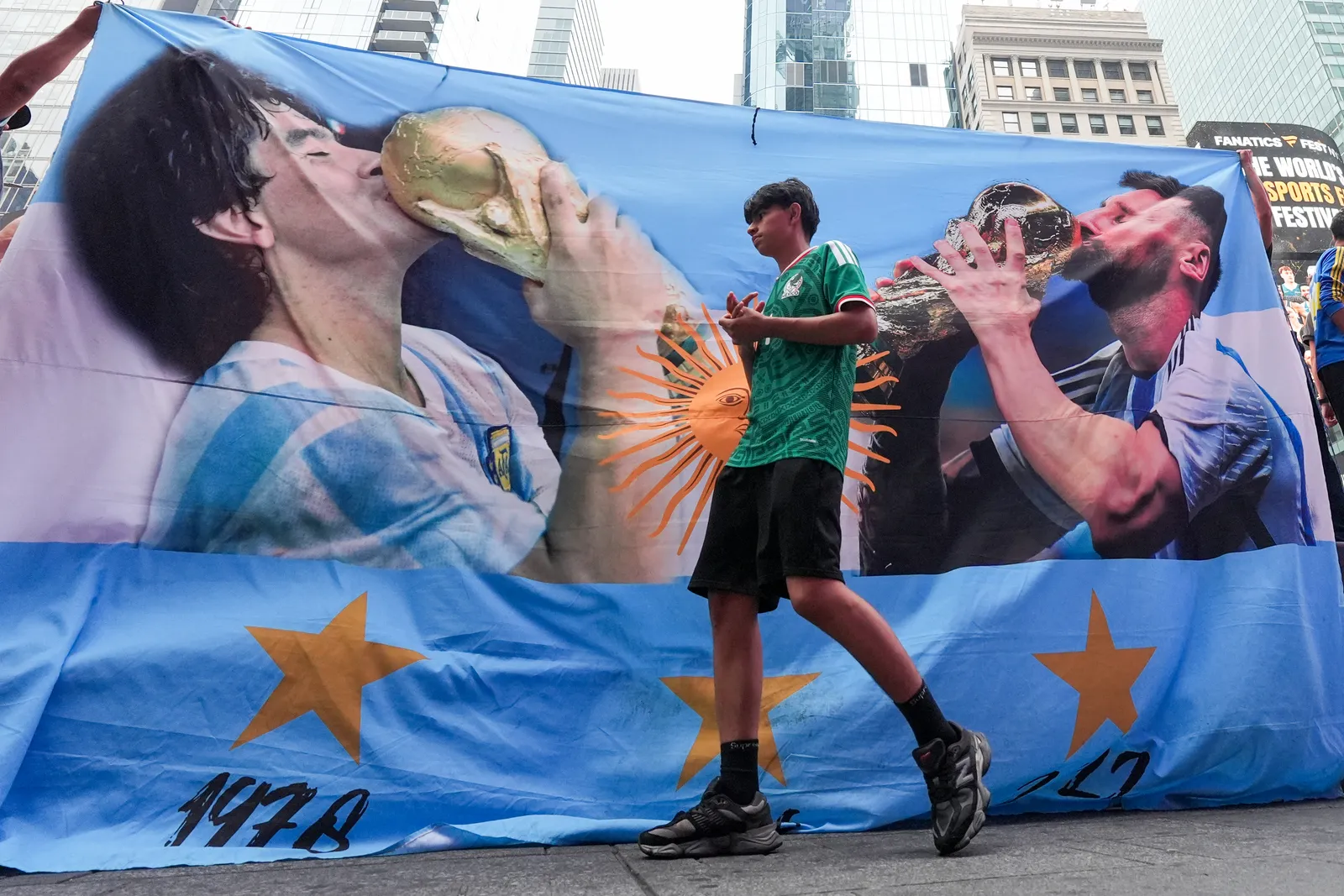
The Democratic National Committee is launching a nationwide voter registration effort for Sunday’s World Cup final, aiming to register more than 3,000 new Democratic voters at FIFA Fan Zones, sports bars, and community watch parties. The push signals how political parties plan to reach younger, harder-to-engage Americans through major sporting events ahead of the 2026 midterms.
The Democratic National Committee is betting that Sunday’s World Cup final can do something most voter registration drives struggle to do: reliably pull in people who are not usually standing in line for politics. The DNC says it is dispatching organizers, volunteers, and campaign staff to FIFA Fan Zones, sports bars, and community watch parties with a specific goal, registering more than 3,000 new Democratic voters this weekend.
This is not a generic “get out the vote” moment. The DNC Chair Ken Martin said the plan is to spend the weekend registering thousands of new Democrats and having conversations “about how we win races up and down the ballot” at locations ranging from outside FIFA Fan Zones to bars, restaurants, and parks. In other words, the party is using one of the biggest crowd magnets in the world, with more than 80,000 people expected to attend in person for the final, as an on-the-ground sales floor for its voter pipeline.
The logistics are built for reach. The weekend push spans nearly two dozen states, and Democratic organizers will show up in battlegrounds including Arizona, Pennsylvania, and Florida. Arizona is getting a particularly granular rollout, with planned registration efforts in Phoenix, Chandler, Tempe, Tucson, and Yuma. That matters because battleground states are where small shifts in turnout can swing outcomes, and the DNC is effectively trying to manufacture additional Democratic-leaning registrants in places where every incremental advantage is fought for.
The World Cup push also fits into a broader DNC initiative aimed at young voters ahead of the 2026 midterms. The program is called “When We Count,” and it is deliberately different from older models that tend to center on college campuses. According to the source, it instead targets young Americans who are already in the workforce. It also notes that about one-third of the program’s fellows are native Spanish speakers, which suggests the DNC is trying to match messaging and outreach to the actual demographics of who is gathering, traveling, and working, not just who is most visible on campuses.
Training and execution are the hidden backbone here. The DNC is pairing the World Cup registration effort with a four-part national training series, which it says will equip more than 1,500 organizers, campaign staff, and volunteers with best practices for partisan voter registration. That kind of scaling is a board-level issue even if you are not a political insider. The operational question is always the same: can you reliably convert attention into registered voters across many locations without creating chaos, compliance risk, or uneven follow-through? The source frames it as “best practices,” implying the party is standardizing how teams capture and process people during high-traffic events.
And this is happening inside a wider sports-civic engagement ecosystem where both parties and major leagues are experimenting with the same core idea: when people gather for sport, they are more likely to stick around for community activities, including registration. Professional sports leagues have increasingly embraced civic engagement around elections. The NBA and WNBA are highlighted as visible examples, using arenas as polling locations and partnering on nonpartisan voter registration drives. Conservatives have also registered voters at NASCAR events. So the DNC’s World Cup play is not an isolated stunt. It is a continuation of a broader trend, where the attention, belonging, and foot traffic of mega-events become infrastructure for civic participation.
That “belonging” point is not just vibes. Lee Igel, a professor of global sport at New York University, connects the logic to behavior: people gather, and gathering creates a sense of belonging. He argues that if you want to register 3,000 people at a watch party for a sports mega-event, it is hard to stop at that number, suggesting the environment can support far larger registration potential. He also says there is precedent for voting and sports, but this initiative reflects a more recent trend of politicians, elected officials, and organizations tied to them tapping into sport’s cultural reach.
For executives, campaign leaders, and investors watching political mechanics, the strategic takeaway is straightforward: attention is no longer a passive thing. It is an asset you have to convert, in the right places, with the right people, at the right moment. The DNC’s approach is essentially a distribution strategy. It uses FIFA Fan Zones and community watch parties to reach young Americans who may be less likely to attend traditional political events, and it stacks that outreach with training and a broader 2026-focused effort. If you build anything that depends on turnout or participation, the message is that major cultural moments are becoming part of the operational toolkit, not just a backdrop.
This story's Key Insights and Take-aways are locked.
Create a free account to unlock Executive Actions for one credit.
Register to UnlockAlways free for Executives Club members. Join the Club
More in Politics

LA County: DOJ's 20,000 'noncitizen' voter list is 'unreliable,' includes U.S.-born
Preliminary review by Los Angeles County election officials finds errors in the federal list, raising the stakes for voter roll integrity ahead of November.

Trump's $1.5B Pentagon chip investment lands in North Carolina
A $1.5 billion defense infusion for North Carolina chipmaking signals a new era of Pentagon-backed reshoring - here's what it means for the industry.

Nigeria confirms first Ebola case in Abuja, a woman just off a Uganda flight
Health Minister Muhammad Ali Pate says the patient flew in from Uganda, putting Africa's latest outbreak on Nigeria's doorstep.