
DOJ career lawyers reportedly leaned to sue, then Trump-era approved $111B Paramount-WBD deal
A report says the antitrust division's staff opposed the $111 billion merger, but senior leaders closed it early anyway.
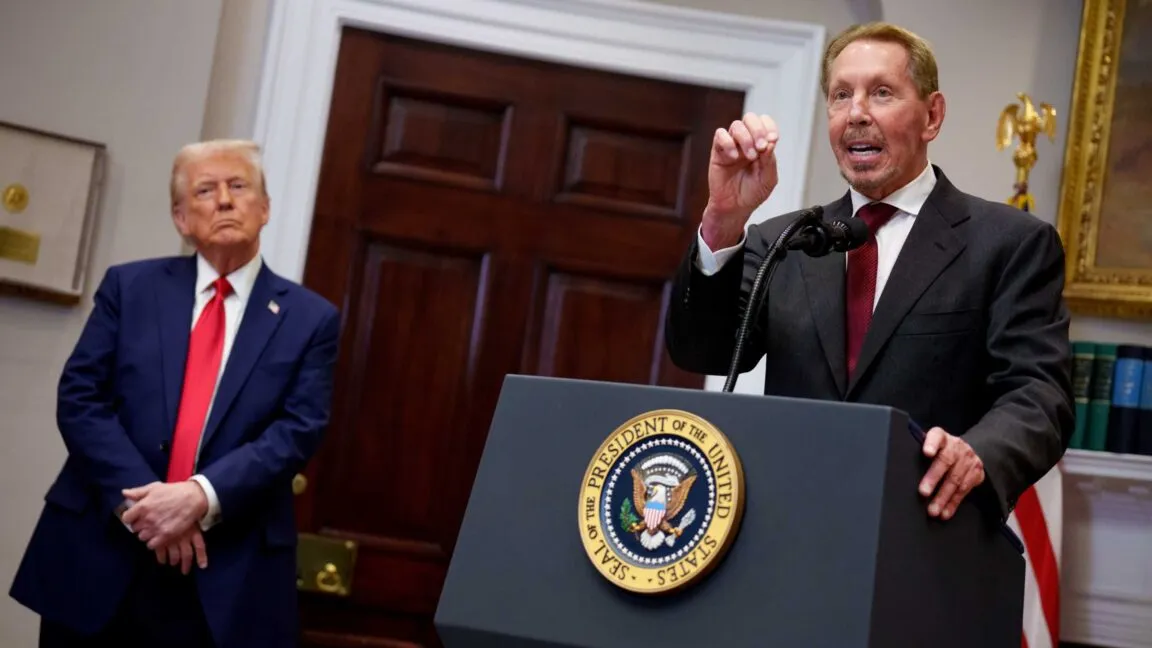
The DOJ approved Paramount Skydance's proposed acquisition of Warner Bros. Discovery for $111 billion after an eight-month antitrust investigation. A Wall Street Journal report says DOJ career lawyers were leaning toward recommending a lawsuit, but senior leaders closed the investigation before they could object, prompting Sen. Elizabeth Warren to allege the decision was a political favor.
The U.S. Department of Justice approved Paramount Skydance's proposed acquisition of Warner Bros. Discovery on Friday, and the price tag is enormous: $111 billion. DOJ said a rigorous eight-month investigation led by the Antitrust Division's career staff found the deal would not harm competition or American consumers. But a new report says the internal story looked nothing like that tidy press-release ending.
According to The Wall Street Journal, the DOJ career lawyers who led the investigation were leaning toward recommending a lawsuit challenging the merger on anticompetitive grounds. The core detail is even more explosive: DOJ senior leaders allegedly closed the investigation before career staffers who were concerned about the acquisition had an opportunity to object, according to people familiar with the matter. In other words, the same investigation process that produced “rigorous” language in public may have been heading toward a fight inside DOJ, then pivoted fast behind closed doors.
Why this matters beyond the entertainment industry is that mergers at this scale are not just corporate moves, they are market-structure bets. Paramount Skydance and Warner Bros. Discovery are major studios, and combining them changes bargaining power with distributors, advertisers, and streaming platforms. Antitrust regulators evaluate those effects because the risk is not only higher prices for consumers, but reduced choices and weakened competition. That is the standard framing the DOJ press release used when it said the investigation found no competitive harm.
Now zoom in on the process. The DOJ press release emphasizes that the Antitrust Division's career staff led an eight-month investigation. In practice, that means a team of professional lawyers do the heavy lifting: analyze documents, consider competitive effects, and assess whether the government has a legal basis to block the deal. A lawsuit is the nuclear option, but in antitrust it is also the clearest tool. The WSJ report, if accurate, suggests those professionals were leaning toward that tool.
Then senior leaders step in. The report says DOJ senior leaders closed the investigation before staffers could object. That detail is the administrative version of a bait-and-switch, except it is happening inside the agency that is supposed to apply the law based on evidence. The immediate question for decision-makers is not just whether the legal standard was met, but whether the internal governance of the investigation protected dissent and due process.
This is where politics enters the room, even if nobody in the source claims specific motives for the DOJ. Sen. Elizabeth Warren (D-Mass.) commented on the report and wrote that “the American people need to know if this merger was approved as a political favor. This reeks of corruption.” That is a direct accusation aimed at the fairness of the approval decision. The Trump administration approving a deal of $111 billion is exactly the kind of thing politicians tend to seize on because the stakes are so high and the visibility is so wide.
For executives watching from the outside, this case is a reminder of how regulatory outcomes can depend on the choreography of an investigation, not just the economics. Boards and deal teams typically model antitrust risk in terms of likely agency positions, precedents, and the factual record. But the WSJ reporting suggests a second-order variable executives rarely model explicitly: whether agency senior leadership closes a process before the staff complete the internal escalation that could have changed the outcome.
If you are a CEO, CFO, or general counsel at any company planning a consolidation, the message is uncomfortable but actionable. Regulators can publicly signal certainty, while internal staff may still be uneasy. That gap between public posture and internal debate can affect timing, disclosure, and negotiation strategy with customers and counterparties who are trying to understand whether the deal is “safe” or merely “approved today.”
The strategic stakes for peers are simple. Deals of this size reshape entire ecosystems. If the enforcement narrative is that a “rigorous eight-month investigation” concludes no competitive harm, markets may price in approval quickly. But if credible reporting suggests staff opposition was sidelined, those same markets may reconsider the stability of the government’s posture, not necessarily in court immediately, but in political and regulatory follow-through. That uncertainty can influence deal sequencing, financing assumptions, and the willingness of partners to commit to long-term contracts.
In the near term, the headline outcome is clear: DOJ approved the merger. The internal wrinkle reported by WSJ is what will stick to the transaction like static. And for anyone involved in megamergers, it raises the question that matters most for risk management: when regulators say they followed a careful process, which parts of that process can actually be challenged, and by whom, before the decision is locked in?
This story's Key Insights and Take-aways are locked.
Create a free account to unlock Executive Actions for one credit.
Register to UnlockAlways free for Executives Club members. Join the Club
More in Business

A flaw in PHP just forced governments to pull their own sites offline
European agencies from Belgium to Germany took websites dark to patch a critical weakness in the language behind almost 70% of the web, and the blast radius extends far beyond government portals.

BioWare shuts down, Mass Effect 5 dead after $55B EA buyout
The legendary RPG studio's closure lands months after a $55 billion investment group buyout of EA, raising tough questions for gaming's biggest acquirers.
Musk weighs Tesla-SpaceX mega-merger as boards form review panels
Special committees at both companies will examine a tie-up that could fuse electric vehicles and space launch, forcing a fresh look at governance and valuation.