

Dolly Parton calls Taylor Swift and Travis Kelce’s $2M gift “blown away,” asks for firstborn
Parton thanks the couple’s donation to Imagination Library and jokes she wants their first child.
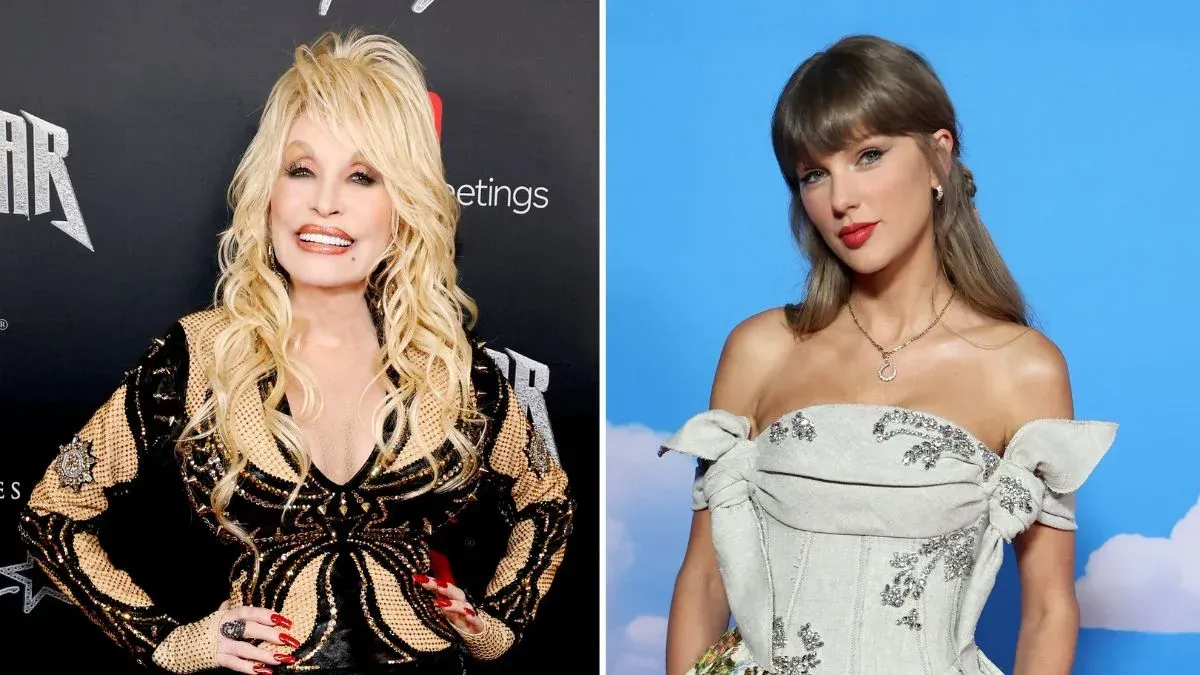
Dolly Parton posted a Friday Instagram video thanking Taylor Swift and Travis Kelce for a reported $2 million donation to her Imagination Library. The big business takeaway is how high-profile giving can instantly amplify charity funding, spotlighting food insecurity and forcing other sponsors to show up.
Dolly Parton is officially in the “gratitude with a wink” business. In a Friday Instagram video, the “Jolene” singer said she was “blown away and overjoyed” after being told that Taylor Swift and Travis Kelce were making a $2 million donation to her Imagination Library. Then she added the cheeky part: “when you have your firstborn, can I have it?” Parton asked, framing the request as a way to acknowledge the couple’s generosity while still making the moment unmistakably her.
The donation matters because it is not just celebrity goodwill. Imagination Library, backed by the Dollywood Foundation, ties directly to the mission Parton spelled out in the same message: “dream more, care more, learn more, and be more.” She said the donation would help the organization “continue that mission in even bigger ways.” In other words, this is a visible, high-dollar input into a kid-focused program that relies on consistent funding to keep books and reading experiences moving to families.
If you are an executive watching from the sidelines, the first thing to notice is the timing. TheWrap reports the video ahead of Swift and Kelce’s wedding, expected at Madison Square Garden on Friday. And the couple’s charitable push was already reported as broad: Swift and Kelce donated $26 million to charities across the United States ahead of the wedding day. That positions philanthropy as a “big moment” activity, not a last-minute afterthought, and it changes the optics of what sponsors and nonprofits might expect from major brand-adjacent donors.
The second thing is the structure of the giving and how it lands on the ground. The couple made contributions to nine New York City organizations, including Food Bank For New York City, City Harvest, and Musical Mentors. Even though TheWrap notes that Swift and Kelce have not commented on the donations or on the wedding itself, multiple organizations thanked them and disclosed how much they received. City Harvest, for example, said it was “incredibly grateful” for the couple’s “generous $1 million donation” and framed it as “a love letter to New York” and “a bold commitment.” The statement also connected the need to timing pressures: visits to New York City soup kitchens and food pantries are near record highs and are expected to increase further in response to federal funding cuts.
That last detail is where executives should pay attention, because it is the bridge between one-off celebrity checks and predictable operational stress. When nonprofits say need is rising due to federal funding cuts, it signals that budgets are under strain and demand for services can outpace replenishment. A $1 million donation can be meaningful in isolation, but its real value is what it buys: time, capacity, and stability when the funding weather changes. City Harvest specifically tied the urgency to food assistance conditions and federal policy exposure, which is a reminder that charity funding often has to act like a buffer for policy uncertainty.
Rhode Island Community Food Bank CEO Melissa Cherney also spoke through an organizational statement, thanking Swift and Kelce for an “extraordinarily generous and unexpected gift.” She said the $1 million donation would help the organization “purchase and distribute the nutritious, culturally appropriate food that Rhode Islanders deserve.” She added, “I hope their gift inspires others; it has certainly inspired us.” That line is not just PR. From a governance and board perspective, it is a signal of how peer donors respond when visibility spikes. When a major name backs a program, it can shift fundraising trajectories quickly, either by unlocking matching donations, encouraging other sponsors, or making grantmaking boards feel safer funding similar work.
Parton’s message also adds a different lens. Her request was not about more money, but about the emotional branding of giving. She thanked Swift and Kelce and “sang” in reference to her 1974 hit, “So thank you, and know that I will always love you.” The joke about taking a firstborn is playful, but it functions like a spotlight: it keeps the donation story in circulation beyond the initial announcement. In the nonprofit economy, narrative stickiness can be as valuable as the check, because attention fuels both volunteer interest and downstream donor confidence.
Zoom out and the strategic stakes become clear: this is a live demonstration of how high-profile giving can concentrate attention across multiple causes at once. Swift and Kelce’s reported $26 million in donations across the U.S., with nine New York City organizations included, shows how quickly reputational capital can translate into financial support for urgent services. For executives and boards in adjacent sectors, it raises the question of whether philanthropy will increasingly be treated as part of brand and stakeholder strategy, especially around major lifecycle moments like weddings. The Parton video makes the point with humor. The underlying machine is operational: attention converts to funding, and funding converts to capacity when needs are rising.
This story's Key Insights and Take-aways are locked.
Create a free account to unlock Executive Actions for one credit.
Register to UnlockAlways free for Executives Club members. Join the Club
More in Business
Comcast shares jump 25% as it plans to split NBCUniversal and Sky
The tax-free spin-off could reshape focus, funding, and competition across media and tech for years.

Bungie cuts most Destiny 2 staff as Sony says Marathon still matters
Herman Hulst confirms layoffs affecting most Destiny and some Marathon teams after Bungie admits Destiny fell short.

SK Hynix jumps 11% after seeking up to $29.4B in Nasdaq listing
The chip giant filed for a Nasdaq listing plan that could raise $29.4 billion, instantly reshaping investor expectations.