

Doug Ford calls Trump wildfires rhetoric “absolutely unacceptable” during Thunder Bay briefing
Ontario’s premier rejects U.S. criticism, framing the moment as emergency response over politics, and signaling high-stakes cross-border fallout.
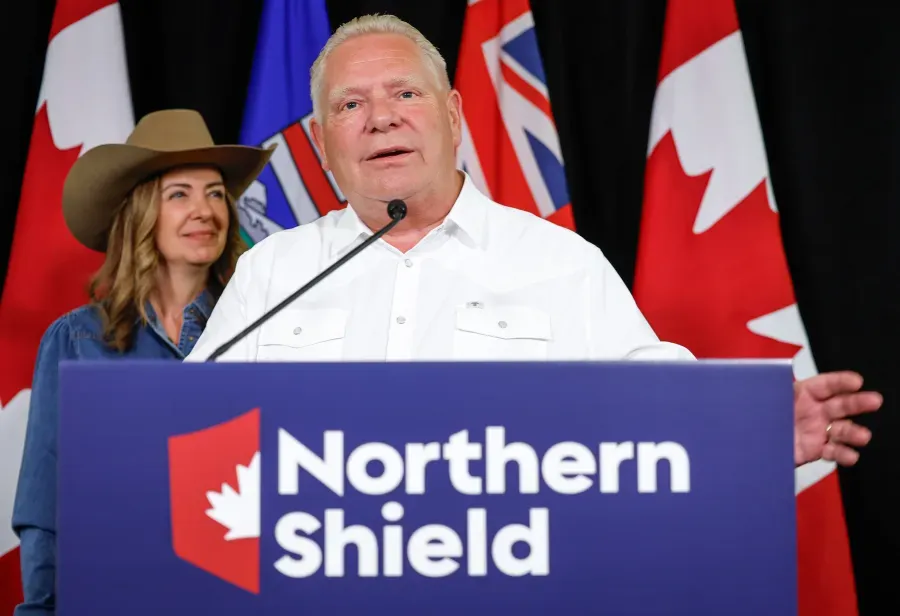
Ontario premier Doug Ford condemned criticism from the Trump administration and congressional Republicans over Canada’s handling of wildfires. The public clash matters for leaders tracking how emergency governance, politics, and cross-border accountability collide in real time.
Ontario premier Doug Ford launched an unusually blunt rebuttal Saturday, calling criticism of Canada’s wildfires response “totally unacceptable” and saying it is “absolutely unacceptable.” Speaking to reporters during a press conference in Thunder Bay, Ontario, Ford said, “We’re trying to get through this,” as the Trump administration and congressional Republicans faced attention for leveling rhetoric at the Canadian government over how the raging wildfires were being handled.
That exchange is the whole story’s core. Ford is not merely defending a policy position. He is pushing back against the timing and tone of external scrutiny while people are dealing with active emergencies, which is why his choice of language matters. “We’re trying to get through this” is a direct message to Washington, and to anyone watching the press cycle, that wildfire response cannot be treated like a talking-points exercise.
To understand why this matters beyond the headlines, zoom out to how wildfires are governed and funded. Wildfires are a frontline operational challenge, but they quickly become a fiscal and institutional one too. When fires rage, governments must coordinate across jurisdictions, mobilize personnel, manage evacuations and public safety communications, and keep critical infrastructure running. Then, after the smoke clears, the political questions start: Did resources arrive fast enough? Were the right agencies empowered? Were budgets built for climate-linked risk? In that environment, outside criticism tends to land harder, because leaders are simultaneously fighting the fire and defending the process.
For Ford, the pushback also highlights a leadership dilemma. Emergency management requires calm, clear decision-making. Public bickering can cause confusion, especially when messaging influences how residents interpret risk and how partner agencies coordinate. When a U.S. administration and congressional Republicans publicly criticize Canada’s handling of wildfires, the story becomes a parallel track to the operational one. Ford’s framing suggests he wants decision-makers to keep their attention on response effectiveness, not rhetorical escalation.
There is also a cross-border accountability angle. Wildfires do not respect national borders, and air quality impacts, resource constraints, and mutual aid can all have international dimensions. That means scrutiny can travel quickly, and reputational risk can move with it. Even if the policy details remain separate, public language from major political actors can shape how the public judges competence. For Canadian officials watching U.S. political dynamics, the stakes are not just diplomacy. It is how trust is maintained during crises when collaboration is most valuable.
The Hill’s report centers on the fact pattern that Ford “blasted” the criticism and labeled it “totally unacceptable.” That matters because it signals Ford’s intent to set the tone: he is drawing a line between constructive oversight and what he views as unhelpful rhetoric from outside. In political terms, this is a form of agenda-setting. When a premier labels external criticism as unacceptable, the domestic audience hears that governance will prioritize continuity of operations over external narratives.
For executives and board members in adjacent sectors such as emergency services vendors, infrastructure operators, utilities, insurance, and climate-risk analytics, the second-order implication is about how crises propagate into capital decisions. When wildfire response becomes politicized, it can affect procurement timelines, contracting expectations, and how organizations model risk. Boards may also see increased pressure from investors, regulators, and customers to demonstrate preparedness and resilience, especially if wildfire events coincide with high-visibility political disputes.
Strategically, this kind of public standoff can influence how leaders prepare for the next incident. Ford’s comment implies that leaders will resist attempts to convert urgent public safety into partisan conflict. But even as he tries to shut down the rhetorical lane, the attention lane is real, and it can shape reputational outcomes and policy direction. The strategic stakes for peers are clear: in high-pressure emergencies, communication becomes part of the operational plan, and cross-border criticism can either be converted into coordination or turned into noise. Ford is clearly choosing coordination over noise, and he is doing it loudly from Thunder Bay.
This story's Key Insights and Take-aways are locked.
Create a free account to unlock Executive Actions for one credit.
Register to UnlockAlways free for Executives Club members. Join the Club
More in Politics

LA County: DOJ's 20,000 'noncitizen' voter list is 'unreliable,' includes U.S.-born
Preliminary review by Los Angeles County election officials finds errors in the federal list, raising the stakes for voter roll integrity ahead of November.

Trump's $1.5B Pentagon chip investment lands in North Carolina
A $1.5 billion defense infusion for North Carolina chipmaking signals a new era of Pentagon-backed reshoring - here's what it means for the industry.

Nigeria confirms first Ebola case in Abuja, a woman just off a Uganda flight
Health Minister Muhammad Ali Pate says the patient flew in from Uganda, putting Africa's latest outbreak on Nigeria's doorstep.