
Dow hit a record close Monday as S&P 500 and Nasdaq chase best half since 2021
Markets are powering into the most bullish first half since 2021, setting up a high bar for the next quarter.

The Dow hit a record close Monday, while the S&P 500 and Nasdaq are on pace for their biggest quarterly gain since 2020. The result is a clear stress test for decision-makers: can optimism hold without breaking the market’s own momentum math?
Wall Street is closing out its best first half since 2021, and the Dow just proved it by hitting a record close Monday. At the same time, the S&P 500 and Nasdaq are on pace for their biggest quarterly gain since 2020. That combo matters because it does not just signal “things are good.” It signals something rarer: broad market strength across both old-economy and growth-heavy benchmarks, at a moment when investors are already primed for gains.
Here is the immediate translation for executives. If the Dow is printing records while the S&P 500 and Nasdaq are positioned for their biggest quarterly gain since 2020, then risk appetite is not tucked into one corner of the market. It is showing up in multiple indices at once. That tends to tighten the link between equity performance and corporate decision-making, because financing costs, employee retention expectations, and even internal confidence often move with the tape. In other words, optimism is not just a feeling in this story. It is a measurable force.
To understand why this is such a “big deal,” you have to think in terms of market incentives. Large index moves are a proxy for what major pools of capital are willing to pay for exposure. When the Dow makes a record close, it signals that the set of large industrial and blue-chip stocks it tracks is getting bought with conviction. When the S&P 500 and Nasdaq are on pace for their biggest quarterly gain since 2020, it adds a second signal: investors are not only rewarding value and dividends. They are also rewarding growth and tech-linked risk.
Now zoom out to what usually happens next. Strong first halves can create a feedback loop. Portfolio managers often need to keep pace with benchmarks, not just beat them someday, and a strong start can raise internal targets. Companies also feel it. When markets are rising, the bar for capital allocation discussions can quietly shift. If equity valuations are lifted, boards may feel more room to consider buybacks, acquisitions, or longer-duration growth investments. CFOs may find capital markets more receptive than they were a few quarters earlier.
But there is a reason Quartz framed this as both “best” and “optimism.” Big stretches tend to attract attention from the other side of the ledger: the constraints. Even without introducing specific policy changes, the broader market reality is that the market’s forward-looking assumptions are always under pressure from regulation, interest rate expectations, and macro uncertainty. If investors have spent the first half buying the narrative, they can run into a second-half reckoning when new data forces that narrative to either evolve or break. That is not a prediction. It is simply how markets tend to behave once they have priced in a lot of good news.
For decision-makers, the strategic stake is straightforward. Record closes and “biggest since 2020” quarterly gains can be helpful for funding and morale, but they can also lull organizations into treating momentum as a permanent condition rather than a variable. Boards and leadership teams should treat this environment as an input, not a guarantee. If the market is approaching milestones that imply strong demand for equities, then timing matters for financing and investment decisions. The same conditions that can make it easier to raise capital can also make it easier to overpay, especially in frothy corners.
And there is one more second-order effect executives should keep in mind: peer optics. When benchmarks are rising broadly, executive teams in similar industries often face a new kind of comparison pressure, even if their fundamentals are different. Investors and analysts may shift their attention toward growth and execution timelines because the market is acting like those timelines are improving. That can influence everything from guidance posture to incentive plan assumptions.
The bottom line is that Monday’s record close on the Dow is not just a headline. It is part of a larger pattern: the S&P 500 and Nasdaq are positioned for their biggest quarterly gain since 2020, and the overall market is set to close out its best first half since 2021. For executives, that is a real opportunity to align strategy with favorable conditions, but it is also a reminder that optimism is a market variable, not a corporate plan.
This story's Key Insights and Take-aways are locked.
Create a free account to unlock Executive Actions for one credit.
Register to UnlockAlways free for Executives Club members. Join the Club
More in Business
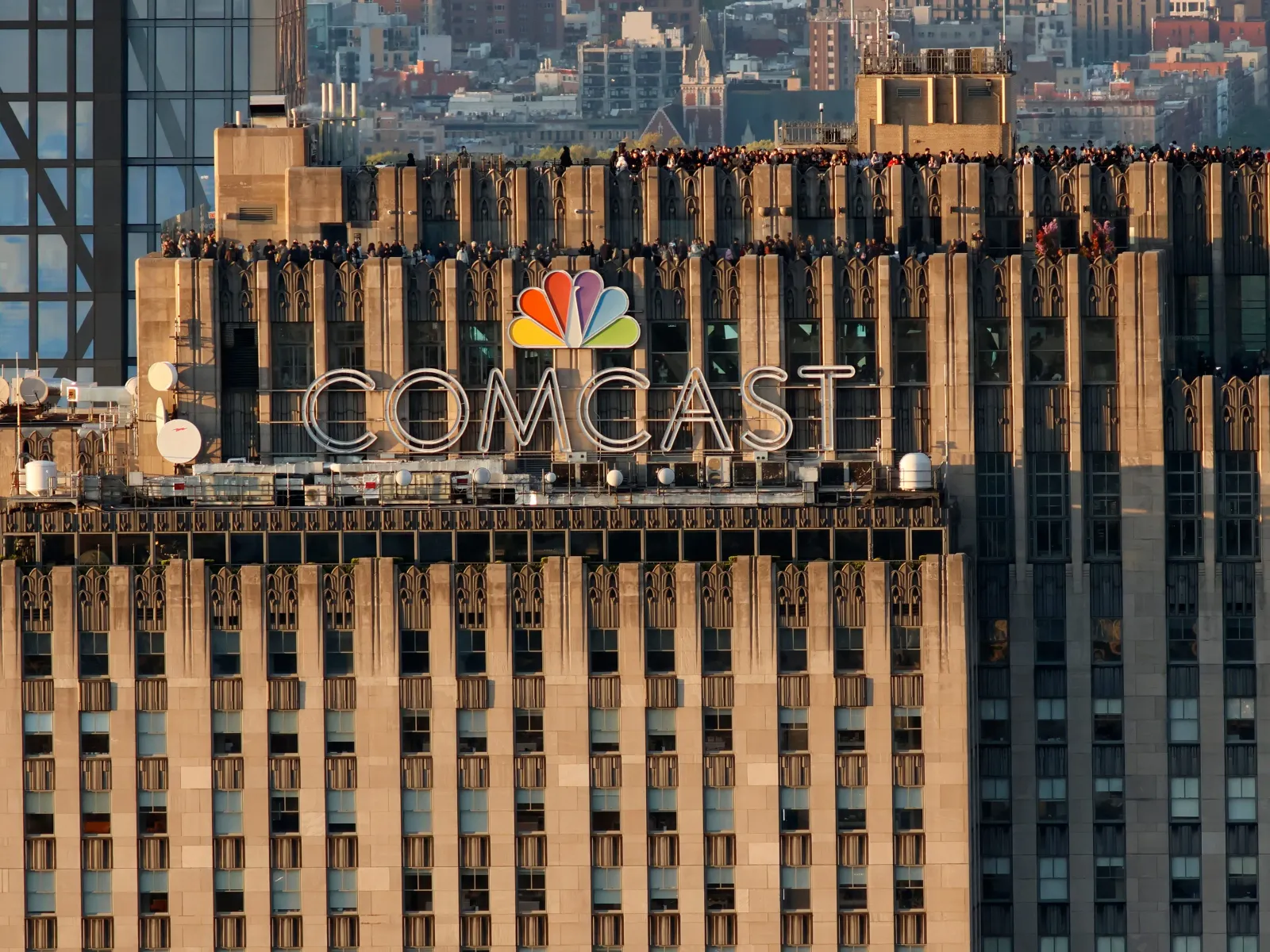
Comcast shares jump 25% as it plans to split NBCUniversal and Sky
The tax-free spin-off could reshape focus, funding, and competition across media and tech for years.

Bungie cuts most Destiny 2 staff as Sony says Marathon still matters
Herman Hulst confirms layoffs affecting most Destiny and some Marathon teams after Bungie admits Destiny fell short.

SK Hynix jumps 11% after seeking up to $29.4B in Nasdaq listing
The chip giant filed for a Nasdaq listing plan that could raise $29.4 billion, instantly reshaping investor expectations.