
Dr Julie Elie wins $100,000 for decoding zebra finch calls
The 11-call “vocabulary” unlocks two-way animal communication, turning a blank-response problem into a measurable path forward.
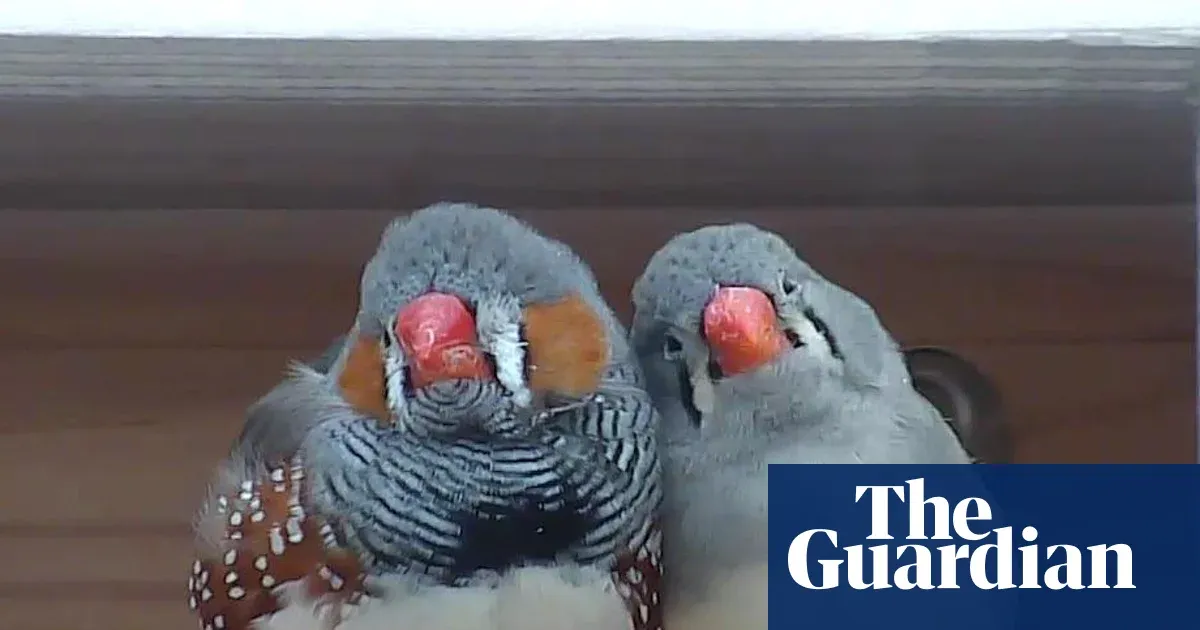
Dr Julie Elie at the University of California, Berkeley, won the 2026 Coller-Dolittle prize by decoding the dictionary zebra finches use to communicate. The award signals real momentum toward humans talking to animals in a way that animals do not answer with silence.
Dr Julie Elie, a scientist at the University of California, Berkeley, has been awarded the 2026 Coller-Dolittle prize, winning $100,000 for progress toward two-way interspecies communication. The core of the breakthrough: she worked out 11 core calls in the zebra finch “vocabulary,” including what they mean and how the birds use individual vocal signatures to announce who they are and what they are doing.
In other words, this is not just bird noise analysis. Elie decoded a usable dictionary, so the conversation problem does not end in a blank response. The prize recognizes progress toward a world where humans can communicate with animals and the animals react in a way that is meaningful, not mute, not random, and not impossible to interpret.
To understand why executives should care, zoom out one layer. Communication is the bottleneck in a lot of “human-to-animal” fantasy ideas. If humans only guess, animals respond unpredictably, and researchers cannot reliably map sound to intent, then every next step becomes guesswork plus expensive trial-and-error. What Elie’s work implies is a shift from “maybe the birds mean X” to “here are the core calls, and here are their meanings,” with added structure from individual signatures that help specify identity. That matters because identity and intent are the two ingredients you need before you can build any kind of two-way system.
The prize itself is also a signal. The 2026 Coller-Dolittle prize is explicitly framed as a step toward two-way interspecies communication. Awards like this do not just hand out money. They concentrate attention, accelerate follow-on research, and bring more funders into a field that can otherwise feel like a science project without a clear path to outcomes. For decision-makers, the practical takeaway is that the “translation” layer is becoming more concrete. And when translation becomes concrete, it becomes fundable.
There is also a governance and compliance angle, even if this story is biological rather than software-first. Any push toward closer human-animal interaction quickly raises questions about how experiments are designed, how animal welfare is protected, and what counts as valid evidence of communication rather than coincidence. While the source does not detail regulatory changes or specific oversight rules, it is still worth noting how such projects typically draw scrutiny because they involve animal subjects and claims that can be misunderstood by the public. A scientific dictionary approach, focused on specific calls and meanings, can help researchers design clearer, testable protocols. That clarity can reduce ambiguity when results are evaluated by ethics boards, funders, and peer reviewers.
Now consider second-order implications for adjacent industries. Elie’s work is rooted in learned vocal patterns and defined call categories. That is conceptually adjacent to other pattern-recognition problems across technology and data science, even if the data here is birdsong rather than clicks or signals. If teams can systematically decode meaning from structured audio, the same mindset can apply to machine listening, classification, and interpretation pipelines. That does not mean bird calls become a product overnight. But it does mean “understanding intent from sound” is moving from a vague goal into a measurable research target: 11 core calls, specific meanings, and the role of individual signatures.
The strategic stake is simple. If humans can reliably interpret animal communication and animals can reliably respond in ways that map to shared structure, the world changes. That includes everything from conservation to animal husbandry to how society thinks about animal cognition. And in the near term, it means more researchers and investors will want to align with whoever can turn a decoding breakthrough into repeatable systems. Elie’s award does not guarantee a fully functional two-way translator. But it does mark real progress toward the key threshold: not just hearing animals, but building a dictionary that makes responses interpretable.
For executives and board members watching emerging science, the lesson is that breakthroughs often look small until you realize they eliminate an entire category of failure. Here, the “blank response” problem is the failure mode. Elie’s decoding of zebra finch vocabulary and meanings, including individual signatures, is a step toward making responses legible. In a landscape where many ideas stall in ambiguity, decoding that dictionary is the kind of progress that creates momentum, funding interest, and the next set of experiments that can finally test two-way communication like a real system, not a hopeful experiment.
This story's Key Insights and Take-aways are locked.
Create a free account to unlock Executive Actions for one credit.
Register to UnlockAlways free for Executives Club members. Join the Club
More in Technology

SoftBank plunges 13% and SK Hynix drops 10% as AI cost fears hit Asia
A broad Asia tech selloff tracks weakness in the U.S., forcing investors to reprice the AI buildout cost curve fast.
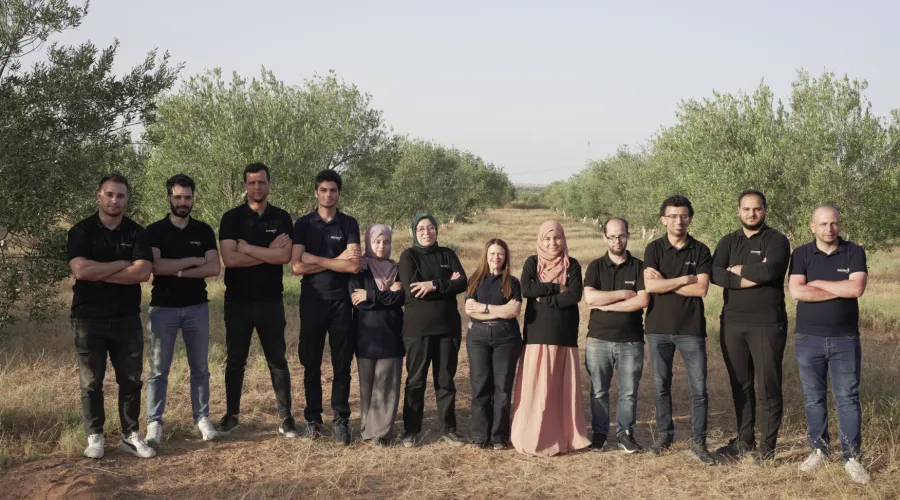
216 Capital drops six figures into RoboCare to scale AI precision agriculture across MENA
Tunisia's RoboCare uses satellite, drone, IoT, and AI alerts. This round is built to accelerate regional expansion.

Qihoo 360’s Zhou Hongyi says its Tulongfeng swarm beats Anthropic’s Mythos bug-finding
A US-banned Chinese cybersecurity firm claims it can confirm vulnerabilities with automated sandboxing and exploit testing.