
Drone footage explains why southern right whales flip upside down to escape parenting
New aerial video points to a surprisingly practical purpose for a rare whale behavior, changing how scientists interpret maternal care.
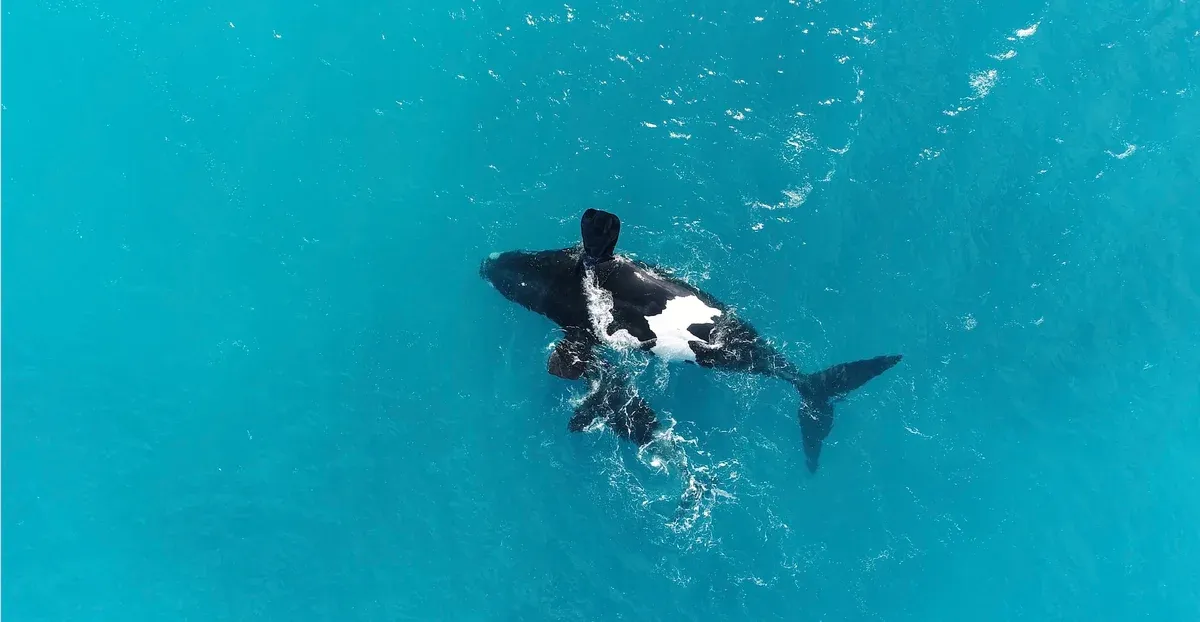
Scientific American reports that southern right whales are the only whale species known to float upside down, and new drone footage suggests the behavior may help them get a break from parenting. For decision-makers in research funding and policy, it is a reminder that data collection methods can reshape our understanding of animal behavior and welfare.
If you have ever wondered why some southern right whales do something that looks like a human overcorrecting in a pool, here is the new answer: drone footage suggests the upside down float is not random showmanship. Scientific American reports that southern right whales are the only whale species known to float upside down, and that aerial observations point to a purpose. The purpose, researchers think, could be to get a break from parenting.
That sounds almost too relatable, until you consider what the behavior would mean in the real world. Parenting in whale life is not a light lift. Newborn calves are vulnerable, and adults must devote time and energy to keeping them safe and supported. The reported clue is that southern right whales may use an unusual posture, floating upside down, as a behavioral “reset” that reduces the strain of continuous caregiving. The punchline is that the footage helps move the conversation from “what are they doing?” to “why would they do it?”
To understand why this matters beyond whale trivia, zoom out to how animal behavior research actually works. Researchers often infer motivations from patterns. But patterns can mislead when they do not reveal the full context. A whale might flip, pause, and resume activity for reasons that are easy to misread from the surface, or from limited observation windows. Drone footage changes the information density. It can add perspective, continuity, and the ability to document what happens before and after a behavior without waiting for the animals to surface in just the right way.
This matters for the broader scientific ecosystem too, especially where funding and policy are involved. Animal behavior is not just curiosity. It can affect how scientists define welfare, how conservation teams prioritize time and disturbance levels, and how regulators consider acceptable human activity around wildlife. If a species has a behavior that functions as a break or recovery mechanism for caregivers, then interactions that interrupt those recovery periods could have welfare implications. That is a second-order effect executives should care about even if they never set foot on a research boat.
There is also a regulatory framing layer worth noting. In many wildlife contexts, rules and permits aim to minimize disturbance, particularly around breeding, calving, and vulnerable life stages. The reported behavior is tied to parenting. That means it intersects with the same logic regulators use when they restrict activities during sensitive periods. Even though this Scientific American report is centered on explaining behavior, the behavioral explanation can influence how researchers describe what “disturbance” means. If an upside down float is a practical break from caregiving, then the context of when and how often it occurs becomes relevant to welfare-oriented decision-making.
And now the strategic implication for leaders who fund science, manage conservation programs, or oversee communications for science organizations: methodology can rewrite interpretations. The story here is that southern right whales are the only known upside down floaters, and drone footage suggests why. That is a reminder that what you measure, how you measure it, and from where you measure it can change conclusions. In executive terms, it is the same lesson that applies to human systems: you cannot optimize what you do not observe clearly.
Finally, this should reshape how decision-makers talk about “behavioral mysteries.” Sometimes the mystery is not that the animal is unknowable. Sometimes the mystery is that the observation window is wrong. A behavior that looks odd from a single vantage point can become meaningful when you connect it to energy budgets, caregiver roles, and time off. For peers in wildlife research and conservation, the stakes are real: better explanations can lead to better conservation decisions, better welfare frameworks, and better public understanding. In a world where attention spans are short and habitats are under constant pressure, getting the “why” right is not just scientifically satisfying. It is operationally important.
This story's Key Insights and Take-aways are locked.
Create a free account to unlock Executive Actions for one credit.
Register to UnlockAlways free for Executives Club members. Join the Club
More in Science

Alaska's 1,580-foot tsunami had warning signs. Scientists just found them.
Rapid glacier retreat, heavy rainfall, and thousands of tiny tremors preceded Alaska's 1,580-foot tsunami, a warning for every coastal community in a warming world.

The rare mutation that lets high-risk brains dodge Alzheimer's
Scientists found a natural defense against protein buildup, opening a new path to preventive treatments.

3,000 steps a day may halve Alzheimer's decline, study finds
New research links a modest daily walk to less tau buildup and nearly half the cognitive and functional decline, even for those with early signs.