

Einstein Probe catches a black hole shredding a white dwarf, early X-ray sequence revealed
The telescope saw an unusual pattern of intense X-ray flashes in the earliest moments, pointing to a rare intermediate-mass black hole event.
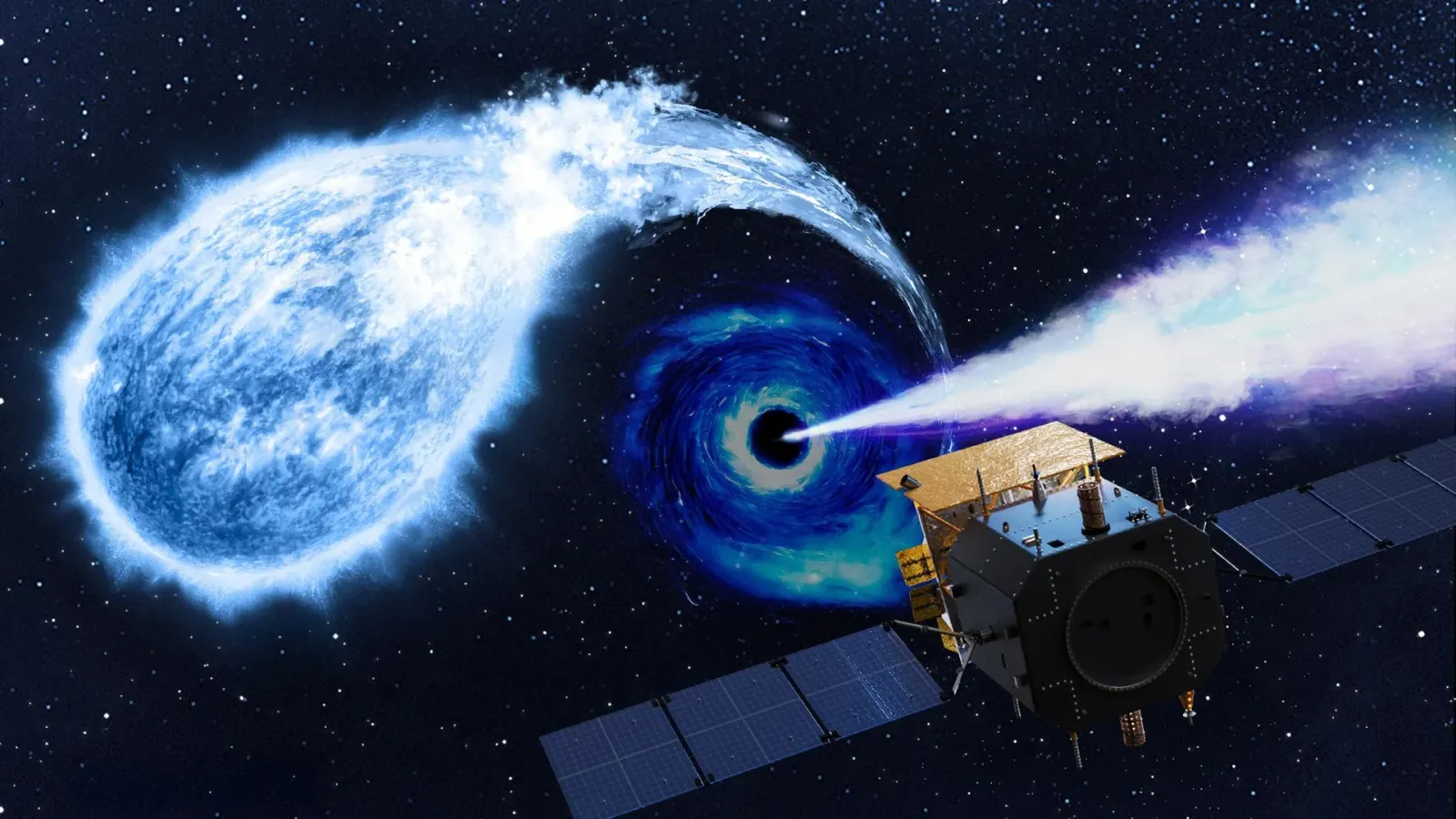
Einstein Probe, a space telescope, captured what astronomers believe is an intermediate-mass black hole ripping apart a dense white dwarf star and devouring it. For decision-makers tracking science and tech risk, it is a reminder that early detection systems can turn rare astrophysics into actionable evidence fast.
Astronomers may have witnessed one of the rarest and most dramatic cosmic events ever seen: the long-sought moment when an intermediate-mass black hole rips apart a dense white dwarf star and devours it. The key detail is not just that it happened, but when it was caught. Einstein Probe space telescope data captured the explosion in its earliest moments, before the story became “interesting after the fact.”
What Einstein Probe recorded looks different from the usual playbook. Instead of behaving like a typical gamma-ray burst, the event showed an unusual sequence of intense X-ray flashes. That “not like the others” fingerprint matters because it turns a broad claim, “something extreme occurred,” into a specific diagnostic: a sequence of X-ray behavior unlike what is expected from a typical gamma-ray burst. In other words, the telescope did not only see a bright sky; it saw a pattern that fits a more precise explanation.
If you are used to thinking in terms of markets, this is the scientific version of catching a process early enough to distinguish it from lookalikes. In astrophysics, many explosive events can be luminous and fast, but different source mechanisms can still land in overlapping observational ranges. Here, the early X-ray flash sequence is the discriminant. The source itself emphasizes that the sequence was unusual and unlike a typical gamma-ray burst. That is the pivot point for how astronomers interpret the event, and it is why “earliest moments” is doing heavy lifting.
So what makes an intermediate-mass black hole such a big deal? The source frames it as “long-sought,” which signals a persistent gap between theory and observation. Intermediate-mass black holes sit in a category that is harder to confirm observationally than some better-known populations. A direct event where such a black hole tears apart a white dwarf provides a rare kind of observational confirmation. The white dwarf is described as dense, and the act of ripping it apart and devouring it is the dramatic mechanism that ties the X-ray signal to a physical cause.
Why would decision-makers care about this, beyond the sheer cool-factor of cosmic destruction? Because the moment Einstein Probe captured the explosion “in its earliest moments” is exactly what fast detection architectures are built for: early signals that narrow interpretation quickly, which then guides where resources go next. In many technology and science programs, the difference between an ambiguous detection and a discriminating observation comes down to whether instruments are positioned, tuned, and scheduled to catch the beginning of the event rather than the afterglow. The source does not mention engineering specifics, but it clearly spotlights timing and data characteristics as the evidence.
There is also a broader second-order implication for how scientific results propagate. When observations are collected early and show an unusual sequence rather than a generic category match, they can accelerate the pace of follow-up analysis. That can change what gets prioritized by research teams, what kinds of alerts get issued, and what models get updated. The source describes intense X-ray flashes and an unusual sequence, and those details are the hooks that allow the community to argue, test, and converge on interpretation.
Finally, there is a strategic stake for peers. If Einstein Probe can identify a rare intermediate-mass black hole ripping apart a dense white dwarf via an early X-ray flash pattern unlike a typical gamma-ray burst, it sets a higher bar for what “successful” transient astronomy looks like. Boards, sponsors, and program owners in the adjacent tech universe tend to ask whether a platform can deliver discriminating signals, not just detections. This event reads like a case study in that distinction: it is rare, dramatic, and crucially, it is observed in a way that makes the interpretation sharper.
This story's Key Insights and Take-aways are locked.
Create a free account to unlock Executive Actions for one credit.
Register to UnlockAlways free for Executives Club members. Join the Club
More in Science

Alaska's 1,580-foot tsunami had warning signs. Scientists just found them.
Rapid glacier retreat, heavy rainfall, and thousands of tiny tremors preceded Alaska's 1,580-foot tsunami, a warning for every coastal community in a warming world.

The rare mutation that lets high-risk brains dodge Alzheimer's
Scientists found a natural defense against protein buildup, opening a new path to preventive treatments.

3,000 steps a day may halve Alzheimer's decline, study finds
New research links a modest daily walk to less tau buildup and nearly half the cognitive and functional decline, even for those with early signs.