

Einstein Probe spotted an intermediate-mass black hole shredding a white dwarf in X-rays
The telescope saw an unusual early sequence of intense X-ray flashes that doesn’t match a typical gamma-ray burst.
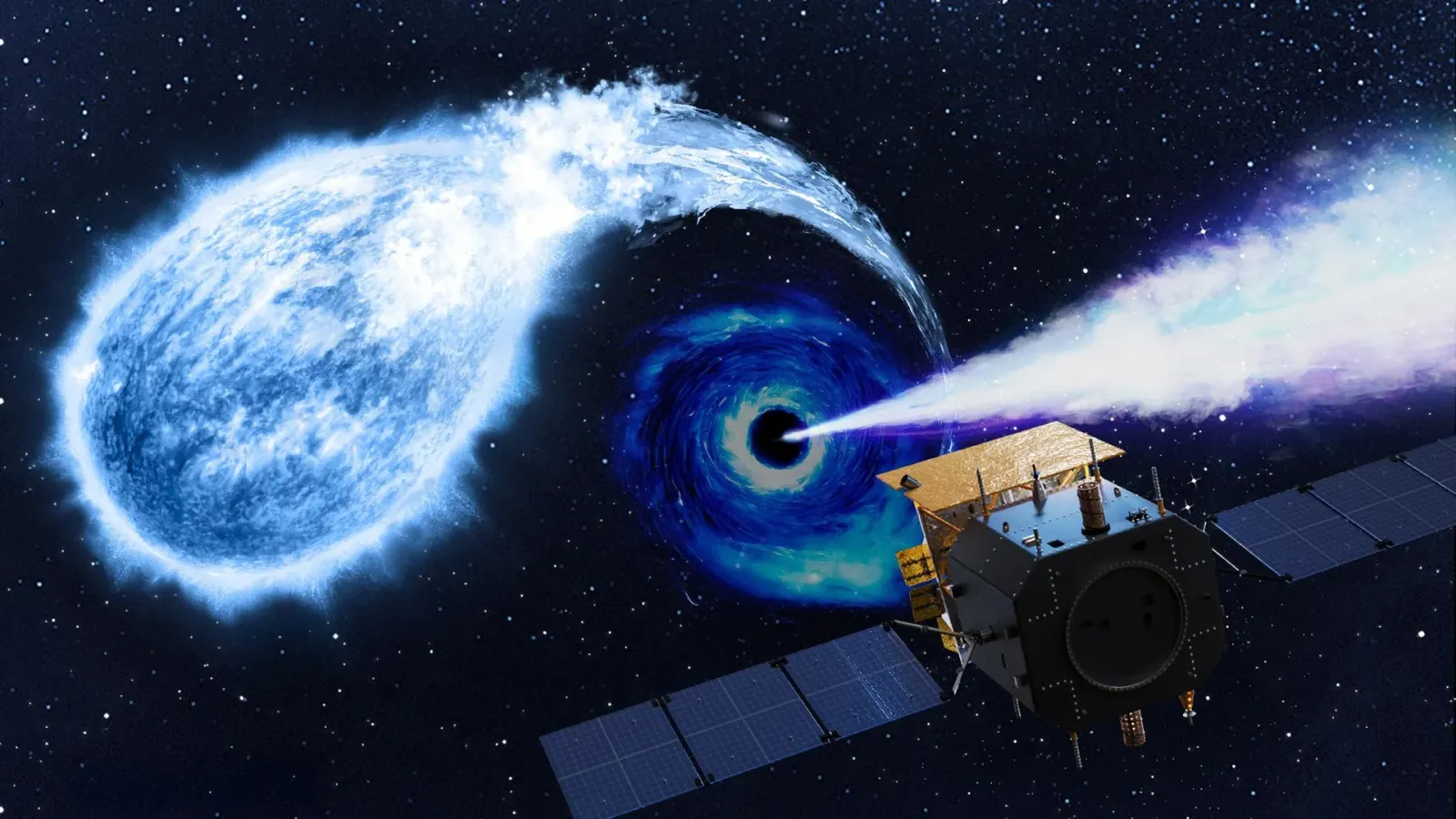
Astronomers using the Einstein Probe space telescope may have witnessed an intermediate-mass black hole ripping apart a dense white dwarf and devouring it. The early observations show a distinctive pattern of intense X-ray flashes, unlike what is seen in a typical gamma-ray burst.
Astronomers may have witnessed one of the rarest and most dramatic cosmic events: an intermediate-mass black hole tearing apart a dense white dwarf and consuming it. The Einstein Probe space telescope caught the explosion in its earliest moments, and the early signals are the giveaway. Instead of looking like a typical gamma-ray burst, the event produced an unusual sequence of intense X-ray flashes.
That matters because “earliest moments” is where you learn what is driving the spectacle. In this case, the earliest X-ray pattern is not just bright, it is distinctive. The source describes an unusual sequence of intense X-ray flashes unlike what is seen in a typical gamma-ray burst, which is essentially the observational fingerprint that helps astronomers sort one kind of violent space event from another.
So what, beyond the sheer awe? For decision-makers in science and technology ecosystems, these breakthroughs are a reminder that detection systems do not just observe, they discriminate. Einstein Probe is effectively acting as a cosmic early-warning filter, snapping pictures during the first moments and recording the X-ray timeline. When you catch an explosion that early, you can test competing interpretations about what kind of object caused it. Here, the object is an intermediate-mass black hole, long-sought, and the victim is a dense white dwarf star.
“Intermediate-mass” is doing a lot of work in that sentence. Black holes come in categories that observers try to bracket by mass and behavior. The source does not give numerical ranges, but it does frame intermediate-mass black holes as “long-sought,” which signals how hard they have been to find indirectly through their effects. Finding one that can rip apart a white dwarf and show a clear observational trail in X-rays is an important step toward building a more complete map of black hole populations.
The other crucial detail is the devouring. In the source, the black hole is not merely detected; it is described as ripping apart the white dwarf and devouring it. That implies extreme energy release, and the X-ray flashes are the observational trace of that energy. The fact that the flashes occur as an “unusual sequence” is also a key framing point: it suggests the event has a characteristic time structure that could be used to identify similar events in the future.
For executives watching how research gets funded, how data gets prioritized, and how teams scale mission-level capabilities, the second-order implication is straightforward. When a telescope catches an event in its earliest moments and the early signal is distinctive, it creates reusable knowledge. That includes improved targeting strategies, better classification rules for transient events, and stronger justification for continued investment in instrument sensitivity and rapid response pipelines. In other words, the value is not only that something rare happened, it is that the detection performance produced discriminative signals.
There is also a broader “cosmic market” angle, even if no money changes hands in the story itself. Astronomy depends on limited observing time and on instruments that can handle unpredictable transient events. When a mission demonstrates that it can capture rare early-time X-ray sequences that do not resemble typical gamma-ray bursts, it raises the mission’s role in multi-messenger and multi-wavelength ecosystems. Other observatories can coordinate around these findings, and classification can feed back into how future observation campaigns are planned.
Finally, there is a strategic stakes layer for peers who care about complex systems under uncertainty. A typical gamma-ray burst is a known class with recognizable properties. This event is framed as unlike that typical pattern, which means it could broaden or complicate how transient events are sorted. If the community can reliably associate certain early X-ray sequences with specific physical scenarios, that becomes a competitive advantage for researchers and institutions, because it speeds up confirmation, reduces ambiguity, and helps prioritize which events are worth deep follow-up.
In short: Einstein Probe may have caught a long-sought intermediate-mass black hole shredding and consuming a dense white dwarf. It did so by capturing an unusual early sequence of intense X-ray flashes that differs from a typical gamma-ray burst. For the people building and funding the next generation of observation and data systems, that combination of rarity, early detection, and distinctive signatures is the kind of result that moves the field forward, quickly.
This story's Key Insights and Take-aways are locked.
Create a free account to unlock Executive Actions for one credit.
Register to UnlockAlways free for Executives Club members. Join the Club
More in Science

University of Ottawa’s UbiMyTherapist AI reads smartwatch and earbuds to spot distress early
A new approach aims to detect emotional distress automatically, so people do not have to ask for help first.
Hayabusa2 risks a 1 km flyby of Torifune July 5
Japan's probe hunts answers on a 450-meter asteroid while testing rapid reconnaissance for planetary defense.

California Polytechnic wins NASA’s $10,000 2026 Human Lander life-support prize
Top student designs in environmental control and life support for future Artemis landers just got real money and real momentum.