

Ella Langley’s first Hot 100 No. 1 in 2026 is the only one by July
Halfway through 2026, first-time leaders plunged to 1 No. 1, and boards should notice what that signals.
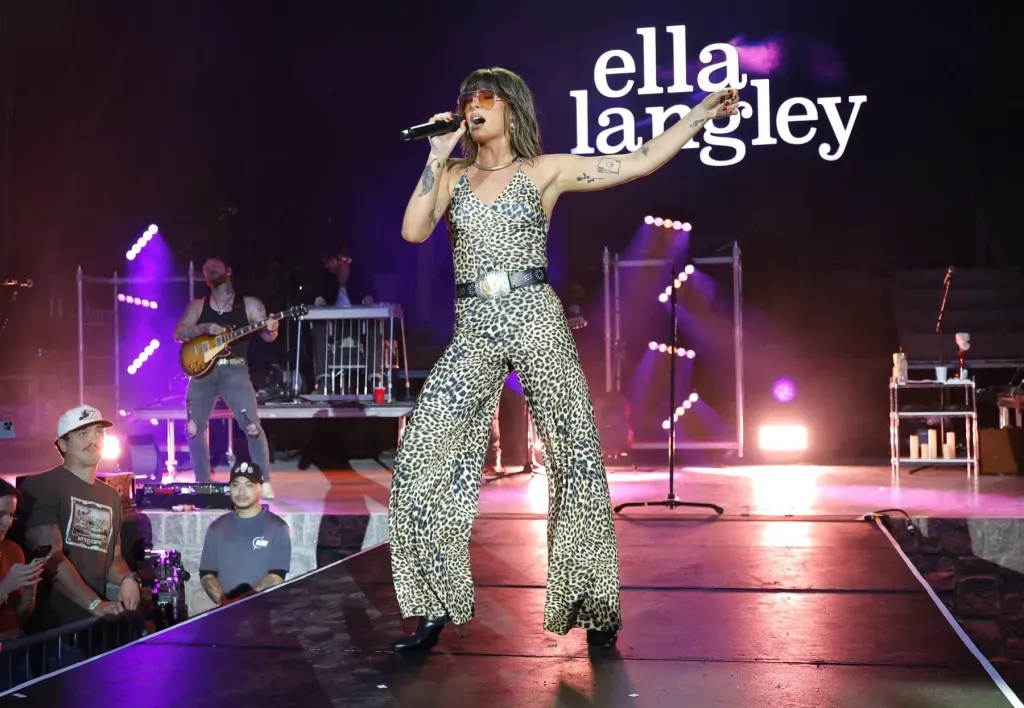
Ella Langley’s “Choosin’ Texas” is the only first-time Hot 100 No. 1 artist in 2026 so far, leading for 11 weeks beginning Feb. 14. For music industry decision-makers, the year’s pattern points to structural advantages for established mega-acts and catalog gravity that make breakthroughs rarer.
Ella Langley is having a clean-room kind of chart year. “Choosin’ Texas” is the only 2026 Hot 100 No. 1 by an artist achieving a first career leader, and it’s in the driver’s seat for 11 weeks to date, beginning Feb. 14.
Zoom out to the same moment in the calendar and the math gets even sharper: looking at 2026 so far, there has been just 1 No. 1 (1 act) by an artist leading for the first time out of 10 total leaders, for a 10% success rate. That same “first-time leader share” is not just low, it’s dramatically down versus recent years: 2020 was 55%, 2021 was 41.2%, 2022 was 41.7%, 2023 was 47.1%, 2024 was 40%, and 2025 was 37.5%.
Billboard frames this as part of a broader shift in how the Hot 100 summit is being scaled. Halfway through 2026, the chart top has been “almost exclusively” the domain of acts who have climbed it before. Of the 10 new No. 1s since January, nine are by artists who previously led. And this is where Langley’s achievement matters beyond fanfare: of the big names collecting their typically repeatable wins, only Langley is clearing the specific hurdle of a first-ever Hot 100 No. 1.
The story is also about what did not happen. Billie Eilish-era breakthrough logic, where a new face could take over the entire conversation, is not showing up in 2026 at the Hot 100’s top slot. Billboard also notes that, in the current crop of No. 1s, there’s a second absence beyond first-time leaders: any featured or co-billed artists are not appearing in these No. 1 records. The magazine adds that every year had included a billed collaboration at the top through last year going back to 1990, with 1988 and 1989 being the weird exception where a single recording artist handled each No. 1.
Put those two absences together and you get a clear incentive map for labels and publishers. Billboard’s recap of 2026 No. 1 leaders underscores the point. The list includes Bruno Mars with “I Just Might” at No. 1 for 3 weeks beginning Jan. 24; Harry Styles with “Aperture” at No. 1 for 1 week beginning Feb. 7; Ella Langley with “Choosin’ Texas” for 11 weeks to date beginning Feb. 14; Bad Bunny with “DTMF” at No. 1 for 1 week beginning Feb. 21; Taylor Swift with “Opalite” at No. 1 for 1 week beginning Feb. 28; BTS with “Swim” at No. 1 for 1 week beginning April 4; Olivia Rodrigo with “Drop Dead” at No. 1 for 1 week beginning May 2; Drake with “Janice STFU” at No. 1 for 2 weeks beginning May 30; Ariana Grande with “Hate That I Made You Love Me” at No. 1 for 1 week beginning June 13; and Taylor Swift again with “I Knew It, I Knew You” at No. 1 for 2 weeks beginning June 20.
Why would first-time leaders get squeezed while repeat leaders keep winning? Billboard lays out five potential factors, and they align tightly with how modern release strategies work.
First, “shining stars” with new albums at No. 1 on the Billboard 200: BTS, Drake, Mars, Rodrigo, and Styles are named as topping that chart in 2026. When big stars have fresh projects, their momentum tends to follow them to the Hot 100 because radio and streaming ecosystems often treat arrival as an event.
Second, solo dominance at the top. Billboard points out that “doubling star power, or tripling it” creates more opportunities to reach No. 1 when collaborations are credited, and it cites last year’s dynamic where Tate McRae was featured on Wallen’s “What I Want,” plus HUNTR/X’s EJAE, AUDREY NUNA and REI AMI on “Golden.” In 2022, it notes seven credited acts scored a first No. 1 with a single song: Encanto’s “We Don’t Talk About Bruno.” Fewer billed collaborations in 2026 means fewer pathways for breakout credits to land at No. 1.
Third, Billboard points to the Hot 100’s methodology and release playbooks. High-profile acts often debut on streaming and radio at the same time, and multiple versions of tracks can be available for purchase. That can include remix-like formats such as a cappella, acoustic, slowed-down, sped-up mixes, and physical releases returning after about two decades of purely digitally released singles.
Fourth, “Choosin’... Texas?... or...” is Billboard’s way of saying discovery is overloaded. With streaming lowering the barrier, the number of new releases has “swelled to staggering heights,” making it hard for listeners to explore everything. Instead, people rely on known names that match a familiar sound. That preference funnels attention toward artists already proven on the chart, which is why Billboard notes that nine artists at No. 1 this year have notched second or more career Hot 100 No. 1s.
Fifth, catalog gravity keeps getting heavier. Billboard notes that catalog music takes a larger slice of consumption as artists’ catalogs grow, and it even stretches beyond music into “bigger and bigger business.” The implication is simple: new songs now compete not only with other releases, but with back-catalogs that can out-perform on familiarity and ongoing play.
The second-order implication is worth underlining for boards and operating teams. When Billboard observes the share of No. 1 hits that include at least one artist leading for the first time dropping from 66.6% in the 1960s to 41.9% in the 2020s, the story is not just about charts. It is about market structure. Catalog and brand recognition turn into a compounding advantage, and the funnel for first-time No. 1 outcomes narrows. That is why Langley’s 2026 anomaly matters: she is the only first-time leader of the year so far, and the year is matching 1996 as the only years in which just one act had a first No. 1 before July.
And yes, Billboard still leaves room for newcomers. It points out that Olivia Dean reached No. 2 with “Man I Need,” and Molly Santana, as featured on Drake’s “Ran to Atlanta,” also reached No. 2. Earlier this decade, Billie Eilish, Luke Combs, and Dua Lipa peaked at No. 1-1 locations before their breakthroughs, and their careers kept flourishing. Billboard also flags precedent for late surprises, like Oliver Anthony becoming the first artist ever to lead the Hot 100 with no prior chart history when “Rich Men North of Richmond” topped the chart in August 2023.
So what should decision-makers take from 2026’s first-time No. 1 drought? If the top slot increasingly reflects repeat leaders and catalog strength, then the bar for a debut becomes sharper, earlier, and more operational. The winners will still exist, but they may need to be engineered like events, not experiments. Langley’s 11 weeks shows it is possible. The 10% success rate shows how rare it is.
This story's Key Insights and Take-aways are locked.
Create a free account to unlock Executive Actions for one credit.
Register to UnlockAlways free for Executives Club members. Join the Club
More in Business

A flaw in PHP just forced governments to pull their own sites offline
European agencies from Belgium to Germany took websites dark to patch a critical weakness in the language behind almost 70% of the web, and the blast radius extends far beyond government portals.

BioWare shuts down, Mass Effect 5 dead after $55B EA buyout
The legendary RPG studio's closure lands months after a $55 billion investment group buyout of EA, raising tough questions for gaming's biggest acquirers.
Musk barred from the room as Tesla, SpaceX boards weigh $3.5 trillion merger
The CEO of both companies is a 'conflicted party' watching independent directors negotiate a tie-up that would create a $3.5 trillion giant he would own about a third of.