
Elliot Page says he was ‘terrified’ taking Sinon in Nolan's Odyssey, yet it worked
His nerves were about moral weight, not logistics, as Nolan staged an Odyssey across six countries.
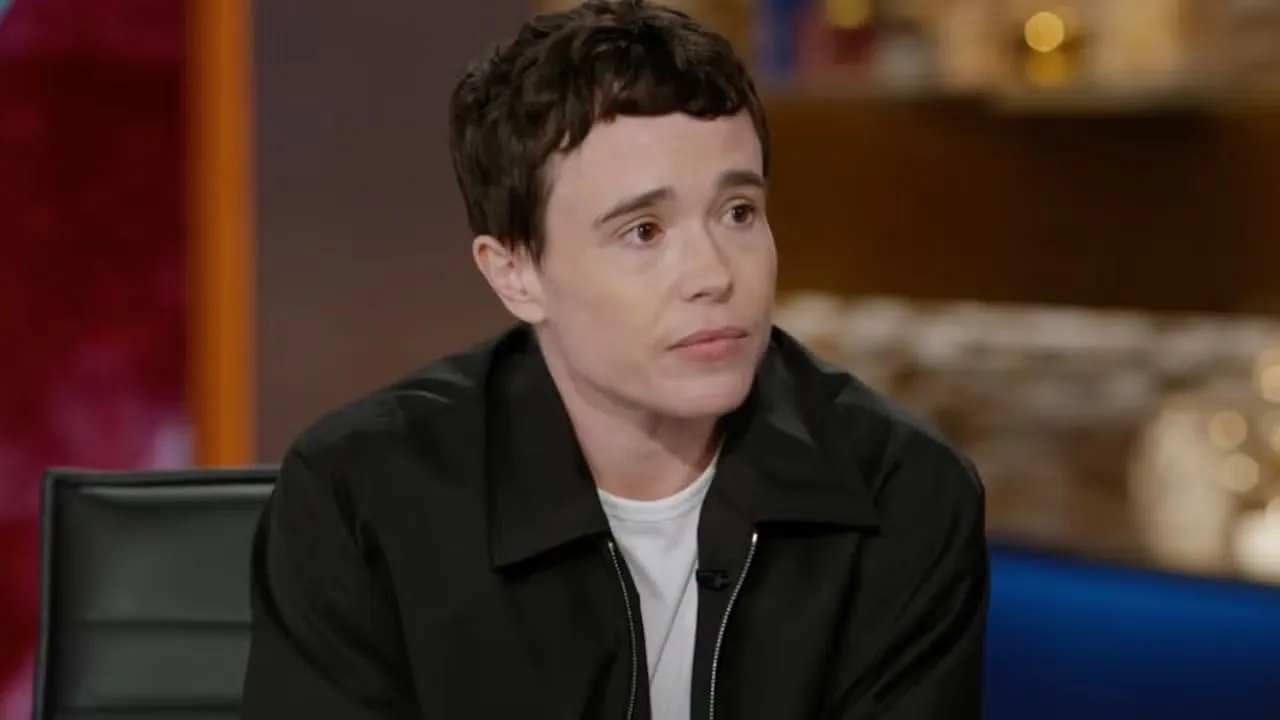
Elliot Page told The Daily Show that he felt “terrified” about playing Sinon in Christopher Nolan's adaptation of The Odyssey, after deep conversations with Nolan about the character. For decision-makers, the story is a reminder that casting and creative risk are real, and execution still has to land on schedule and in public.
Elliot Page didn’t describe his role in Christopher Nolan's The Odyssey as “challenging” or “exciting.” He said he was “terrified” to take on playing Sinon, the character Page frames as a moral anchor in the film.
Page made the point on Wednesday's The Daily Show, explaining that his focus was on capturing Sinon in “these few scenes” and making Nolan “happy.” He also tied that anxiety directly to the creative brief he says he received in conversations with Nolan: Sinon as “this sort of consciousness” facing Odysseus, and the impacts of war, brutality, and violence. In other words, Page’s nerves were not about finding the right accent or hitting a mark. They were about carrying the moral weight of a story where the character functions like the audience’s ethical compass.
If you’re an executive, investor, producer, or operator watching from the business side of entertainment, that distinction matters. Creative work often gets talked about like it’s all inspiration and vibes. Page’s account shows there is a practical, decision-level conversation happening upstream, where a director effectively tests the emotional math. In Page’s telling, he and Nolan “engaged in deep conversations about the importance of the character before filming.” That is a pre-production discipline, not a last-minute improvisation. When a project is built around a moral anchor, the wrong casting performance can shift tone and undermine the entire film’s internal logic.
Page also addressed how Nolan’s production would have been difficult even for someone with his experience, though he says he personally had an easier job than many others. The adaptation, Page says, filmed across six different countries, used practical effects, and involved a “massive cast and crew.” Page recalled working early in the shoot, then returning later. He said he couldn’t even understand how everyone was still standing, and suggested the most challenging parts for him were “weather and temperature.” He added a personal context point, saying he “grew up working in Canada as a kid,” which he describes as familiarity with “pretty brutal temperatures.”
That matters because it reframes “terrified” into a more operational story. Major productions are not just creative problems, they are execution problems. When you move a film across six countries, practical effects introduce constraints that digital production sometimes hides. Massive crews create coordination overhead. And even if your own schedule is lighter, your co-workers’ endurance can determine whether the shoot hits its moments and maintains consistency. Page’s remark that others had a tougher job is a reminder that the people closest to the production plan often carry less visible risk while still enabling the performance moments audiences notice.
There was also public noise around Page’s casting. The source says Lydic and Page chose not to address the right-wing outrage that surfaced online after the trans performer was cast as a Greek soldier in Nolan's adaptation. That choice is itself a signal about how performers and shows handle politically amplified controversies: they can choose to stay inside the creative conversation, especially when the outlet is a comedy interview and the focus is craft and process rather than culture war commentary.
And the scoreboard, at least so far, looks like the gamble paid off. The source reports Nolan’s adaptation has emerged as a box office success, bringing in $264 million global in its opening weekend. The film stars Matt Damon, Tom Holland, Anne Hathaway, Robert Pattinson, Samantha Morton, and Zendaya, and has earned critical and audience acclaim, according to the same report. In film economics, opening weekend is not the whole movie, but it is the loudest early indicator of whether the market believes the product will keep drawing repeat viewers. When a director places moral emphasis on a specific character, early audience trust matters.
So what’s the second-order takeaway for executives and boards managing creative risk? First, casting can be both art and systems engineering. Page’s nerves were grounded in the idea that Sinon carries an essential moral function, and that Nolan’s production demanded accuracy in those scenes. Second, production scale is real risk. Filming across six countries with practical effects and huge teams raises the chance that weather, temperature, logistics, and coordination could derail the final experience. Third, public controversy can coexist with commercial success, and stakeholders may still need to focus on what they control: preparation, performance quality, and the ability to execute the plan.
For peers in similar roles, the strategic stake is simple: if you underestimate the importance of a “small” set of scenes, you may lose tone in ways the marketing cannot patch. Page’s interview is a reminder that even when a character appears briefly, the moral load can be heavy, and directors and actors treat that seriousness as part of the job, not an afterthought.
This story's Key Insights and Take-aways are locked.
Create a free account to unlock Executive Actions for one credit.
Register to UnlockAlways free for Executives Club members. Join the Club
More in Entertainment

12TB Steam 'teraleak' goes beyond Valve: GTA 3, Mafia 2 prototypes exposed
A 12-terabyte dump of Steam data reveals prototypes and builds of third-party classics like GTA 3 and Mafia 2, plus unreleased Valve content, rewriting game history.

LinkedIn's romance problem: 1 in 4 workers say dating on it is fair game
A new survey shows a quarter of U.S. employees treat the professional network as fair game for romance, even as LinkedIn bans it and removes hundreds of thousands of offending posts.

Enhypen's first No. 1 album breaks K-pop's Billboard 200 streak
The K-pop group's 98,000-unit debut tops the chart while Dolly Parton's catalog reentry shows how death reshapes streaming.