
Elon Musk hit $1T the day SpaceX went public in June 2026
The first trillion-dollar moment was IPO timing. The real story is how SpaceX replaced Tesla as the wealth engine.

Elon Musk became the world's first trillionaire right after SpaceX went public in June 2026, immediately pushing his net worth above $1 trillion. For decision-makers, the shift shows how private-market valuations and equity incentives now drive the biggest fortunes and market power.
Elon Musk reached $1 trillion in net worth seconds after SpaceX went public in June 2026, turning him into the world's first trillionaire. The milestone matters because it ties wealth creation to a single market event: the IPO. Not years of quiet compounding, not incremental product cycles. One trading day, one valuation reset, and Musk's fortune shot past the billionaires people usually benchmark against, including Jeff Bezos, Mark Zuckerberg, and Larry Ellison.
And the “how” is immediate once you understand what changed. The Business Insider account makes the causal chain pretty direct: SpaceX's historic IPO came after SpaceX had been privately valued extremely high in advance, and once it debuted on public markets, SpaceX was quickly valued at more than $2 trillion. That public pricing pushed Musk's net worth to more than $1 trillion. In other words, the IPO did not just enrich Musk. It re-ranked which of his companies actually carries his balance sheet.
To see why this is such a big deal beyond celebrity math, you have to zoom out to how Musk built wealth over time. He was born in South Africa, moved to Canada, and dropped out of a Ph.D. program at Stanford. He became a millionaire before he hit 30 thanks to Zip2, a website that provided city travel guides to newspapers. He cofounded the venture with his brother Kimbal Musk, and the pair sold it to Compaq for more than $300 million in 1999 when he was 27. Two years later, he reinvested some of that profit into an online bank called X.com, which soon merged with Peter Thiel's Confinity to become PayPal, which eBay bought for $1.5 billion in 2002. Then came the next pattern: he used windfall capital to launch or scale companies that could later become market-making assets.
SpaceX and Tesla set up the two-track wealth story. Musk cofounded SpaceX in 2002, and in 2004 he became an investor in and the chairman of Tesla, which eventually became his first cash cow. During the 2008 financial crisis, he saved Tesla from bankruptcy by investing $40 million and securing a $40 million loan. He was named Tesla's CEO that same year, calling it “the worst year of my life,” with personal troubles compounding Tesla's poor performance and SpaceX's trouble launching the Falcon rocket. By 2009, he was living off personal loans. The turnaround came in 2010 when Tesla went public, sending his net worth climbing.
From there, the wealth curve begins to look less like a straight line and more like a function of stock volatility, board expectations, and milestone payouts. Tesla's stock has been famous for volatility, meaning Musk's net worth would also fluctuate. The article points to a jump following the 2024 election of Musk ally Donald Trump, and then a drop by more than 50% amid a vehicle sales slump, a Tesla boycott movement, and Musk's stint in the US government. Even if Tesla's stock later largely rebounded, the pattern is clear: Tesla can move violently, and the personal fortunes tied to it will swing with it.
So what pushed Musk “up and to the right” in the last couple of years? The Business Insider piece says SpaceX growth has been more stable over the past couple of years, pushing his net worth higher. It also emphasizes how insider trading and private valuations served as a runway before the IPO. An insider share sale in December 2024 valued the company at $350 billion, sending Musk's net worth up about $50 billion in one day and making him the first billionaire to reach the $400 billion mark. One year later, after he confirmed SpaceX was planning an IPO, an insider share sale valued the private company at $800 billion. After that, his fortune surpassed $600 billion. Then came June 2026: the largest IPO in history, with SpaceX (combined with xAI, the parent company of X, formerly known as Twitter) quickly valued at more than $2 trillion as it debuted, pushing Musk's net worth to more than $1 trillion.
Where does the money actually come from now? The article answers bluntly: Musk's wealth, once largely dependent on Tesla shares, is now dominated by SpaceX. The rocket, satellite, and AI firm accounts for more than 70% of his net worth. Tesla represents a 13% stake, and Neuralink and The Boring Company make up the rest. That concentration is not trivia. It affects how incentives work, how boards structure compensation, and how risk is distributed. In both Tesla and SpaceX, the CEO is largely compensated with stock options awarded when the company meets challenging performance metrics. In SpaceX's case, those goals include a colony on Mars and orbital data centers. At Tesla, the metrics include getting one million robotaxis on the road. Translation: the “why” is equity tied to moonshots, and the “what happens next” is that when those equity vehicles reprice, fortunes reprice with them.
For other executives and boards, the second-order implication is hard to miss. Musk is becoming the blueprint for a new wealth pathway where private market valuations, insider share mechanics, and IPO timing can create near-immediate public-market repricing. In practical terms: if you are sitting on a high-growth, high-expectations asset, the question is not only “will it succeed?” but “when and how will it be priced publicly, and what portion of executive comp and control is linked to that moment?” In a world where a single IPO can move a person from untouchable to historically untouchable, governance and incentive design stop being paperwork and start being balance-sheet leverage.
This story's Key Insights and Take-aways are locked.
Create a free account to unlock Executive Actions for one credit.
Register to UnlockAlways free for Executives Club members. Join the Club
More in Business

Accenture’s $4.18bn play fails as AI fears spark a 20% worst-ever stock plunge
On Thursday, Accenture hit its biggest one-day drop on record after forecasting worries that AI could hollow out consulting.

SpaceX stock jumps 3% after it overtakes Amazon’s market cap
CNBC says SpaceX’s shares surge following its IPO Friday, forcing investors to reprice what “space” and “AI” are worth.
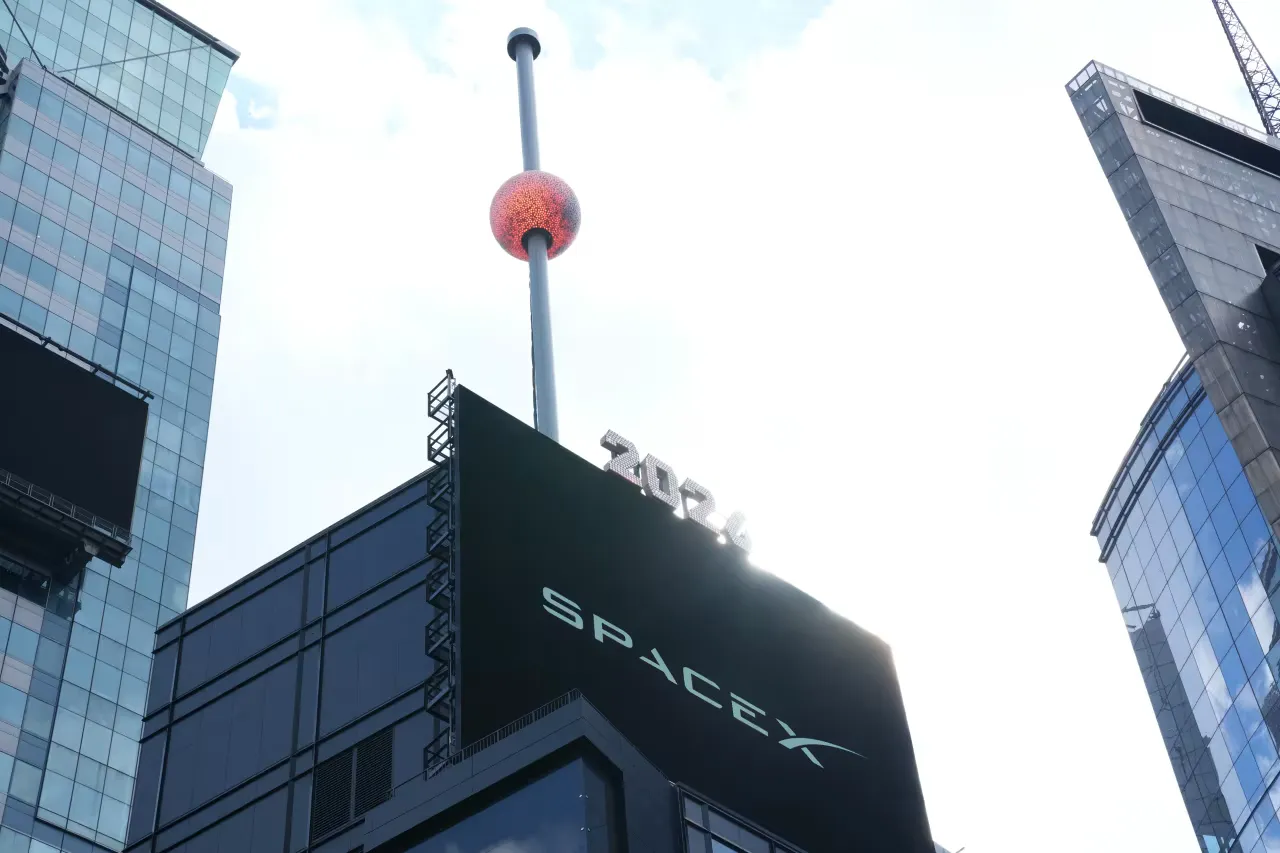
SpaceX’s first options day breaks U.S. records after a $85B IPO win
Big IPO, bigger options debut: what it means for investors, risk teams, and anyone benchmarking market appetite.