
Elon Musk insulates SpaceX’s $1.1T Mars pay after Tesla’s $56B grant got voided
His IPO-bound compensation is built to preserve control even if the Mars and data center goals never land.
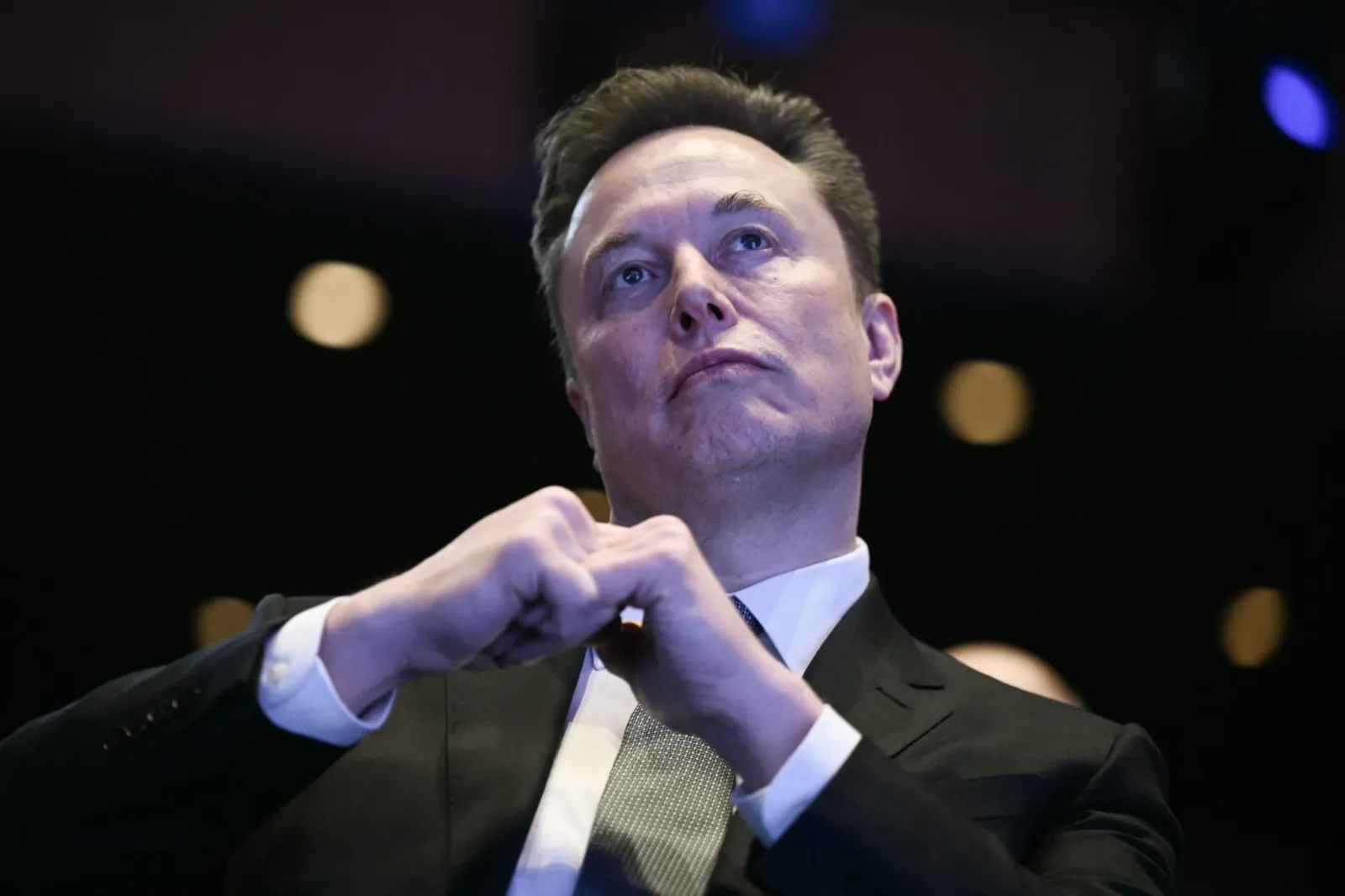
Elon Musk is pushing an almost bulletproof SpaceX compensation structure as SpaceX prepares for a $75 billion IPO next week, with a potential $1.1 trillion value. The consequence for decision-makers is a governance and litigation shift: Musk’s voting power stays locked in, even if the performance goals are “improbable.”
It started with a fight over Elon Musk’s $56 billion Tesla moonshot pay. A Delaware Chancery Court judge ultimately voided it after the award was granted in 2018 when Tesla was already public, letting shareholders argue it was essentially an after-the-fact transfer of wealth.
Now, as SpaceX prepares to go public in a $75 billion initial public offering next week, Musk is designing his SpaceX pay so he will not have to run that same legal gauntlet again. Fortune reports that the SpaceX stock compensation spelled out in the company’s IPO registration statement makes the deal legible to any investor before they buy in, and the company is no longer incorporated in Delaware, the state whose court struck down the Tesla package.
The headline number in this story is brutal in its confidence: SpaceX describes Musk’s compensation as having potential upside of $1.1 trillion. That magnitude is paired with performance targets that the company itself characterizes as “improbable,” including a requirement to achieve a “permanent human colony on Mars with at least one million inhabitants” and to establish data centers capable of delivering 100 terawatts of compute per year. The mechanics matter as much as the ambition. Fortune notes that these milestones are not paired with a timeframe, and they also appear structured so that Musk keeps control even if the goals are not achieved.
To understand why this avoids a repeat of Tesla-style litigation, you have to look at how the incentives are documented and how governance rules are chosen. In the Tesla case, the issue was partly about timing: the 2018 grant came after Tesla was already public, which allowed a shareholder to argue it was an improper transfer. In SpaceX’s case, Musk’s deal is clearly spelled out in SpaceX’s IPO registration statement, according to Fortune, so investors can review the terms before buying any shares.
There’s also the jurisdictional lever. Fortune reports that Musk moved SpaceX to Texas after the Tesla award was rescinded, and that in Texas a shareholder would need to own 3% of the company, a multibillion-dollar stake at SpaceX’s projected $1.8 trillion valuation, merely to bring a claim. Those claims would be heard in a special Texas business court with no jury. Translation: the barrier to getting a judge to unwind Musk’s deal is higher, and the forum is different.
But the bigger, more interesting twist is control. Musk is not just buying himself a payout lottery. Fortune describes his stock-based awards as a governance hack that flips the usual relationship between performance and power. The SpaceX structure includes 1.3 billion super-voting Class B shares with 10 votes per share. Because of how these restricted shares are designed, Musk receives the voting benefits of the shares even if he never hits the performance targets required to unlock their financial value.
Fortune adds a clean explanation: the deal ensures Musk maintains “near-iron grip” over SpaceX, because he can retain voting rights without reaching the Mars and data center thresholds. One cited comp expert, Jay Ritter, frames it as an investor choice problem: if you do not like it, you do not buy at that price. Another, Eric Hoffmann of Farient Advisors, is even more direct in substance, saying Musk wants complete control and that the goals appear designed around that outcome. Musk’s voting position is substantial even before the IPO. Fortune reports that Musk holds a total of 5.6 billion Class B shares, translating to 85.1% combined voting power before the IPO.
The pay-to-control bridge is where executives and board members should pay attention. Fortune details that Musk’s combined total voting power is supported by grants received in January and March, totaling 1.3 billion performance-based restricted shares of Class B stock. To monetize 1 billion of those shares, Musk must hit 15 market capitalization milestones up to $7.5 trillion and build the Mars colony requirement. The additional 300 million shares require 12 market cap milestones from $1 trillion to $6.6 trillion and data centers capable of 100 terawatts of compute per year. For context, Fortune notes the 100 terawatts figure is roughly 30 times the U.S. average power consumption in 2022, and five to six times average global power use. The point is not whether it happens. The point is that the voting rights start immediately.
In fact, SpaceX’s filings state that Musk has “all the rights and privileges of a holder of Class B Common Stock” for restricted shares that have not been forfeited, including the right to vote from the date of grant. So the vesting schedule affects when Musk can earn and sell the shares, not whether he can vote them. Fortune reports that Musk’s total 6.4 billion shares, including Class A and B, will be locked up for 366 days, while other executives can start selling earlier in staged releases.
This is where the second-order implications show up for anyone sitting on a board or managing founder succession risk. Fortune describes SpaceX as a “controlled” publicly listed company, meaning some traditional governance rules that often apply to large publicly traded companies will not apply. For example, it “won’t need to have a compensation committee made up of all independent board members.” That changes how oversight is structured, and it raises the stakes for investors who thought “public” automatically meant “independent.”
SpaceX also reports a board-election setup that preserves Musk’s influence for as long as Class B stock exists. Fortune says that the rocket ship and Starlink satellite internet provider’s block of Class B shares, held mostly by Musk, will elect 51% of SpaceX’s board. Musk will retain 82.4% of that voting power after a potential IPO. The strategic lesson is blunt: SpaceX’s public-market debut is not designed to dilute the founder. It is designed to monetize the story while keeping decision power consolidated, even if the most cinematic milestones never arrive.
This story's Key Insights and Take-aways are locked.
Create a free account to unlock Executive Actions for one credit.
Register to UnlockAlways free for Executives Club members. Join the Club
More in Business

Nvidia memory-chip deal lifts AI hopes, but SK Hynix and Samsung shares face fresh pressure
A new memory-chip agreement is not enough to stop South Korean stocks sliding as the AI trade cools.
AXA and Standard Chartered push HK offshore wealth despite mainland cross-border squeeze
This week’s new private offerings show regulatory tightening has not stopped big firms from betting on Hong Kong high-net-worth growth.
Hong Kong IPO runups increasingly sour after debut, as listings intensify market competition
A pre-debut trading surge is starting to flip into a post-listing performance problem, changing how executives should judge IPO momentum.