

Elon Musk wires $5M to Vivek Ramaswamy’s Ohio governor bid despite DOGE feuds
The $5 million check lands even as Musk and Ramaswamy have clashed publicly around federal downsizing plans.
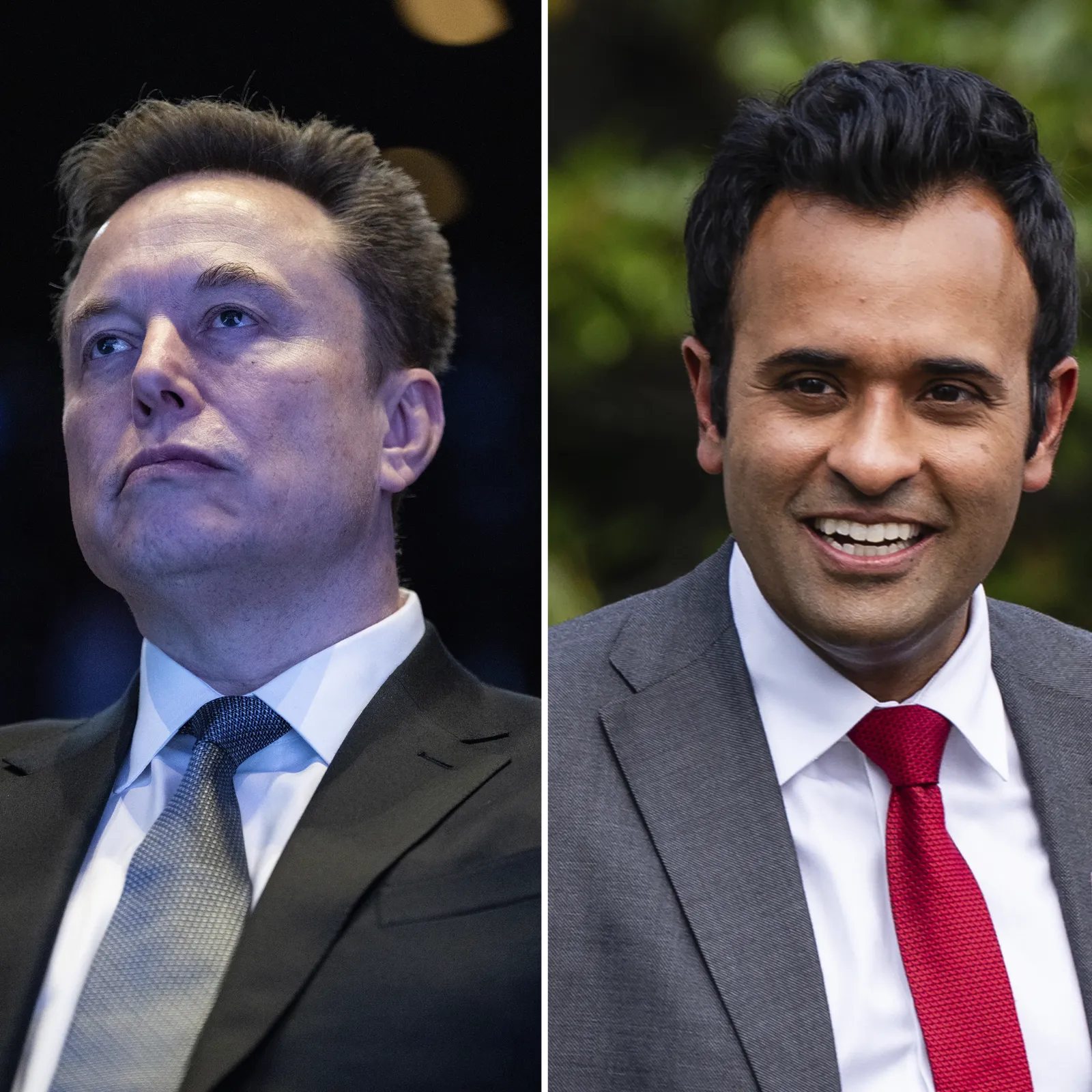
Elon Musk gave $5 million to support Vivek Ramaswamy’s campaign for Ohio governor. For decision-makers, it signals Musk is willing to separate DOGE-style federal workforce politics from state-level ambitions.
Elon Musk’s $5 million contribution to Vivek Ramaswamy’s campaign for Ohio governor is the kind of headline that makes people double-take, because it comes after tensions tied to DOGE and efforts to downsize the federal work force. In other words, the money does not look like a pause button on the broader political conflict. It looks like a sidestep.
Per the New York Times, Musk gave the $5 million to back Ramaswamy’s run for Ohio governor, “seemingly moving past tensions” around the push to reduce the federal workforce. That is the key phrase, because it frames the contribution as more than casual support. It suggests Musk believes the state-level strategy can proceed even if the federal-level fight has been messy.
Why does this matter if you are not a campaign staffer? Because when major donors and high-profile tech figures change the “where to place pressure” calculus, it can reshape timelines, coalitions, and the credibility of policy narratives. In US politics, campaigns rarely live on pure ideology. They live on momentum: who funds what, who shows up, and which story voters start repeating. A check like this is a signal flare. It says Ramaswamy’s candidacy is more than a thought experiment, and it says Musk is comfortable engaging in political risk at the same time he is dealing with operational risk from his other work.
The federal downsizing angle provides the connective tissue. The Times link between Musk’s support and tensions around efforts to downsize the federal work force matters because it tells you what the underlying dispute probably was about: who controls the lever, what “downsizing” actually means, and whether the messenger is aligned with the method. Federal workforce reductions are not a side quest. They touch federal operations, service delivery, budgets, unions, procurement, and the legal machinery that governs employment and agency staffing. Even if you think the policy direction is straightforward, the execution becomes a multi-actor process where lawsuits, administrative rules, and congressional oversight can slow or redirect outcomes.
That is why Musk and Ramaswamy moving from “tension” to “support” can be read as a second-order political move. It is not necessarily a reconciliation on substance. It can also be an acknowledgment that state and federal politics have different mechanics. Ohio governor races operate within a different set of constraints than federal workforce policy. States can influence budgets, procurement, and state agencies. They can set administrative priorities. They can also become laboratories that shape national narratives. If the goal is to demonstrate competence, build a political brand, and create a platform for future battles, state elections are where that brand gets stress-tested.
For boards and executives who track political risk, the bigger takeaway is how influence is being allocated. High-profile donors can reduce uncertainty in one arena while maintaining uncertainty in another. In practical terms, Musk’s $5 million support tells stakeholders that Ramaswamy’s coalition is not limited to campaign fundraising norms. It is reinforced by a donor with global reach and tech-sector gravity. That can accelerate media attention and policy framing, which then affects how regulators, contractors, and industry groups anticipate the next wave of state-level proposals.
There is also a credibility dimension. Companies and investors often try to map “who is serious” when policy talk gets loud online. Money helps. So does the willingness to back a specific candidate rather than stay in generic commentary. Musk funding a governor bid with a specific $5 million amount is a concrete action that can change how other donors calculate risk. It can also influence how party operatives think about candidate survivability, fundraising prospects, and alignment with broader ideological currents.
Meanwhile, the notion that Musk is “seemingly moving past tensions” is a subtle reminder that public political disagreements do not always translate into strategic separation. Elite actors can run parallel playbooks. One playbook handles conflicts over federal workforce downsizing and DOGE-adjacent messaging. Another playbook handles electoral opportunities at the state level, where a donor can help shape an agenda without immediately confronting the full complexity of federal employment law and congressional oversight.
For decision-makers, the strategic stakes are straightforward. A state-level win can create a regulatory environment that sets precedents and attracts investment. It can also reshape how advocacy groups and public-sector partners negotiate. If you manage government-facing operations, a higher-profile governor campaign from a donor with Musk’s profile is a reminder to watch the agenda setting, not just the election outcome. Even before any policy change lands on paper, the fundraising and framing can determine which proposals get treated as serious, which timelines become realistic, and which stakeholders start preparing now rather than later.
This story's Key Insights and Take-aways are locked.
Create a free account to unlock Executive Actions for one credit.
Register to UnlockAlways free for Executives Club members. Join the Club
More in Politics

LA County: DOJ's 20,000 'noncitizen' voter list is 'unreliable,' includes U.S.-born
Preliminary review by Los Angeles County election officials finds errors in the federal list, raising the stakes for voter roll integrity ahead of November.

Trump's $1.5B Pentagon chip investment lands in North Carolina
A $1.5 billion defense infusion for North Carolina chipmaking signals a new era of Pentagon-backed reshoring - here's what it means for the industry.

Nigeria confirms first Ebola case in Abuja, a woman just off a Uganda flight
Health Minister Muhammad Ali Pate says the patient flew in from Uganda, putting Africa's latest outbreak on Nigeria's doorstep.