
Emilia Clarke said she was furious at Daenerys finale script in 2019
The actress confirms her anger over Daenerys Targaryen's fate, turning a cultural debate into a leadership lesson on creative incentives.
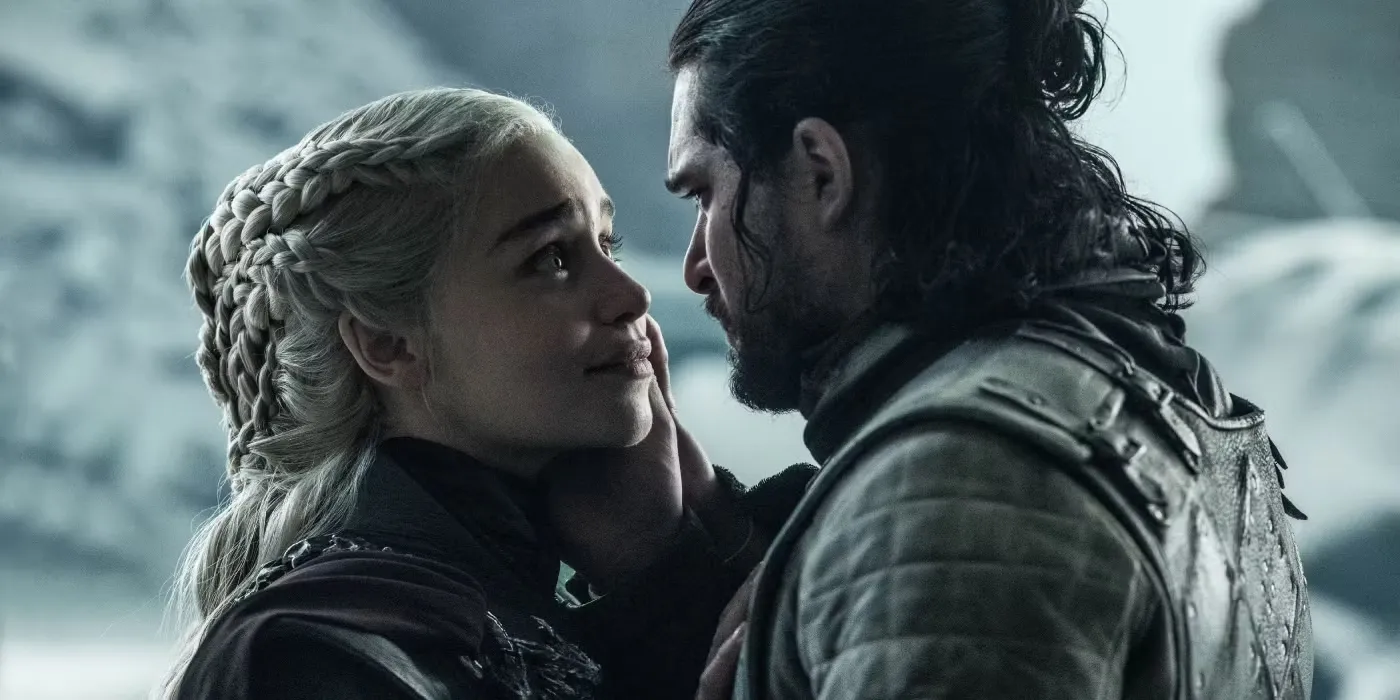
Emilia Clarke, who played Daenerys Targaryen on Game of Thrones, said she was furious over the finale script when the series ended in 2019. For decision-makers, her comments underscore how final-season outcomes can backfire when creative and stakeholder incentives drift.
Seven years after Game of Thrones wrapped in 2019, Emilia Clarke is still talking about the finale with heat. She confirmed her outrage over the script, explaining that Daenerys Targaryen’s fate landed wrong for her, and that the final season’s conclusion kept bothering her long after the credits rolled.
If you remember the conversation around the last stretch of the show, Clarke’s perspective is one of the clearest “inside the room” signals you can get. She was at the center of those episodes, dragons and everything, and she has now publicly opened up about why she felt angry about the script tied to Daenerys’s end. The point is not subtle: the series finale was not just a fan debate, it was an actor-perceived reckoning with choices the production made.
That matters because major media projects are rarely just art. They are complex organizations with tight timelines, escalating budgets, and teams who often stop being able to control outcomes the way they could earlier in a run. The tension usually starts during long arcs, then intensifies when there is pressure to close storylines cleanly. By the time a finale arrives, the “what” is mostly locked in, but the “how” can still feel like the difference between a satisfying conclusion and a scramble. Clarke’s continued frustration is a reminder that even when the ending is celebrated publicly, it can still feel internally broken for key talent.
There is also a business incentive behind why finales become so contentious. Long-running franchises operate like engines: the earlier seasons generate momentum, audience investment, and brand value. Then, the last season has to convert that accumulated goodwill into a payoff. If viewers sense the payoff is misaligned with the groundwork, the franchise takes reputational damage. Even if the show’s overall success was enormous, the ending becomes a focal point for criticism because it is the last, highest-visibility decision. Clarke’s anger functions as a human amplifier for that dynamic, showing that stakes were not purely on the audience side.
For boards, executives, and investors backing culture-defining properties, this is the second-order risk that gets underestimated. It is not just whether the finale draws viewers. It is whether the production builds closure that the people doing the work can emotionally sign off on. In organizational terms, talent buy-in is a kind of operational continuity. When that breaks, the brand can pay twice: first through audience reaction, and again through how partners, press, and future collaborators interpret what went wrong.
There is no regulatory twist here in the way you might see with financial firms or healthcare, but there is still a governance angle. Media companies are subject to reputational scrutiny, platform policies, and public relations constraints that function like soft regulation. When a show’s finale triggers backlash, those pressures cascade into how leadership explains decisions, how marketing reframes the narrative, and how executives talk about creative direction. Clarke’s comments suggest that, at least for someone with her role and proximity to the character, the scripting choices did not land as intended.
Strategically, consider what happens if you run a creative organization with similar structure: you have long arcs, a final-season spotlight, and a chorus of stakeholders who all want the ending to satisfy different goals. The audience wants coherence. The network wants retention. Talent wants authenticity to character work. Production wants a schedule that does not implode. Clarke’s stated fury over Daenerys’s fate is a case study in what can happen when the convergence point fails to align those incentives. Even years later, the finale remains a wound, not a solved problem.
So for leaders in entertainment, games, and any business that sells narrative outcomes, the takeaway is uncomfortable but useful: endings are not “wrap-up.” They are the moment where every earlier decision is judged. If key creative participants feel blindsided by the script, that signals a broader mismatch in how the organization prioritized closure. Clarke’s anger turns a pop-culture headline into an executive reminder that the last mile can make or break the brand story for years, not months.
This story's Key Insights and Take-aways are locked.
Create a free account to unlock Executive Actions for one credit.
Register to UnlockAlways free for Executives Club members. Join the Club
More in Entertainment

Entertainer Russell Brand denies 7 sex charges amid accuser's 'couldn't breathe' claim
The alleged victim's account sharpens the reputational and legal stakes for Brand, his platforms, and any business tied to a public figure under criminal scrutiny.

Russell Brand's accuser 'bewildered and confused' as he denies 7 sex charges
The criminal case against the comedian is a live test of how media companies manage talent risk when serious allegations go public.

'It's a Magic Trick': Ballet Experts Say Rosalía's SNL Pose Is Impossible
Three ballet experts tell Rolling Stone Rosalía's gravity-defying SNL stillness shouldn't be possible - and why the debate is now part of the show.