
Emma D'Arcy says Episode 2 locks Rhaenyra’s “momentum” in Dragonstone
Rhaenyra’s ascent comes with denial, a forced throne-claim execution, and a betrayal that steals the victory.
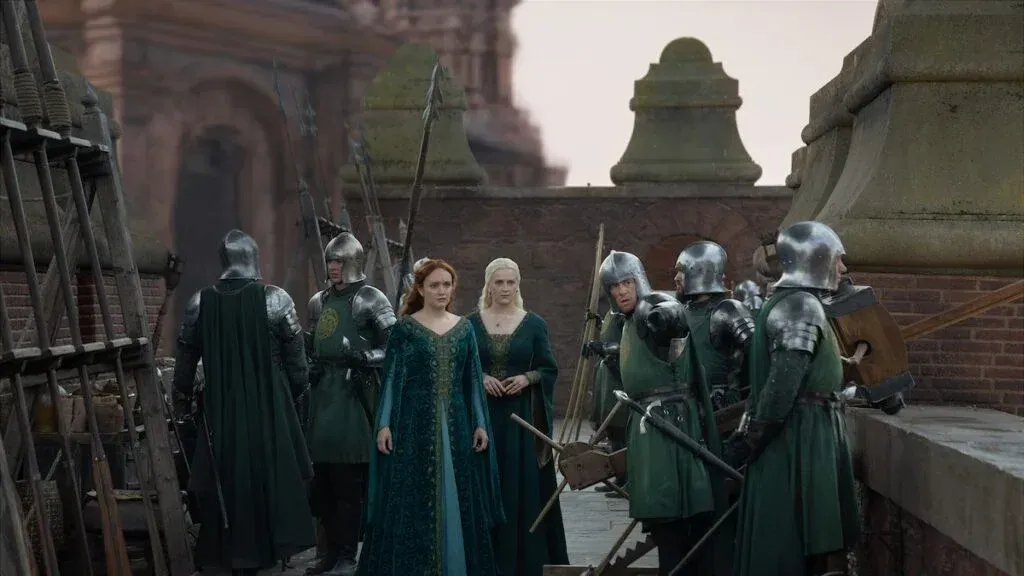
In an Episode 2 discussion with TheWrap, Olivia Cooke and Emma D'Arcy unpack how Rhaenyra’s “real momentum” is throttled by a Dragonstone lock-in under Jacaerys. The consequences ripple into Daemon’s push for a throne grab and Alicent’s political survival game at King’s Landing.
Note: This story contains spoilers from “House of the Dragon” Season 3, Episode 2. Emma D'Arcy told TheWrap that Jacaerys locking Rhaenyra in Dragonstone prevented the “real momentum” of her campaign to the Iron Throne. In the same conversation, D'Arcy frames the choice as more than strategy, describing it as control “under the guise of protection,” and calling it “profoundly frustrating” that the act of being “prevented from pursuing your desire against your will” becomes a kind of infantilizing force.
D'Arcy then ties that emotional squeeze directly to the episode’s most brutal payoff. Jace still ends up paying the price, falling to his death in battle, and Rhaenyra is not told the news, she is shown his lifeless body carried in by castle guards. The moment matters because it flips how information and agency work for Rhaenyra: the grief lands without consent. D'Arcy even says she wanted Rhaenyra’s question, “What have you done?” to carry hope as an answer rather than turning immediately rhetorical, essentially forcing denial to do one last, desperate job before reality wins.
If this were boardroom politics, you’d call it a misaligned incentive problem: Jacaerys acts with protective logic, while the campaign needs forward motion. In Episode 2, Daemon’s response makes that tension sharper. After Jace’s death, Daemon returns to Dragonstone, comforts Rhaenyra, and applies “just enough pressure” that the urgency becomes unmistakable: taking the Iron Throne at King’s Landing. Matt Smith describes Daemon’s role as simultaneously political and restless, saying he tries to assert some form of political council but also acts like an errand runner, “collecting gold,” “collecting this, collecting that.” Smith’s point is that Daemon’s internal desire to dominate undercuts any purely advisory posture, creating underlying tension as he pushes toward something he frames in his mind like a holy war.
Meanwhile at King’s Landing, Olivia Cooke explains that Alicent’s immediate job is not victory, it’s triage. Alicent prepares guards for Rhaenyra’s arrival and coerces them to stand down, while dodging accusations of treason along the way. Cooke’s read of Alicent is brutally pragmatic: she likely assumes the kingdom is so corrupt that “everyone’s sort of committing treason.” Her mission is framed as survival, specifically to “save herself, save Helaena, save Jaehaera,” and crucially not ruin Helaena’s legacy. The coercion and the standing-down aren’t clean or heroic, they are defensive, a way of getting out of the trap she’s trapped in.
Cooke also points out that even the supposed smooth transition is complicated by intimacy and coercion inside the castle. Alicent has to manage unwelcome advances from her staff, and then there is Aemond, who in Episode 1 forces a kiss upon his mother. Cooke called reading that kiss “shocking,” but she says it fits what she understands from showrunner Ryan Condal and EP and writer Sara Hess: an “unreciprocated Oedipal undertone” that had felt like a “missing link” until it became “very, very clear.” The operational consequence in Episode 2 is fear as policy. Cooke notes that because Aemond is “one of the most dangerous men in the kingdom,” any perceived rejection could get Alicent killed. So she tread very carefully, in other words, she manages threats before they become headlines.
That threat-management theme becomes even sharper right before Rhaenyra’s throne moment, because the episode makes one last demand of the Season 2 political bargain. Before Rhaenyra takes the throne, there is “one thing left to be done”: execute Aegon, the usurper, as specified by the Rhaenyra and Alicent deal from Season 2. But Aegon has fled with Larys Strong, so Daemon finds the next best target: Otto Hightower, Alicent’s father and Rhaenyra’s father’s right-hand. D'Arcy says Rhaenyra had wrapped her head around executing Aegon, but the pivot to Otto throws her off. D'Arcy also describes the emotional dynamics of “historical relations,” noting that Otto knew Rhaenyra as a child, and that it “dissolves some of the armor” when those ties become visible.
Smith says Daemon insists that Rhaenyra has to land the final blow because of the statement it makes to the people and the realm, adding “authority and a violence” that sends the “right message.” Rhaenyra winces through the execution, but delivers the blow, releasing Otto’s head onto the floor and enabling her to finally ascend the Iron Throne. Then the victory gets stolen mid-breath. Alicent and Helaena enter the throne room and discover Otto dead. Cooke describes the distance Alicent has to travel through the “massive” room, and that Alicent does not immediately see what the commotion is about until she is in front of her father’s body. Cooke also emphasizes what Alicent has not heard for a long time: the silence becomes evidence, suggesting her father could have been Rhaenyra’s prisoner, and that Otto’s execution is the first enacted political strength from the new rule.
Cooke interprets Alicent’s reaction as betrayal and heartbreak, feeling she has been caught up in “yet another person’s scheming,” that it was “all for nothing,” and that she is in a worse position than where she started. D'Arcy says Rhaenyra’s triumph is robbed by Alicent’s gaze, because it “uncomfortably reveals” Rhaenyra, showing that Rhaenyra’s armor and artifice do not hold up under scrutiny. The episode ends on a wordless exchange between the dueling heroines, and Cooke teases “carnage” ahead as the penultimate season continues.
For executives and board members watching from the adjacent universe of incentives and power transitions, the second-order lesson is clear: when one actor tries to preserve order through control, the system can go quiet at the worst possible time, then suddenly spike into irreversible events. This episode also shows how “political council” and “domination instincts” can coexist, but not without creating tension. And it underlines a hard governance point: symbolic actions, even when procedurally consistent with an earlier deal, can still trigger relationship collapse if the counterparty experiences them as betrayal rather than alignment. In short, Episode 2 is a reminder that in high-stakes transitions, the story is not just who takes the throne. It is who believes the throne was earned, and what that belief does to the next move.
This story's Key Insights and Take-aways are locked.
Create a free account to unlock Executive Actions for one credit.
Register to UnlockAlways free for Executives Club members. Join the Club
More in Entertainment

Russell Brand's accuser 'bewildered and confused' as he denies 7 sex charges
The criminal case against the comedian is a live test of how media companies manage talent risk when serious allegations go public.

'It's a Magic Trick': Ballet Experts Say Rosalía's SNL Pose Is Impossible
Three ballet experts tell Rolling Stone Rosalía's gravity-defying SNL stillness shouldn't be possible - and why the debate is now part of the show.

Activision CMO: GTA 6 Will Boost Call of Duty, Not Bury It
Activision's top marketer says Rockstar's blockbuster will drive players back to consoles and into Modern Warfare 4, even as the company admits its recent strategy failed.